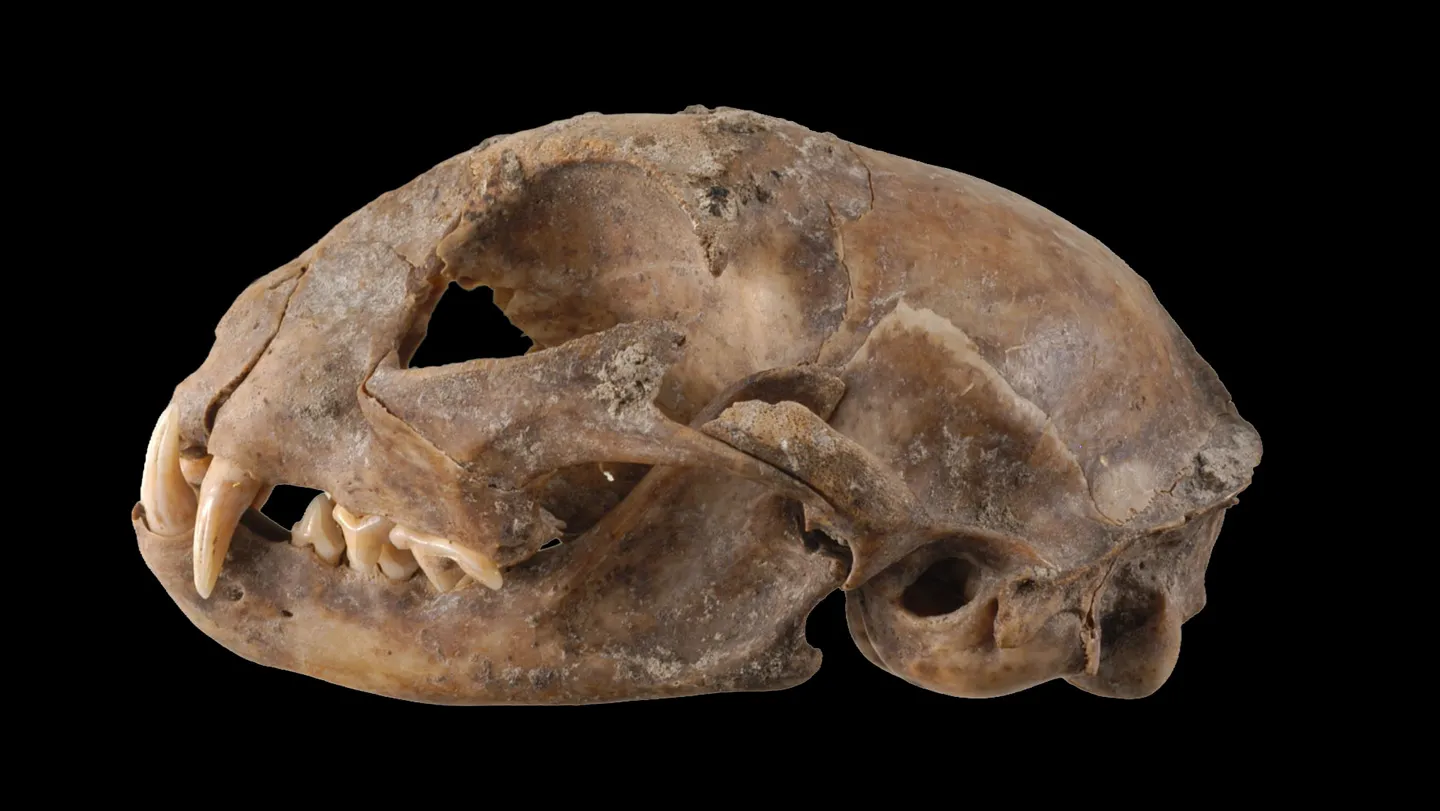
Like a toy on a string, the timing of cat domestication has been a moving target. Now researchers have pounced on a new timeline suggesting that tame descendants of African wildcats left the continent more recently than thoght.
DNA from dozens of ancient cat remains in Europe and Turkey reveals that “domesticated” felines from as early as 6,000 years ago were, in fact, wild cats. Instead, the first domesticated cats left Africa no earlier than around 2,000 years ago, researchers report November 27 in Science. Yet these felines still had plenty of time to achieve world domination,with hundreds of millions now kept as pets.
“This fundamentally reshapes our understanding of the species’ history,” says Allowen Evin, a bioarchaeologist at the University of Montpellier in France who was not involved with the research. “it reveals an entirely new narrative.”
Previous genetic evidence suggested that several thousand years ago,house cats (Felis catus) were domesticated from African wildcats (Felis lybica lybica),which range throughout North Africa and the Near East. One major origins hypothesis centers on ancient Egypt 4,000 to 5,000 years ago, where the lovable predators were frequently enough held in high regard.
Than in 2004, researchers found a 9,500-year-old cat buried alongside a human skeleton in Cyprus, hinting that domesticated cats got their start even earlier in the Levant, dispersing from there. This possibility received additional support in 2017, when Claudio Ottoni — a paleogeneticist at the University of Rome Tor Vergata — and his colleagues analyzed ancient cat remains. They found that cats seemingly related to domesticated cats moved into southeastern Europe from Turkey alongside farmers around 6,000 years ago.
“Humans were stocking grains in their settlements and these attracted rodents and other pests and these, in turn, attracted cats,” Ottoni says.
The 2017 study used DNA from the cell’s mitochondria, which is passed down only from the mother. So researchers had an incomplete view of the cat family tree, and by extension, cat history.
Now Ottoni and his colleagues have analyzed the full genetic instructions from 87 cats that lived across Europe and Turkey between the 9th millennium B.C. and the 1800s. Everything dated earlier than around 200 B.C. matched European wildcats (Felis silvestris) not domesticated cats, the team found.
Why the rethink? The more comprehensive data did reveal that the cats that may have entered Europe from Turkey carried mitochondrial genes from African wildcats. But the other DNA in their cells’ nuclei was more like that of european wildcats. So the traces of African wildcat suggest that European wildcats probably mated with African wildcats long before cats were tamed, rather than being a telltale sign of domestication, the researchers now say.
The findings suggest that domesticated cats didn’t show up in Europe until quite recently.A stepping-stone may have been a place like the island of Sardinia. Both African wildcats and domesticated cats arrived there around 2,000 years ago.
Given the timing of when cats entered Europe, Ottoni suspects it was the romans who sailed their purring pals across the sea. But a mixture of civilizations spread across North Africa and the Mediterranean could also have played a role in the origin and worldwide spread of our kitty confidants. As a notable example, the Phoenician and Punic peoples had a sphere of influence in the western Mediterranean and Sardinia. The african wildcats on Sardinia can be traced back to a population in northwestern Africa, far from the regions traditionally associated with the rise and spread of cats, the Levant and Egypt.
The new timeline jibes with another recent study on when house cats arrived in China.
“Cats have been studied far less intensively than dogs, but they have much to teach us about how human societies have shaped and modified species to meet our needs over millennia,” Evin says.
Keep reading