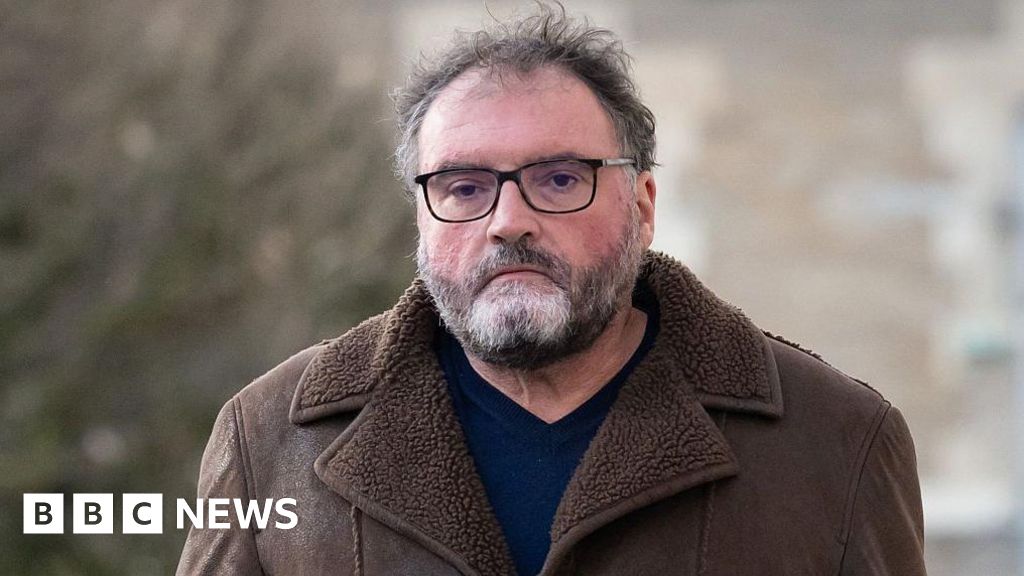
French Anesthesiologist Sentenced in Years-Long patient Poisoning Case
A French anesthesiologist, Dr. Jean-baptiste Péchier, has been sentenced to a minimum of 22 years in prison for poisoning patients, bringing an end to a harrowing case that unfolded over nearly a decade. The verdict,delivered after a lengthy trial,confirms suspicions that began surfacing in 2017 and marks a notable moment for the victims and their families. This article delves into the details of the case, the evidence presented, and the chilling motivations behind Péchier’s actions.
A Pattern of suspicious Cardiac Events
The investigation into Péchier began eight years ago, triggered by a concerning spike in unexplained cardiac arrests at the Saint-Vincent private clinic in Besançon, France. Initially, the alarm was raised in 2017 when unusually high levels of potassium chloride were discovered in an infusion bag administered to a patient undergoing back surgery.
Investigators quickly identified a disturbing trend. The rate of fatal heart attacks under anesthesia at Saint-Vincent was more then six times the national average – a statistic that immediatly warranted further scrutiny. Crucially, unlike most cases nationally where a cause for cardiac arrest could be identified, these events at Saint-Vincent remained largely unexplained.
The Disappearance and Reappearance of a Deadly Trend
The timeline of events painted a particularly damning picture. The “serious adverse events” abruptly ceased when Péchier temporarily transferred to another clinic. Though, a similar increase in complications was then observed at that facility.
Upon his return to Saint-Vincent, the emergencies resumed. This cycle continued until Péchier was ultimately barred from practicing medicine in 2017, at which point the anomalies stopped altogether. This correlation strongly suggested a link between Péchier’s presence and the unexplained illnesses and deaths.
The First Victim and the Potassium Connection
Sandra Simard, now a survivor, was the first known victim. In 2017, the 36-year-old experienced a sudden cardiac arrest during spine surgery. Fortunately, Péchier himself intervened, saving her life, though she was left in a coma.
Subsequent testing revealed potassium concentrations in her infusion bag were 100 times the expected level. this discovery prompted local prosecutors to launch a full-scale investigation. Potassium chloride, when administered in excessive doses, can induce cardiac arrest.
A Trial Marked by Denial and Shifting Testimony
During the 15-week trial, Péchier consistently denied intentionally poisoning patients. He repeatedly asserted his adherence to the Hippocratic oath, claiming, “I am not a poisoner.” However, his testimony proved inconsistent.
While initially denying any wrongdoing, he later conceded that some patients may have been poisoned, but maintained his innocence. His defense team argued a lack of concrete evidence linking him to the crimes.
The “Savior” Complex and a Darker Personality
The trial revealed a disturbing pattern of behavior. Colleagues described Péchier as someone who always presented himself as the expert, cultivating an image of a ”savior” figure. This,according to the prosecutor,led colleagues to instinctively rely on his judgment.
A court psychologist’s assessment further illuminated Péchier’s complex personality, describing him as possessing a ”Dr. Jekyll and Mr. Hyde” duality – a respectable facade masking a capacity for profound harm. He had also attempted suicide in both 2014 and 2021, suggesting underlying psychological distress.
The Verdict and its Impact
Despite his denials, the court found Péchier guilty. The 22-year minimum sentence reflects the gravity of his crimes and the devastating impact on his victims and their families. he has 10 days to appeal the decision, which would trigger a second trial.
The verdict brought a sense of closure to survivors like Sandra Simard, who described the outcome as “the end of a nightmare.” Another survivor, Jean-Claude Gandon, expressed relief, stating, “We can have an easier Christmas now.”
If you or someone you know is struggling with suicidal thoughts, please reach out for help.You can contact the National suicide Prevention Lifeline at 988 or text HOME to 741741 to reach the Crisis Text Line.
Disclaimer: *I am an AI chatbot and cannot provide medical or legal advice. This article
Keep reading
- Trump’s New Tariffs: Impact on Global Trade, Spanish Industry, and US Businesses
- Red Devils’ Van Bommel Succeeds Rudi Garcia After World Cup Quarter-Final Exit in Canada
- Black MS Patients Die Younger Than White Patients, New Study Reveals (time.news)
- French Army Mobilizes to Fight Massive Southwest Wildfires Near Bordeaux (newsdirectory3.com)