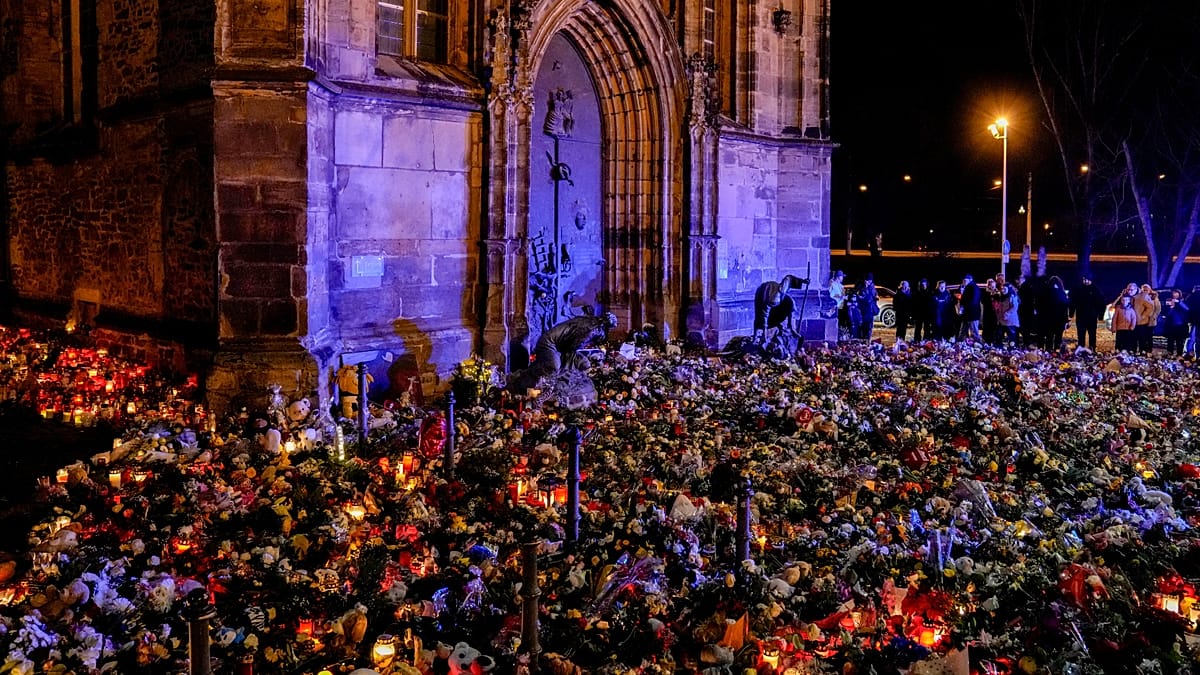
Magdeburg Christmas Market Attack: Ongoing Trial,Victim Support,and a Complex Case
The 2024 Magdeburg Christmas market attack,a horrific act of violence that unfolded shortly before Christmas,continues to reverberate through Germany. this article provides a thorough overview of the incident, the ongoing legal proceedings, the extensive support offered to victims and their families, and the complex motivations behind the perpetrator’s actions.We will delve into the details of the attack, the legal challenges presented by the defendant, and the long-term care being provided to those affected.
the Attack: A Moment of Devastation
On December 20, 2024, a 50-year-old man deliberately drove his car through the bustling Magdeburg Christmas market, causing widespread chaos and tragedy. The perpetrator, a psychiatrist originally from Saudi Arabia who had resided in Germany as 2006, travelled through the market stalls for a harrowing minute and four seconds, reaching speeds of up to 48 km/h (with an average of 27 km/h). The devastating result: six fatalities – five women aged between 45 and 75, and a nine-year-old boy – and over 300 injuries. The victims hailed from across Germany and internationally, highlighting the far-reaching impact of this senseless act.
Legal Proceedings: A Trial Hampered by Obstruction
The perpetrator is currently on trial at the Magdeburg Regional Court, facing a comprehensive indictment brought by the Naumburg public prosecutor’s office. The charges include six counts of murder, 338 counts of attempted murder, grievous bodily harm, and perilous interference with road traffic. The 206-page indictment reflects the scale of the devastation and the gravity of the alleged crimes.
Adding a notable layer of complexity to the proceedings, the defendant has been on a hunger strike for several weeks, leading medical professionals to deem him temporarily unfit to stand trial.This has prompted a controversial decision by presiding Judge Dirk Sternberg to continue the trial without the accused, citing the defendant’s purposeful attempt to obstruct justice. The defense vehemently opposes this decision and intends to appeal to the Higher Regional Court.
Judge Sternberg stated that the accused, Taleb al-Abdulmohsen, explicitly announced his intention to use the hunger strike as a tactic. The prison doctor at Burg Prison confirmed the risk of acute kidney failure, a risk Abdulmohsen refused to mitigate with recommended infusion therapy.
Beyond the Act: Understanding the Perpetrator’s Motivation
The examination has revealed a disturbing pattern of pre-planning and a chilling lack of remorse. Prior to the attack, al-Abdulmohsen filed a criminal complaint with the public prosecutor’s office in 2023, hinting at his intentions.During the trial, he described his actions with a disturbing detachment, claiming to have been unaware of the injuries he inflicted. He justified the attack as a result of failed attempts to resolve disputes with German authorities.
Crucially, the Federal Public Prosecutor General has ruled out a terrorist motive, attributing the attack to “personal frustration.” The perpetrator’s behavior further fueled speculation, notably his display of a laptop displaying “Sept. 2026,” the date of the upcoming state elections in Saxony-Anhalt. This act suggests a potential attempt to politicize the tragedy. He has consistently refused to apologize or express remorse for his actions.
Comprehensive Support for Victims and Their Families
Recognizing the profound and lasting impact of the attack, the German government, through the Ministry of social Affairs, has implemented a robust support system for survivors and the families of victims. this includes:
* Psychological Support: 146 psychotherapeutic treatments have been arranged at an outpatient trauma center.
* Medical and Financial Assistance: 691 cases have been approved for benefits covering medical treatment (inpatient stays, psychotherapy, medication) and participation in support programs.
* Funeral Expenses: The federal state covered funeral costs in three cases.
* Financial compensation: Six surviving dependants have received financial assistance.
* Ongoing Monthly Payments: 56 individuals are receiving a monthly compensation payment of 434 euros, with one individual receiving 868 euros.
Social Affairs Minister Petra Grimm-Benne emphasized the long-term nature of trauma,stating,”Time often doesn’t heal wounds,and physical and psychological damage from the attack may not appear for a long time afterwards. This is why those affected can still submit applications now.” This highlights the commitment to providing sustained support to those impacted by the tragedy. Individuals who have been victims of violence in Germany are entitled to this support, ensuring quick and needs-based assistance.
Looking Ahead: A Long Road to justice and Healing
The trial is scheduled to continue with almost