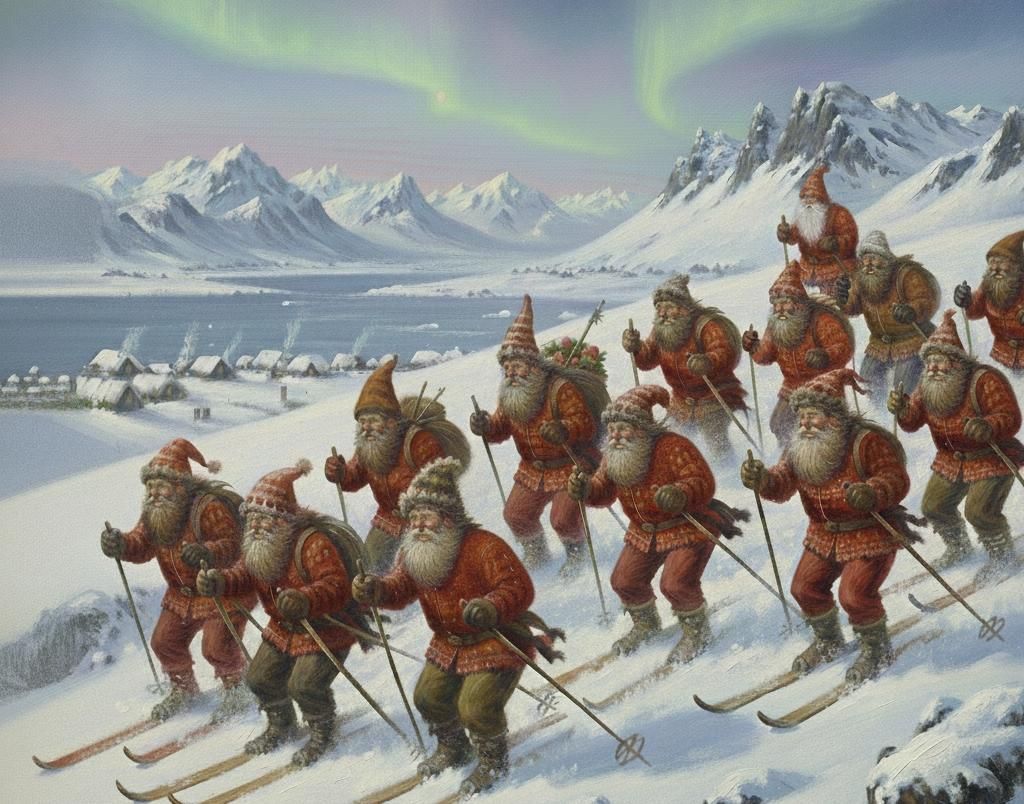
Beyond Santa: Unmasking the Wild and Marvelous World of Iceland’s Yule Lads
For many, Christmas conjures images of a single, jolly man in red. But venture to Iceland, and you’ll discover a far more complex and captivating festive tradition – one populated not by a single Santa Claus, but by thirteen mischievous lads, a monstrous ogress, a hapless husband, and a terrifying feline. This isn’t a sanitized, modern invention; these figures, collectively known as the Jólasveinar (Yule Lads) and their family, are deeply woven into the fabric of Icelandic folklore, stretching back centuries and reflecting a history shaped by harsh winters and a resilient culture.
A History Rooted in Hardship and Folklore
The story of the Yule Lads isn’t a cheerful fairytale spun for children. It’s a reflection of Iceland’s challenging past. Medieval texts, including Snorri Sturluson’s 13th-century Prose Edda, hint at the origins of Gryla, the monstrous mother of the lads. However, her connection to the Christmas season solidified in the 17th century, a period marked by food scarcity and long, dark winters.
The Yule Lads themselves weren’t originally benevolent gift-givers. Their names – Ufur (Stubby), Thvorusleikir (Spoon-Licker), Pottasleikir (Pot-Licker), Askasleikir (Bowl-Licker), hurdaskellir (Door-Slammer), Skyrgamur (Skyr-Gobbler), Bjugnakraekir (Sausage-Swiper), Gluggagaegir (Window-Peeper), Gattathefur (Doorway-Sniffer), Ketkrokur (Meat-Hook), and Kertasnikir (Candle-Stealer) – are brutally specific, detailing their penchant for pilfering food and causing minor mayhem. these weren’t playful pranks; they were stark reminders of the need to safeguard precious resources during a time when survival was a daily struggle.
Meet the family: A Cast of Characters Both terrifying and Tragic
The Yule Lads aren’t a unified force.Each possesses a distinct personality and a particular vice. They descend from their hidden mountain dwellings – frequently enough said to be within the otherworldly lava formations of Dimmuborgir in northern Iceland – one by one in the thirteen nights leading up to Christmas. Each lad leaves a small gift in a child’s shoe left on a windowsill, or a rotten potato if the child has been naughty.
But the Yule Lads are merely the beginning. Their mother, Gryla, is a truly terrifying figure. Described as enormous, hideous, and possessing a magical ability to detect misbehavior, Gryla doesn’t offer warnings or coal. She eats naughty children,boiling them in a massive pot to create a gruesome stew. This isn’t a metaphorical threat; traditional Icelandic folklore explicitly details her cannibalistic tendencies.
Then there’s Leppalludi, Gryla’s third husband. His story is a cautionary tale of survival through inaction. Gryla consumed her first two husbands, Gustur and Boli, and Leppalludi seems to have learned his lesson, preferring a life of quiet (and largely useless) existence to incurring his wife’s wrath.
Completing the family is the Jolakotturinn (Yule Cat), a monstrous feline that stalks the Icelandic countryside. This isn’t a cuddly Christmas companion; it preys on those who haven’t received new clothes before Christmas Eve. This tradition likely originated as a social incentive to encourage productivity during the weaving season and as a form of payment for farmworkers. It highlights the importance of community and ensuring everyone had adequate clothing for the harsh winter.
From Fear to Festive Fun: The Evolution of a Tradition
over time, the Yule Lads and their family have undergone a notable transformation. While the underlying folklore remains potent, modern depictions have softened their edges. Today, they are often portrayed as playful pranksters, sporting red and white clothing, fluffy beards, and wide smiles.
This evolution reflects a broader cultural shift. Holographic projections of the Yule Lads now illuminate Reykjavik during the festive season, and statues greet visitors at Keflavik Airport. They’ve become beloved cultural icons, as integral to Icelandic Christmas as the Jólabókaflóð (Christmas Book Flood) – the tradition of exchanging books on Christmas eve and spending