Suez Canal Economic Zone Attracts $1.15 Billion in New Investment, Solidifying Egypt’s Industrial Future
The Suez Canal Economic Zone (SCZONE) is experiencing a surge in foreign direct investment, recently securing contracts for three major industrial projects totaling $1.15 billion. This influx brings total investment for the first half of the 2025/26 fiscal year to a remarkable $5.1 billion – already surpassing the $4.6 billion recorded for the entirety of the previous fiscal year. These developments underscore Egypt’s growing appeal as a key investment destination and its commitment to bolstering its manufacturing capabilities.
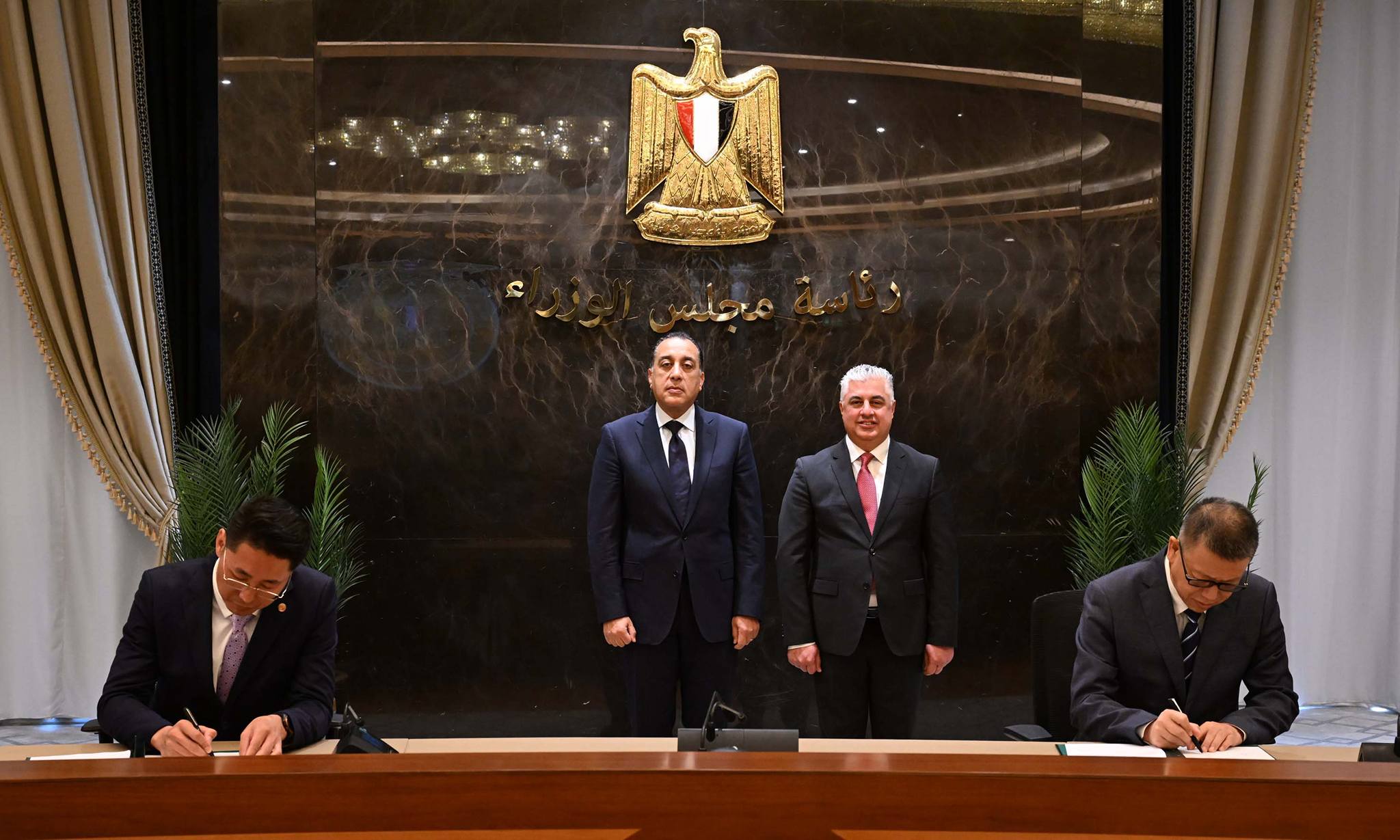
This critically important investment wave, announced by SCZONE Chairperson Walid Gamal El-Dien, is expected to generate 5,400 direct jobs and reflects a growing confidence from international companies in Egypt’s evolving investment landscape.The projects, all signed in collaboration with Teda-Egypt and three Chinese firms within the Sokhna Industrial zone, represent a strategic diversification of industries within the SCZONE, encompassing textiles, heavy industry, and advanced healthcare.
Prime Minister Mostafa Madbouly highlighted the pivotal role of the SCZONE’s robust infrastructure and logistical integration in supporting Egypt’s national strategy. This strategy focuses on deepening local manufacturing, expanding export markets, and creating lasting employment opportunities. The SCZONE isn’t just about attracting investment; it’s about building a resilient and diversified economy.
A Deep Dive into the New Projects
Let’s examine each project in detail:
1. Polyester and Polymer Complex – A $800 Million Investment in Textile Self-Sufficiency
Xin Feng Ming Group is spearheading the largest of the three ventures: an integrated industrial complex dedicated to polyester fibres and polymers. With an investment exceeding $800 million, this project is poised to significantly reduce Egypt’s reliance on imported textile inputs and strengthen its position in the global textile supply chain.
* Scale: Spanning 400,000 square meters, the complex will boast an impressive annual production capacity of 1.08 million tonnes.
* Phased Progress: The project will unfold in three phases:
* Phase 1 (May 2026 - Q4 2027): Construction and initial operations.
* Phase 2 (2028 – 2029): Expansion of production lines.
* Phase 3 (2029 – 2030): Full industrial integration, focusing on upstream manufacturing and raw material independence.
* Production & Revenue: The first two phases will focus on producing POY and DTY polyester yarn, with a combined annual capacity exceeding 360,000 tonnes and projected annual sales of $455 million. Crucially, 50% of the complex’s output will be earmarked for regional and international export markets.
* Strategic Impact: This complex addresses a critical gap in the Egyptian textile industry, fostering upstream manufacturing capabilities and reducing dependence on external suppliers.
2. Tire Manufacturing Facility – $190 Million to Meet Regional Demand
Chaoyang Langma Tyre is investing $190 million in a state-of-the-art complex dedicated to manufacturing heavy truck and passenger car tyres. This project will cater to the growing demand for tyres within Egypt and the wider region.
* Capacity: The facility is designed to produce 1 million heavy truck tyres (TBR) and 4.5 million passenger car tyres (PCR) annually.
* Phased Implementation:
* Phase 1 (April 2026): Focus on construction and establishing a TBR production line.
* Phase 2 (September 2028 – September 2029): Expansion of the TBR line and the addition of a PCR production line.
* Location: The 200,000 square meter site will provide ample space for current and future expansion.
* Job Creation: The project is expected to create 1,400 jobs.
3. Health Products and Nonwoven fabrics – $160 Million for a Growing Sector
Tongling Jieya Biotechnology is investing $160 million in an industrial complex focused on producing health products and nonwoven fabrics.This project taps into the growing demand for hygiene and healthcare products both domestically and internationally.
* Production Capacity: The facility will have an annual production capacity of 10 billion wet wipes, 2 billion baby diapers, and 100,000 tonnes
Keep reading