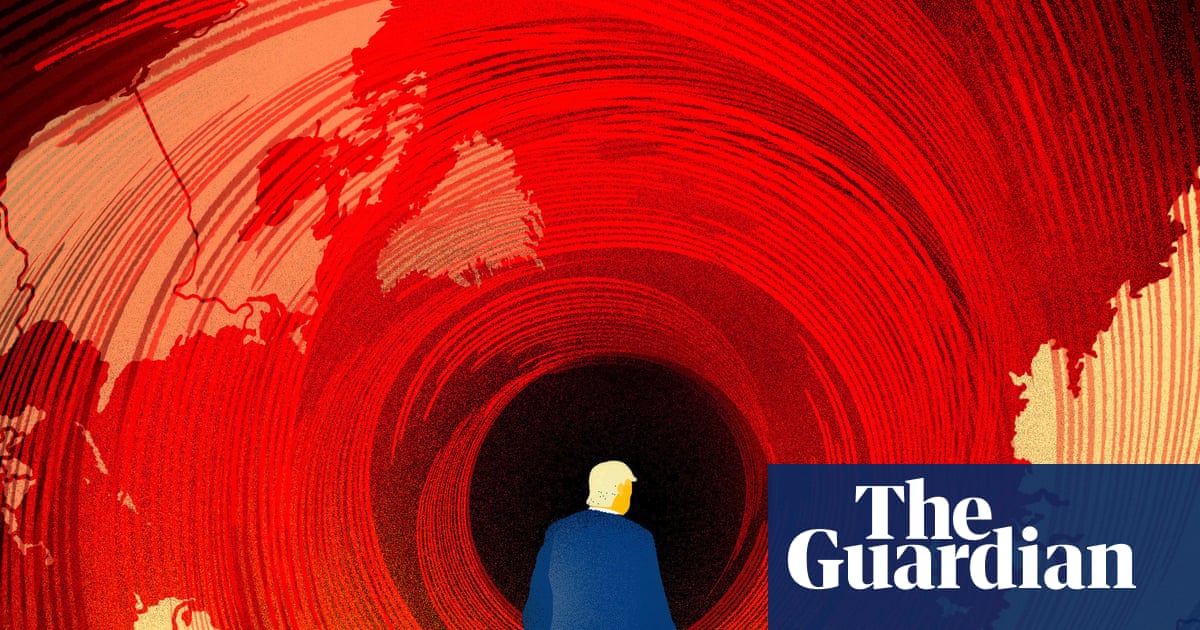
The Erosion of International order: From Post-9/11 Interventions to a Looming System of Disorder
The foundations of the international order, already weakened, are now facing an unprecedented crisis. the post-9/11 era marked a turning point, a moment where restraint and adherence to international law were increasingly sidelined in favor of unilateral action. the interventions in Afghanistan and iraq, framed as counter-terrorism efforts, were, in reality, ambitious - and ultimately destabilizing – regime change projects. This initial fracturing has as widened, fueled by a growing skepticism towards international law itself, and a resurgence of power politics.
For years, a quiet critique has simmered, particularly on the left. Some now welcome the perceived loss of credibility of international law, echoing arguments like those of Marxist scholar Perry Anderson, who contends it’s “neither truthfully international nor genuinely law.” This isn’t simply cynicism. It stems from a long-observed reality: powerful nations, most notably the United States, have consistently acted as if exempt from the constraints they impose on others.
The US, conspicuously absent from key international agreements like the Rome Statute (International Criminal Court) and the UN Convention on the Law of the Sea, has a history of prioritizing its own interests. Even the post-WWII vision wasn’t solely about collective security. As historical analysis reveals, Franklin D.Roosevelt aimed to forge a stability pact with Russia, not just a ”club of democracies.” More recently, the Biden administration’s favored phrase, “rules-based order,” has been interpreted – even by legal experts like Prof. John Dugard – as a revealing ambiguity,a subtle distancing from the more encompassing principles of international law.
This perception is actively exploited by geopolitical rivals. Russia, through Foreign Minister Sergei Lavrov, consistently accuses the US of promoting a “West-centric rules-based order” – a thinly veiled critique of selective application and double standards. China’s Foreign Minister Wang Yi echoed this sentiment in 2021, stressing that international rules must be “written by all” and “applicable to all countries,” rejecting any notion of exceptionalism.
The Global South‘s Perspective: A History of Violence Embedded in the Rules
The critique extends far beyond Washington’s rivals.For many nations in the Global South, the current “rules” aren’t neutral; they are deeply intertwined with a history of colonialism, violence, and racial hierarchy. Furthermore, some view the very attempt to apply legalistic principles like proportionality and distinction to the inherently brutal reality of war as a futile exercise.
This isn’t to say international law is without value. Voices like Christoph Heusgen, former advisor to Angela Merkel and chair of the Munich Security Conference, urgently remind us of what’s at stake. Responding to recent challenges to European values, heusgen emphasized the fragility of the existing order, arguing that a multipolar world requires a shared foundation based on the UN Charter and the Worldwide Declaration of Human Rights. He rightly points out that dismantling this order is far easier than rebuilding it.
A Descent into Disorder?
Though, a growing sense of pessimism pervades diplomatic circles. Seasoned Middle East diplomat Ansari paints a bleak picture, predicting a move ”from a world order to disorder.” He doesn’t foresee a simple shift to a multipolar system, or even a straightforward power-based international order. Instead,he anticipates a risky free-for-all: “a system where anybody can do whatever they like,regardless if they are big or small… As long as you have the ability to wreak havoc,you can do it because no one will hold you accountable.”
This is a chilling prospect. The erosion of international law isn’t merely an academic debate; it’s a practical threat to global stability. The consequences of a truly lawless international environment – unchecked aggression, escalating conflicts, and a breakdown of cooperation on critical issues like climate change and pandemic preparedness – are too grave to ignore.
Rebuilding Trust and Reinforcing the Framework
The path forward requires a renewed commitment to the principles of international law, not as a tool of Western dominance, but as a framework for collective security and peaceful coexistence. this means:
* Universal Adherence: Encouraging universal participation in key international institutions and treaties.
* Consistent Application: Applying international law consistently and impartially,holding all actors accountable for violations.
* Inclusive Governance: Reforming international institutions to ensure greater representation and voice for the Global South.
* Strengthening Multilateralism: Investing in diplomacy and multilateral cooperation as
Related reading
- Phoenix Species Project Secures $200 Million in Funding to Save Endangered Species
- Los Reyes Cartel Leader Arrested in Michoacán Amid Blockades and Violence
- BP Q2 Profit Hits $5.7 Billion Amid Trump Criticism of Big Oil Windfalls (time.news)
- Trump Administration Begins Systematic Appropriation of Japanese Manga (newsdirectory3.com)