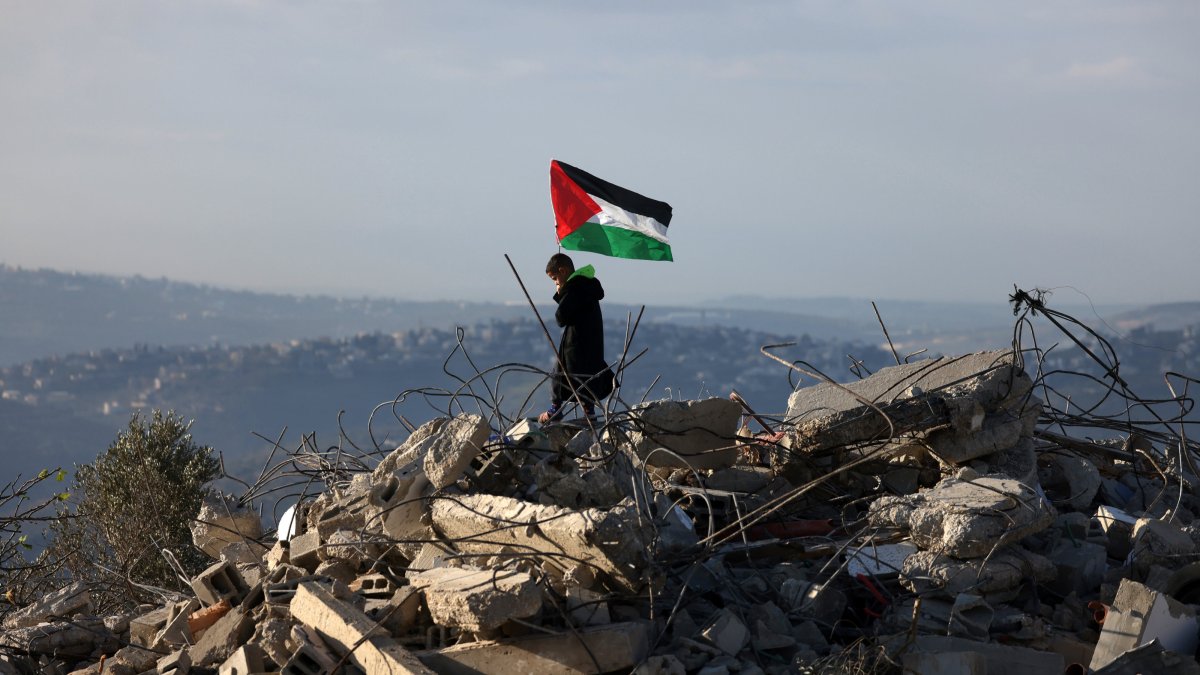
The Escalating Crisis of Israeli Settlements and the Role of U.S. Support
The expansion of Israeli settlements in the West Bank is a deeply concerning issue with meaningful implications for regional stability and the pursuit of a lasting peace. Most of the international community views these settlements, built on land occupied in the 1967 Six-Day War, as illegal under international law. Despite numerous United Nations Security Council resolutions calling for a halt to settlement activity, construction has not only continued but has demonstrably increased, notably with the advent of the current Israeli government.
unfortunately, this expansion isn’t occurring in a vacuum. Its actively facilitated by, and receives substantial support from, the United States. Understanding this dynamic is crucial to grasping the complexities of the Israeli-Palestinian conflict.
The Legal Landscape and Area Divisions
To fully understand the situation, you need to be aware of the framework established by the 1993 Oslo Accords. The West Bank was divided into three areas:
* area A: Under full Palestinian security and civil control.
* Area B: Under Israeli security control, with Palestinian administrative control.
* Area C: Under full Israeli administrative and security control, encompassing approximately 60% of the West Bank.
recent justifications for settlement expansion, like those offered by the U.S. Ambassador to Israel,often focus on construction occurring within Area C. This argument, however, sidesteps the fundamental issue: settlements, nonetheless of location, are considered a violation of international law and a significant obstacle to peace.
U.S. Support: Beyond Acquiescence
The U.S. role extends beyond simply not objecting to settlement activity. It actively defends and even encourages it.Consider the recent defense of 19 new settlement approvals and the confirmation of 35 construction permits issued since 2017. This level of support sends a clear message that Israel faces limited consequences for violating international norms.
This support manifests in several ways:
* Diplomatic Shielding: The U.S. frequently shields Israel from international condemnation at the UN.
* Financial Aid: Significant U.S. aid to Israel, while intended for various purposes, indirectly supports the infrastructure and security apparatus that enable settlement expansion.
* Political Rhetoric: Public statements minimizing the illegality or impact of settlements contribute to a permissive surroundings.
The Broader Implications: colonial Reality and Forced Displacement
The expansion of settlements isn’t simply about housing. It’s a intentional strategy to alter the demographic and geographic reality of the West Bank. Road infrastructure and checkpoints are strategically implemented to serve the settlements and solidify Israeli control.
This creates a de facto annexation of territory, effectively engineering a colonial reality. The ultimate goal, as many observers beleive, is to annex large portions of the West Bank, leading to the forced displacement of Palestinian communities. Settler violence, often unchecked, further exacerbates this situation, creating an environment of fear and intimidation.
What Needs to Happen
A genuine path toward peace requires a fundamental shift in approach. Real international pressure on Israel is paramount. This includes:
* Stronger Condemnation: Consistent and unequivocal condemnation of settlement activity from the international community.
* Targeted Sanctions: Imposing targeted sanctions on individuals and entities involved in settlement construction and related activities.
* Accountability Measures: Holding those responsible for settler violence accountable for their actions.
* Reaffirming International Law: A clear and consistent reaffirmation of the illegality of settlements under international law.
ultimately, protecting Palestinian civilians and preventing the further entrenchment of a colonial reality requires a commitment to upholding international law and a willingness to challenge the status quo. the current trajectory is unsustainable and threatens to extinguish any remaining hope for a just and lasting peace.
Related reading