Sudan Conflict Update: Peace Initiative Amidst Mounting Crisis – December 2025
The conflict in Sudan continues to escalate into its third year, creating one of the world’s moast dire humanitarian crises. As 2025 begins, a fragile hope emerges with a new peace initiative presented by Sudan’s Transitional Prime Minister to the UN Security Council. However, this call for peace is shadowed by recent security setbacks, escalating humanitarian needs, and the withdrawal of peacekeeping forces following a deadly attack. This article provides a extensive overview of the current situation, analyzing the peace efforts, the security landscape, and the deepening humanitarian crisis, offering insights into the path forward for Sudan.
A New Push for Peace: Sudan’s Initiative and the UN Response
On December 26th, 2025, Sudan’s Transitional Prime Minister presented a peace initiative to the UN security Council, signaling a renewed effort to end the devastating conflict. UN Secretary-General António Guterres acknowledged the initiative, emphasizing the “essential” need for lasting and inclusive peace as the conflict enters another year. The Secretary-General’s statement underscored the urgency of an immediate cessation of hostilities and the establishment of a durable ceasefire that safeguards Sudan’s unity and territorial integrity.
Crucially, Guterres urged sudanese actors to prioritize compromise and articulate a shared vision for a civilian-led transition. This highlights a critical point: enduring peace in Sudan hinges on a commitment to democratic governance and the inclusion of all stakeholders in the political process. The initiative’s success will depend on the willingness of the Sudanese Armed Forces (SAF) and the paramilitary Rapid Support Forces (RSF) to move beyond entrenched positions and engage in meaningful negotiations.
Supporting these efforts, the Secretary-General’s Personal Envoy for Sudan, Ramtane Lamamra, remains actively engaged in consultations with both parties. His role is vital in complementing the ongoing diplomatic efforts of Member States and regional partners, fostering an environment conducive to a comprehensive and sustainable resolution. This multi-faceted approach – combining national initiative with international support – represents the most promising pathway towards de-escalation.
security Setbacks and the UNISFA Withdrawal
The pursuit of peace is occurring against a backdrop of deteriorating security conditions on the ground. A important blow came with the recent attacks on the UN peacekeeping mission in Abyei (UNISFA), a strategically important oil-rich region bordering South Sudan.
On December 13th,2025,drone attacks targeted UNISFA’s logistics base in Kadugli,South Kordofan,resulting in the tragic deaths of six Bangladeshi peacekeepers and serious injuries to nine others. Following this devastating incident, UNISFA completed the evacuation of its Kadugli base, ending nearly 13 years of operations at the site. The remains of the fallen peacekeepers have been repatriated, and eight of the wounded are receiving medical care in Kenya.
The Kadugli base served as the headquarters of the Joint Border Verification and Monitoring Mechanism (JVMM), responsible for monitoring the demilitarized border zone established between Sudan and South Sudan in 2012. While UNISFA continues to operate from other locations – Tishwin and Abu Qussa – the withdrawal from Kadugli represents a significant setback in maintaining stability in the region. This incident underscores the increasing risks faced by peacekeepers operating in conflict zones and the challenges of protecting civilians amidst escalating violence. The attack also raises concerns about the potential for renewed border disputes between Sudan and South Sudan.
The Deepening Humanitarian Crisis: A Nation in Need
Beyond the immediate security concerns, the humanitarian situation in sudan is rapidly deteriorating. A recent UN-led assessment reveals a notably heightened vulnerability among female-headed households,who face reduced access to essential resources like cash,education,and water. These households are also disproportionately exposed to displacement and protection risks, highlighting the gendered dimensions of the crisis.
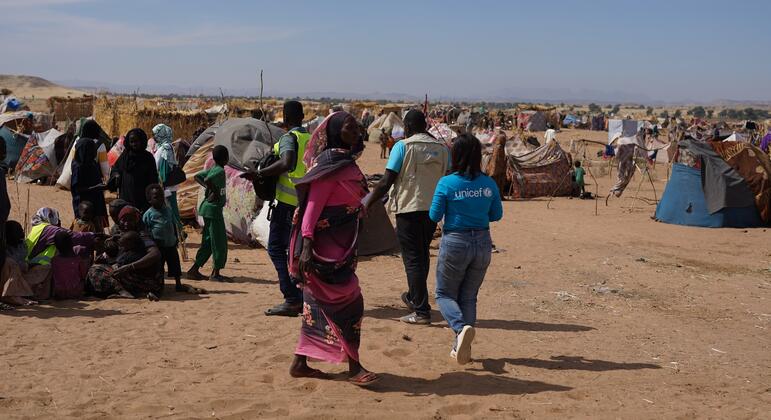
Senior UN officials warned the Security council on December 23rd, 2025, that intensified fighting, particularly in Kordofan and Darfur, is driving mass displacement, disrupting aid access, and exacerbating already catastrophic conditions for civilians. The conflict has triggered widespread famine conditions in several areas, threatening the lives of millions.
into its third year, the war between the SAF and the RSF has displaced millions of Sudanese citizens, both internally and as refugees in neighboring countries. The scale of displacement is overwhelming, straining the capacity of humanitarian organizations to provide adequate assistance. Access to affected populations remains a major challenge, with ongoing fighting and bureaucratic obstacles hindering the delivery of life-saving aid. The international community must urgently scale up
Related reading