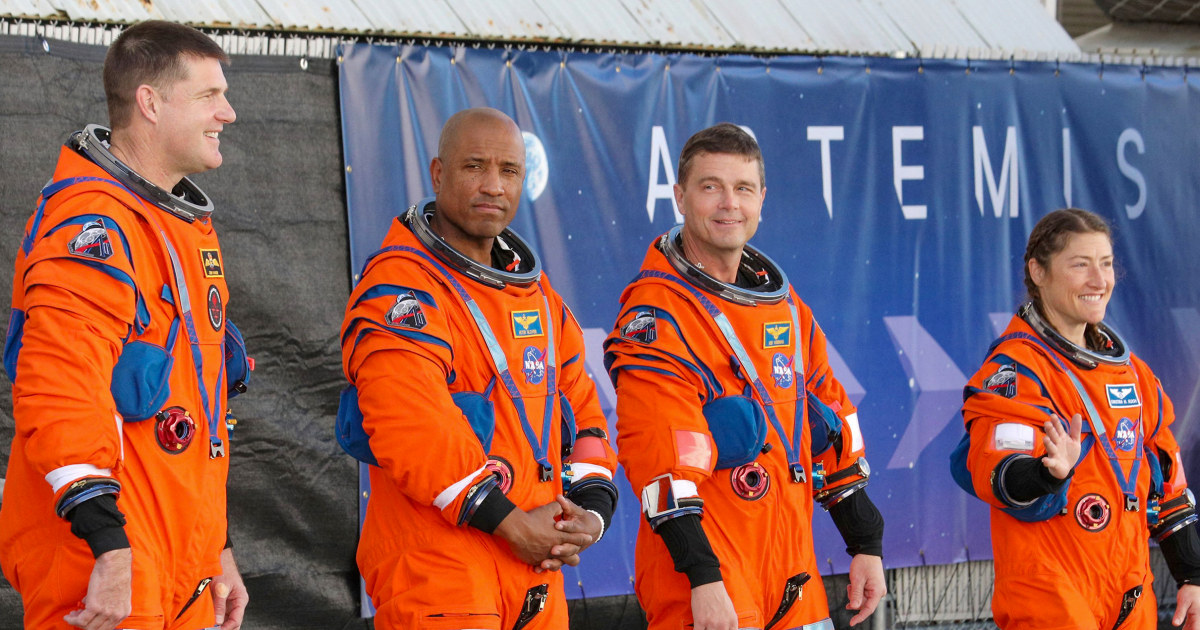
returning to the Moon: Artemis II adn the Dawn of a New Space Age
For the first time in over half a century, humanity stands on the cusp of returning to the Moon. NASA’s Artemis II mission, slated for launch as early as February, represents a pivotal moment – not just for the United States, but for the future of space exploration. This isn’t a repeat of the Apollo missions; it’s a bold step towards sustained lunar presence and, ultimately, journeys to Mars.
This mission is more than symbolic. It’s a critical test flight for NASA’s next-generation Space Launch System (SLS) rocket and orion spacecraft. These systems, developed over a decade wiht significant investment, will carry a crew of astronauts on a groundbreaking journey. Successfully navigating this mission is paramount to realizing long-term lunar ambitions.
Why Now? A Renewed Focus on Lunar Exploration
the drive to return to the Moon isn’t new, but its urgency has intensified. President Trump initially prioritized a lunar return, and the current administration continues to emphasize American leadership in space.This renewed focus is largely fueled by the escalating space race with China, who aim to land astronauts on the Moon by 2030.
But the motivations extend beyond geopolitical competition. We’re entering a new era of space exploration, one focused on establishing a lasting presence beyond Earth. The goal is to build lunar bases for extended stays, paving the way for eventual missions to Mars. As NASA’s new administrator, Jared Isaacman, recently stated, “Within the next three years, we are going to land American astronauts again on the moon, but this time with the infrastructure to stay.”
What Will Artemis II Achieve?
While Artemis II won’t involve a lunar landing, it’s a vital precursor. Here’s what this mission will accomplish:
* System Validation: Rigorous testing of the SLS rocket and Orion spacecraft with a human crew onboard.
* Life Support Evaluation: Assessing the performance of life-support systems in both Earth and lunar orbit.
* Docking Maneuver Practice: Honing the skills needed for future spacecraft docking procedures.
* Technology Presentation: testing critical technologies essential for long-duration space travel.
Think of it as a complete dress rehearsal for the challenges that lie ahead. NASA already completed an uncrewed test flight around the Moon with the Artemis I mission in 2022, providing valuable data. Artemis II builds on that success by adding the complexity - and invaluable insights – of a human crew.
Unlocking Lunar Secrets: The Scientific Promise
Beyond the technological advancements, Artemis II and subsequent missions hold immense scientific promise. For decades, lunar scientists have been eager to address enduring mysteries surrounding the Moon’s origins and evolution.
Consider these key questions:
* Formation: How did the Moon form from violent collisions in the early solar system?
* Water Source: Where did the Moon’s water originate?
* Early Solar System History: What can the Moon tell us about the conditions of our early solar system?
As planetary scientist Brett Denevi of the Johns Hopkins University applied Physics Laboratory explains, “Earth is kind of a terrible record-keeper.” Plate tectonics and weather have erased much of our planet’s earliest history. However, the Moon’s surface, largely unchanged for 4.5 billion years, offers a pristine record of the solar system’s infancy.
What Does This Mean for You?
The return to the moon isn’t just about rockets and astronauts. It’s about innovation, inspiration, and expanding the boundaries of human knowledge. The technologies developed for lunar missions will inevitably find applications here on Earth, impacting fields like medicine, materials science, and energy production.
Furthermore, this endeavor fosters a sense of collective ambition and reminds us of what we can achieve when we push the limits of exploration. You are witnessing the dawn of a new space age, one that promises to reshape our understanding of the universe and our place within it.
Resources for Further Exploration:
* NBC News: Historic Moon Mission Concludes Splashdown
* [NBCNews:SpaceEarthMoon[NBCNews:SpaceEarthMoon[NBCNews:SpaceEarthMoon[NBCNews:SpaceEarthMoon
Related reading