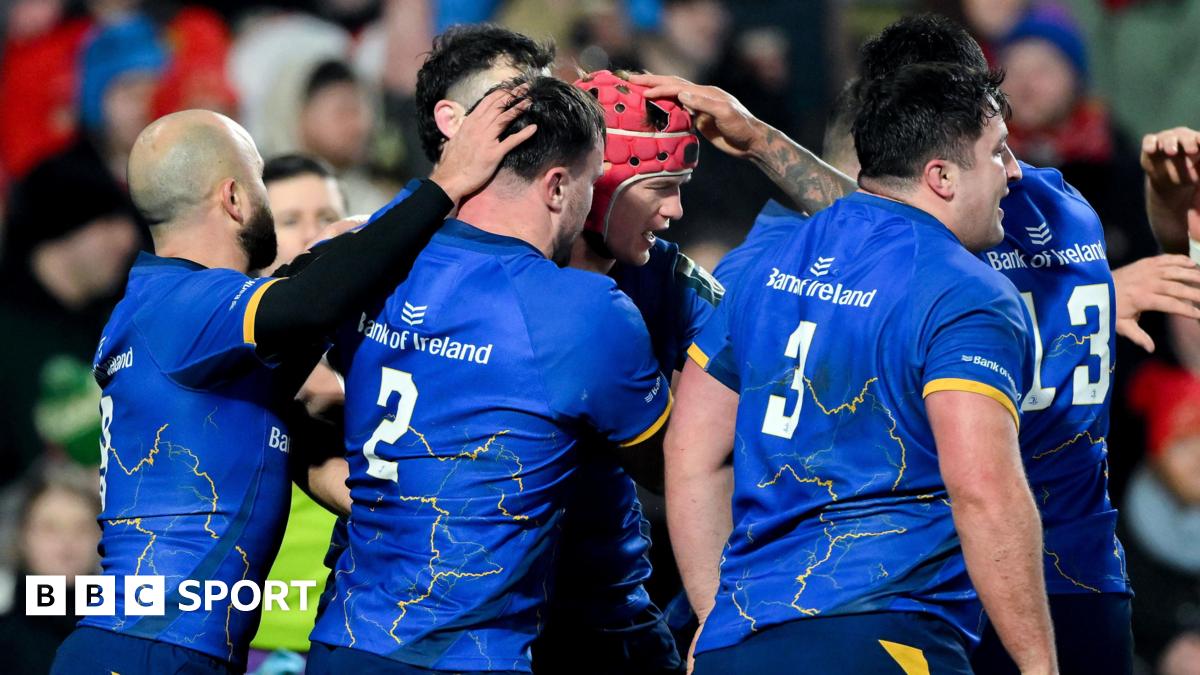
Leinster‘s Scrum Dominance Secures Victory Over Munster in Tight URC Clash
The December 27th United Rugby Championship (URC) encounter between Leinster and Munster delivered a compelling,if often disjointed,display of Irish provincial rugby. While the final scoreline didn’t reflect a blowout, Leinster’s control at the scrum proved to be the decisive factor, ultimately securing a hard-fought victory. This analysis delves into the key tactical battles, pivotal moments, and broader implications of this interprovincial derby.
first-Half Struggles: Munster’s Set-Piece Woes
From the opening whistle, Leinster established a clear advantage in the scrum. Former Leinster player Michael Ala’alatoa, starting at tight-head for Munster, appeared to struggle against the Leinster front row. This created consistent pressure and allowed Leinster to relieve pressure effectively.
Munster, despite enjoying meaningful territory, lacked the clinical edge needed to capitalize. Inaccurate kicking from Jack Crowley and a costly knock-on from Mike Haley following a Tom Farrell pass stifled promising attacks. Thes errors prevented Munster from building sustained pressure and converting opportunities into points.
Leinster, while not flawless in attack, managed to capitalize on their set-piece dominance. A well-executed line-out following a scrum penalty led to the game’s first try, finished by Van der Flier. This early score established a 7-0 lead that Munster would struggle to overcome.
A Stop-Start Second Half & Late Munster Push
The second half mirrored the first in its fragmented nature. Both Harry Byrne and Crowley exchanged penalties, keeping the scoreline tight. Though,the game lacked the fluidity and attacking spark expected of these two Irish powerhouses.
As both teams made substitutions, the contest felt increasingly disjointed. leinster extended their lead with another Byrne penalty, but a late try from replacement Dan Kelly in the 70th minute injected some much-needed excitement. Despite late possession and a resolute effort, Munster couldn’t breach the Leinster defense for the equalizing score.
ultimately, the game’s lack of attacking quality was a fitting reflection of the overall contest. While intensity and physicality were present, the inability to consistently string together attacking phases proved costly for Munster.
Key Takeaways & Strategic Observations
* Scrum Dominance is King: Leinster’s superiority at the scrum wasn’t just a technical advantage; it was a strategic weapon. It provided a consistent platform for attack and a reliable means of relieving pressure.
* kicking Accuracy Matters: crowley’s inconsistent kicking game hampered Munster’s ability to gain territorial advantage. In tight contests,accurate kicking is crucial for pinning the opposition deep in their own half.
* Clinical Finishing is Essential: Munster’s inability to convert territory into points proved decisive. Small errors, like the Haley knock-on, can have a significant impact on the outcome of a game.
* Impact of Substitutions: While substitutions are often intended to inject fresh energy, they sometimes contributed to the game’s disjointed flow.
Looking Ahead: Interprovincial rivalries Continue
Both Leinster and Munster now turn their attention to the next round of URC fixtures.Munster travels to Ulster on Friday, while leinster hosts Connacht the following day. These interprovincial derbies are always fiercely contested, and both teams will be looking to build on their recent performances. You can expect another round of intense battles and tactical intrigue as the URC season progresses.
Timeless Insights: The Enduring Value of Set-Piece Control
Throughout rugby history, dominance at the set-piece has consistently been a hallmark of successful teams.While attacking flair and defensive prowess are vital, a strong scrum and line-out provide the foundation for sustained pressure and territorial control.
This isn’t merely about brute force. It’s about technique,cohesion,and a relentless focus on detail. Teams that invest in their set-piece often reap the rewards in the form of penalties,scoring opportunities,and a psychological advantage over their opponents. The Leinster-Munster clash serves as a potent reminder of this enduring truth.
Frequently Asked Questions (FAQ)
1. What was the primary factor in Leinster’s victory over Munster?
Leinster’s dominant scrum play was the key factor. They consistently won penalties and gained territorial advantage through their set-piece,putting Munster under
Keep reading