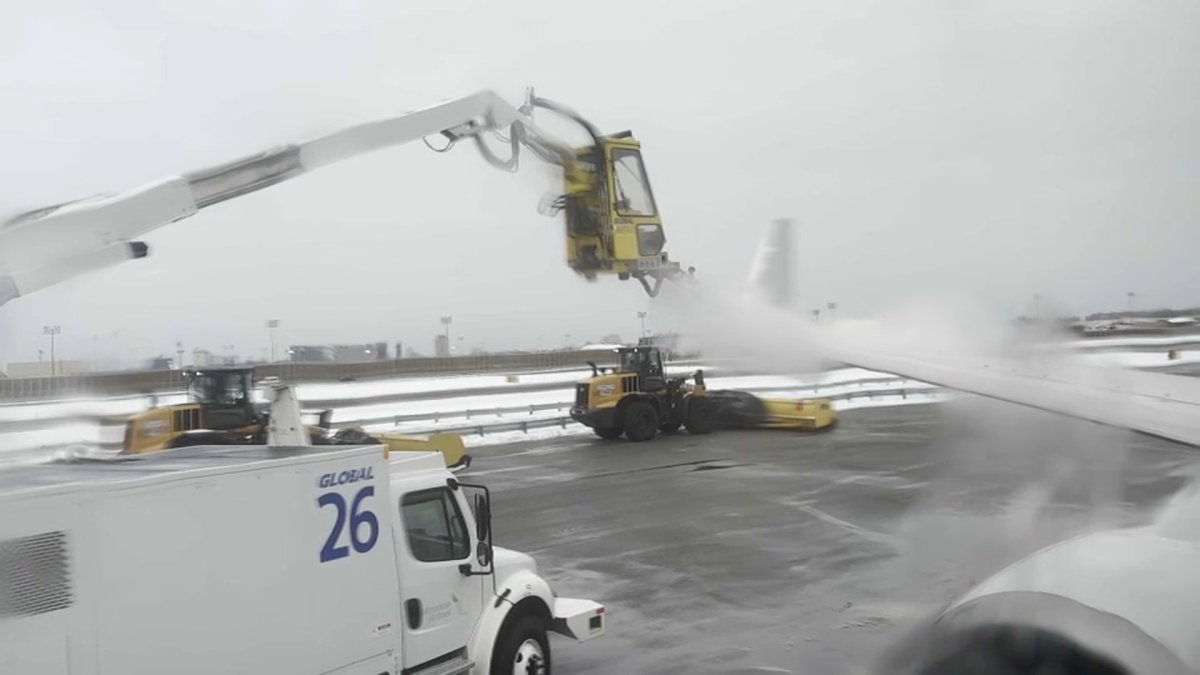
The Critical Role of Aircraft De-Icing: Ensuring Safe Winter Travel
The recent snowstorm impacting the Tri-State Area, coinciding with a peak travel period, highlighted a crucial, often unseen, aspect of air travel: aircraft de-icing. this process isn’t merely cosmetic; it’s a basic safety procedure that protects passengers and crew. But what exactly is de-icing, why is it so important, and what are the evolving challenges facing airlines and airports as winter weather becomes more unpredictable? let’s delve into the science and logistics behind keeping planes safely airborne during freezing conditions.
Understanding the Threat: Why De-Icing is Essential
Did You Know? Even a small amount of frost or ice on a wing can significantly disrupt airflow, reducing lift and increasing drag. This can critically impact an aircraft’s ability to take off and maintain control.
Ice,snow,and freezing rain aren’t just inconveniences; they pose a serious aerodynamic threat. These contaminants disrupt the smooth airflow over an aircraft’s wings and control surfaces. This disruption reduces lift – the force that keeps the plane in the air – and increases drag, making it harder for the aircraft to accelerate and climb. The consequences can range from delayed flights to, in the most severe cases, catastrophic accidents.
The Science Behind De-Icing Fluids
The primary weapon against winter’s grip on aircraft is a specialized fluid containing propylene glycol. This isn’t simply antifreeze; it’s a carefully engineered solution with a lower freezing point than water.
Here’s a breakdown of how it works:
* Warm Water: Initially, warm water is sprayed to dislodge loose snow and ice.
* Type I Fluid (De-icing Fluid): This fluid, typically orange in color, is applied to remove existing ice and snow. It has a relatively short holdover time (HOT).
* Type IV fluid (Anti-icing Fluid): this fluid, often clear or yellow, provides a protective layer that prevents ice formation for a longer duration.It’s applied after de-icing.
Pro Tip: The “holdover time” (HOT) is the estimated length of time a de-icing fluid will prevent the formation of ice.HOTs vary based on fluid type,precipitation intensity,and temperature. Airlines and ground crews meticulously monitor these factors.
The propylene glycol works by absorbing water and lowering the freezing point,allowing any remaining ice to easily shed from the aircraft’s surfaces.It’s a complex process, requiring precise application and adherence to strict guidelines.
The De-Icing Process: A Step-by-Step Look
De-icing isn’t a rapid spray-and-go operation. It’s a methodical process involving specialized equipment and highly trained personnel.
- Inspection: Ground crews visually inspect the aircraft for contamination.
- De-Icing: Type I fluid is applied to remove existing ice and snow.
- Anti-Icing: Type IV fluid is applied to prevent further ice accumulation.
- Final Inspection: A final inspection ensures all surfaces are clean and the fluid is applied correctly.
- Takeoff: The aircraft must take off within the specified holdover time.
Typically, four trucks surround a plane, systematically spraying the fluid onto wings, tail, and fuselage. The entire process can take anywhere from 10 to 30 minutes per aircraft, depending on size and the severity of the weather.
Recent Challenges & Innovations in De-Icing
The demand for de-icing services has been steadily increasing, driven by climate change and more frequent extreme weather events. United Airlines recently set a record, de-icing 471 planes in a single day at its Denver hub earlier this month, demonstrating the scale of the operation. This surge in demand presents several challenges:
* Fluid Shortages: Supply chain disruptions can lead to shortages of de-icing
Keep reading