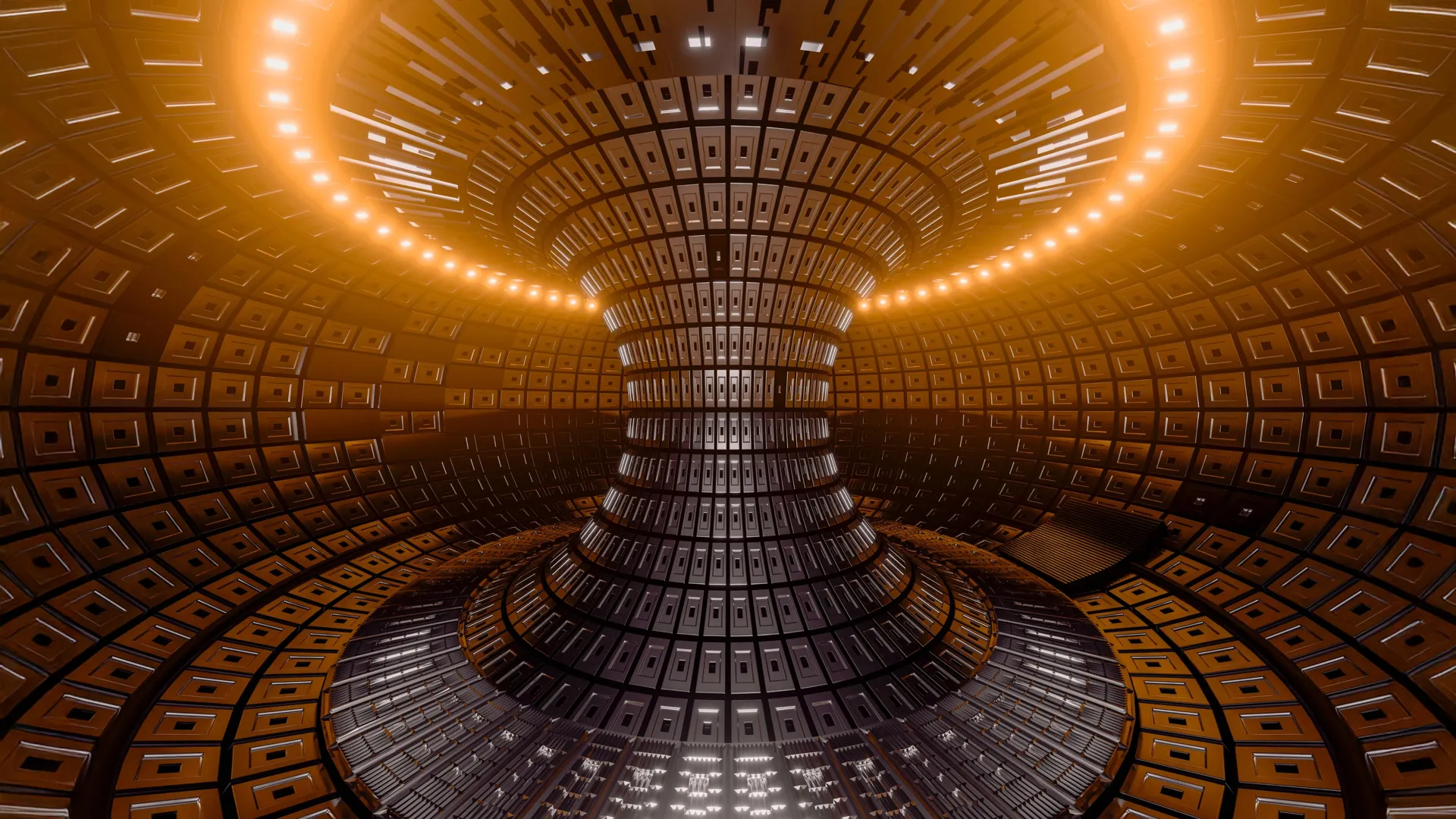
Fusion reactors Offer New Hope in the Hunt for dark Matter axions
For decades, physicists have been grappling with one of the universe’s biggest mysteries: dark matter. Now, a team led by University of cincinnati physicist Jure Zupan believes they’ve cracked a crucial piece of the puzzle - a viable theoretical method for producing axions, a leading dark matter candidate, within fusion reactors. This breakthrough, published in the Journal of High Energy Physics, addresses a challenge so complex it even stumped the brilliant, fictional minds of Sheldon Cooper and Leonard Hofstadter on the hit CBS sitcom, “The Big Bang Theory.”
The Enigma of Dark Matter & the Promise of Axions
Dark matter constitutes the vast majority of matter in the universe – estimated to be around 85% – yet remains stubbornly invisible. Unlike ordinary matter, it doesn’t interact with light, making direct observation impossible. Its existence is inferred through its gravitational effects on visible matter, like the unusual rotation of galaxies and the movement of stars within them.
The leading hypothesis suggests dark matter is composed of incredibly lightweight particles called axions.these hypothetical subatomic particles were first proposed to solve a different problem in particle physics, but their properties align remarkably well with the observed characteristics of dark matter. Successfully detecting or, crucially, creating axions is therefore a top priority in modern physics.
Why Fusion Reactors? A Novel Production Pathway
The challenge lies in how to find, or even create, these elusive particles. Zupan and his international team – including researchers from Fermi National Laboratory, MIT, and the Technion-Israel Institute of Technology - focused on a promising avenue: fusion reactors. Specifically, they examined designs utilizing deuterium and tritium fuel within a lithium-lined vessel, a technology currently under progress through a major international collaboration in southern France.
“Fusion reactors are designed to generate energy through nuclear fusion, producing a massive flux of neutrons in the process,” explains Zupan. “We realized these neutrons, interacting with the reactor’s materials, could trigger nuclear reactions capable of creating particles associated with the ‘dark sector’ – including axions and axion-like particles.”
the team identified two primary mechanisms for axion production within the reactor:
* Neutron Interactions: Neutrons colliding with the lithium lining initiate nuclear reactions, potentially creating new particles, including axions.
* Bremsstrahlung Radiation: As neutrons slow down through collisions, they release energy in the form of “braking radiation” (bremsstrahlung). This process can also lead to the creation of axions.
This approach differs substantially from previous theoretical models, which often focused on axion production within stars like our sun. In fact, it was the limitations of replicating solar axion production in a terrestrial setting that presented the roadblock for Sheldon and Leonard in “The Big Bang Theory.” As Zupan points out, “The general idea from our paper was discussed in the show years ago, but they couldn’t make the calculations work. They correctly identified that the conditions within the sun are far more conducive to axion production using the same processes.”
Overcoming the “Sad Face” Equation: A New Theoretical Framework
The show’s writers cleverly foreshadowed this challenge. An episode featured a whiteboard displaying an equation comparing axion detection rates from the sun versus a fusion reactor, followed by a disheartened “sad face” drawn beneath the calculations.the equation highlighted the difficulty of achieving sufficient axion production in a reactor using solar-like mechanisms.
Zupan’s team circumvented this issue by identifying different production processes within the reactor surroundings.”The sun is a massive, powerful energy source. Though, we’ve shown that by leveraging the unique conditions within a fusion reactor – specifically the high neutron flux and specific nuclear interactions – we can create a viable pathway for axion production.”
Implications for Dark Matter Research & Beyond
This theoretical framework represents a meaningful step forward in the search for dark matter. It provides a concrete, testable prediction: fusion reactors, once operational, could serve as a source for detecting these elusive particles.
“This isn’t just about confirming a theory,” Zupan emphasizes. “If we can successfully produce and detect axions, it will revolutionize our understanding of the universe, providing insights into the nature of dark matter and the fundamental laws of physics.”
The research also highlights the unexpected intersection of popular culture and cutting-edge science. “That’s why it’s fantastic to watch ‘The Big Bang Theory’ as a scientist,” Zupan concludes. “It demonstrates a genuine thankfulness for the complexities and challenges of our field, and often incorporates real scientific concepts in a clever and engaging way.”
Keywords: Dark Matter, Axions, Fusion Reactors, Particle Physics, Journal of High energy
Keep reading