Navigating a Fragile Peace: The Future of Gaza, Hamas Disarmament, and Palestinian Independence
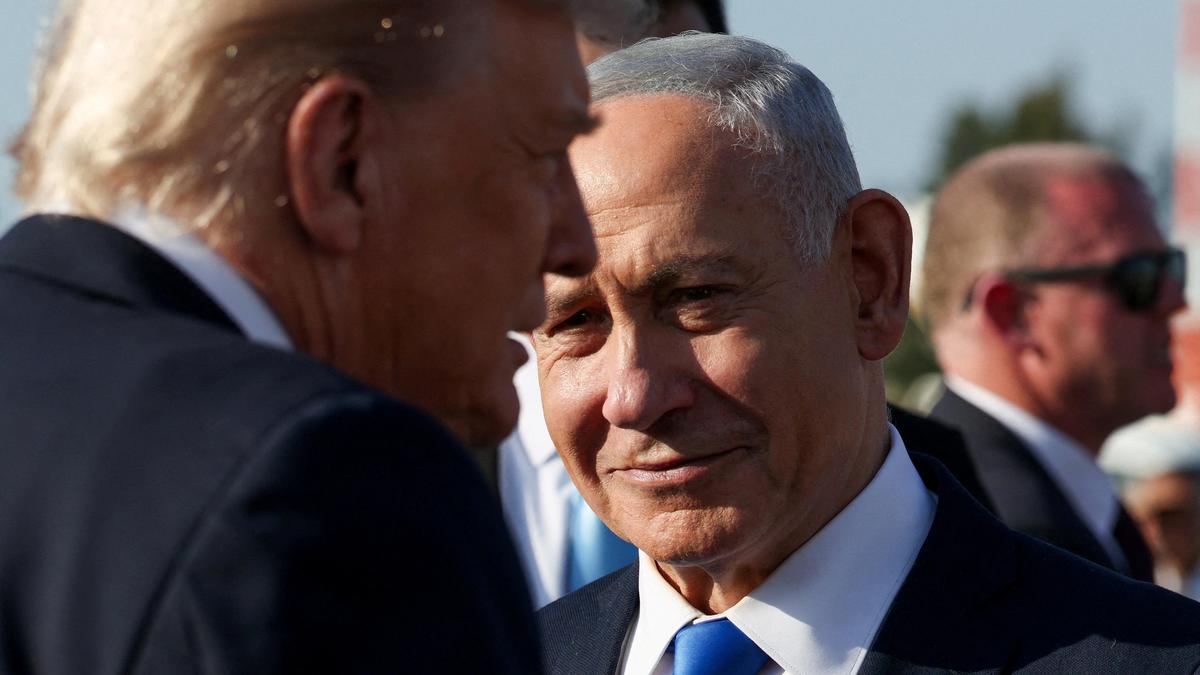
The recent meeting between former U.S.President Donald Trump and Israeli Prime Minister Benjamin Netanyahu marks a critical juncture in the ongoing efforts to stabilize Gaza and chart a path towards a lasting resolution of the Israeli-Palestinian conflict. While the initial ceasefire holds, significant hurdles remain in transitioning to a lasting peace, encompassing reconstruction, security, and ultimately, a viable pathway to Palestinian independence. This analysis delves into the complexities of the current situation, examining the proposed plans, the key players involved, and the considerable challenges that lie ahead.
The Trump Plan: A framework Facing Implementation challenges
The core of the current strategy revolves around a plan initially proposed during Trump’s presidency, now being revisited with his return to political influence. This plan envisions a multi-faceted approach, anchored by the establishment of a “Board of Peace” to oversee Gaza’s reconstruction under a renewable two-year U.N. mandate. The board,expected to be announced – potentially as early as January – represents a crucial first step,but its composition and authority remain points of contention.
Beyond reconstruction,the plan hinges on two key elements: disarming Hamas and establishing an “International Stabilisation Force” (ISF). However, both initiatives are currently stalled, highlighting the deep-seated distrust and conflicting priorities among stakeholders.
Disarming Hamas: A Complex Negotiation
The issue of Hamas’s disarmament is arguably the most sensitive and challenging aspect of the plan. While Hamas has signaled a willingness to discuss “freezing or storing” its weapons, it maintains its right to armed resistance as long as Israeli occupation continues. This position underscores the fundamental link between security concerns and the pursuit of Palestinian statehood.
U.S. officials have floated potential incentives, including a ”buy-back” program spearheaded by Mideast envoy Steve witkoff, to encourage the relinquishment of weapons. However, the success of such a program depends on establishing a credible framework for long-term security guarantees and addressing the underlying grievances that fuel militancy.
Egypt, Qatar, Saudi Arabia, and Turkey are actively advocating for a negotiated deal that includes Hamas disarmament alongside a significant Israeli withdrawal from Gaza. This reflects a regional consensus that a purely security-focused approach, without addressing the political dimensions of the conflict, is unlikely to yield lasting results.
The International Stabilisation Force: A Mandate in Dispute
the proposed ISF, intended as a multinational body to maintain security, is facing significant resistance. A “huge gulf” exists between the U.S.-Israeli vision of the ISF having a “commanding role” – including disarming militant groups - and the perspectives of other key nations. Many countries being considered for troop contributions fear that such a mandate would effectively transform the force into an ”occupation force,” undermining its legitimacy and potentially exacerbating tensions.
This divergence in understanding necessitates a careful recalibration of the ISF’s mandate, focusing on stabilization, border security, and supporting a Palestinian security apparatus, rather than solely on disarmament. A collaborative approach, involving regional stakeholders and international consensus, is essential to build a force that is perceived as impartial and committed to a peaceful resolution.
Reconstruction and the Role of the UAE
The scale of destruction in Gaza is immense, with entire neighborhoods reduced to rubble. Reconstruction is not merely a humanitarian imperative but a critical component of long-term stability. The United Arab Emirates has reportedly agreed to fund reconstruction efforts,including the progress of new communities.
However,a proposed U.S. map obtained by the Associated Press, outlining “UAE Temporary Emirates housing complex” and a “U.S. planned community area” within an Israeli-controlled zone, raises concerns about the potential for creating permanent settlements and altering the demographic landscape of Gaza. While presented as a suggestion,this plan underscores the need for transparency and ensuring that reconstruction efforts are aligned with the goal of establishing a sovereign Palestinian state.
Looking Ahead: A Path Forward
The path to a sustainable peace in Gaza remains fraught with challenges.The success of the current efforts hinges on several key factors:
* Addressing the Root Causes: A lasting solution requires addressing the underlying political and economic grievances that fuel the conflict, including the Israeli occupation, the blockade of Gaza, and the lack of a viable pathway to Palestinian statehood.
* Regional Cooperation: The active involvement and cooperation of Egypt, Qatar, Saudi Arabia, and Turkey are crucial for mediating negotiations, ensuring regional stability, and fostering a sense of shared responsibility.
* International Consensus: Building a broad international consensus on the ISF’s mandate and the overall framework for peace is essential to ensure its legitimacy and sustainability.
* Transparency and accountability: Transparency in reconstruction efforts and accountability for all parties involved
Keep reading