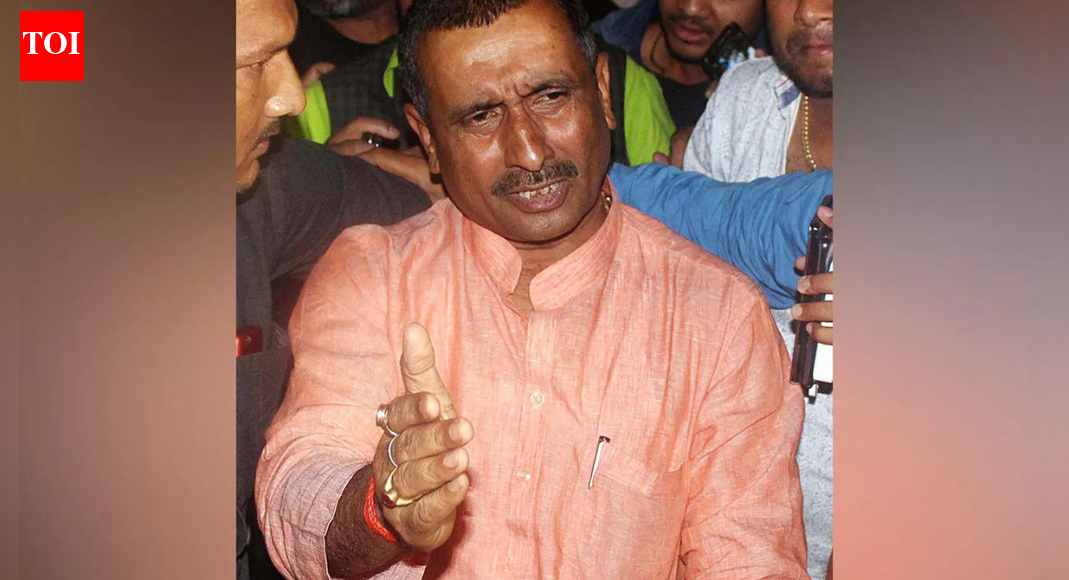
The Unwavering Pursuit of justice: A Daughter’s Plea in a Landmark Case
The recent Supreme Court proceedings surrounding former MLA Kuldeep Singh Sengar have brought a harrowing case of sexual assault and its aftermath back into the national spotlight. Beyond the legal complexities, this story is a powerful testament to a family’s eight-year struggle for justice, a struggle marked by silence, intimidation, and a profound faith in the Indian legal system. This article delves into the details of the case, the victim’s family’s experience, and the critical legal questions now before the court.
A Case Rooted in Tragedy
Sengar is currently serving a 10-year sentence in a separate case related to the custodial death of the rape survivor’s father.This initial conviction, while meaningful, didn’t address the core crime: the brutal sexual assault of a minor in 2017. The current legal battle centers on weather Sengar should face stricter punishment under the Protection of Children from Sexual Offences (POCSO) act,a law designed to provide enhanced protection and harsher penalties for crimes against children.
A Family’s Silent Endurance
What sets this case apart is the victim’s sister, Ishita Sengar‘s, poignant letter addressed to the ”Hon’ble Authorities of the Republic of India.” For eight years, her family chose not to engage in public protests, a decision often misconstrued as a sign of power.Instead, Ishita explains, they believed in the institutions designed to deliver justice.
“We chose silence not becuase we were powerful, but because we believed in institutions,” she wrote. “we waited because we believed that truth does not need spectacle.” This quiet dignity, though, masked a profound ordeal.
* Financial Strain: The pursuit of justice has “drained” the family financially.
* Emotional Toll: The trauma has taken a devastating emotional toll on everyone involved.
* Physical Exhaustion: Years of navigating the legal system have been physically exhausting.
Despite being labeled “powerful” due to her father’s political position, Ishita poignantly asks, “What kind of power leaves a family voiceless for eight years?”
Facing Intimidation and Online Abuse
The family’s silence wasn’t born of strength alone. Ishita reveals she endured relentless online harassment, including explicit rape and death threats, simply for existing as the victim’s sister. This constant abuse ultimately silenced her public voice.
“Over these years,I have been told countless times that I should be raped,killed,or punished simply for existing,” she wrote,describing the abuse as “daily” and “relentless.” This highlights the insidious ways in which victims and their families are often re-victimized in the pursuit of justice.
A Warning About Public Pressure and Due Process
Ishita also raises a crucial concern: the potential for public outrage to overshadow facts and due process. She asks a vital question: “If pressure and public frenzy begin to overshadow evidence and due process, what protection does an ordinary citizen truly have?” This is a critical point, reminding us that justice must be blind and based on evidence, not swayed by emotion.
her letter isn’t a plea for sympathy, but a demand for justice. “We are not asking for a favour. We are asking for justice as we are human,” she asserts, urging the law to function “without fear” and evidence to be examined ”without pressure.”
The Legal arguments and supreme Court Intervention
During the Supreme Court hearing, Solicitor General Tushar Mehta argued that Sengar’s position as an MLA at the time of the crime warranted stricter punishment under the POCSO Act, given his “dominant position” over the victim.
The bench also expressed concern about potentially excluding lawmakers from the definition of “public servant” under POCSO. This could inadvertently create a legal loophole, granting MPs and MLAs a degree of immunity from the full force of the law. This is a significant legal question with far-reaching implications for the protection of children.
Hope Rekindled and the Path Forward
The rape survivor’s mother has expressed renewed hope following the Supreme Court’s intervention. The court has issued notice to Sengar, requesting a response within four weeks, with a further hearing scheduled for the last week of January.
What This Case Means for You
This case isn