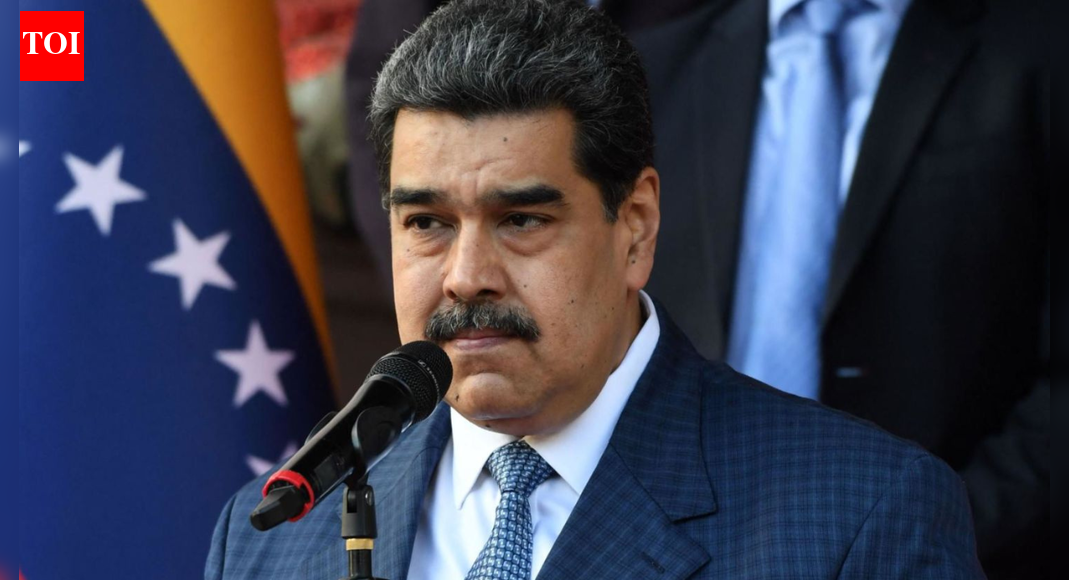
The Capture of Nicolás Maduro: A Dramatic Shift in Venezuela‘s Political Landscape
The world watched with stunned disbelief as reports emerged on January 3, 2026, detailing the capture of Venezuelan President Nicolás Maduro and his wife by U.S. military forces. This unprecedented event, confirmed by the U.S. government, marks a pivotal moment in Venezuela’s tumultuous political history and raises critical questions about the future of the nation. Was this a meticulously planned operation, a negotiated surrender, or a combination of both? this article delves into the details of the capture, the circumstances leading up to it, and the potential ramifications for Venezuela and the wider region.
the Operation: A Swift and Decisive Action
According to statements released by former President Donald Trump, the operation was executed by the U.S. Army’s Delta Force, an elite special forces unit specializing in high-risk covert missions. Trump asserted that maduro and his wife were apprehended from a heavily fortified location, suggesting a sophisticated intelligence gathering and tactical execution.
What’s particularly striking is the reported lack of significant resistance. Despite Venezuela possessing an arsenal capable of challenging such an incursion, reports indicate U.S. forces encountered minimal opposition from Venezuelan air defenses or ground troops. This has fueled speculation about the level of support - or lack thereof – Maduro received from within his own military.
A Negotiated Exit? Opposition Claims a Pre-Arranged Surrender
Promptly following the confirmation of the capture, Venezuelan opposition leaders proposed a compelling alternative narrative: a negotiated exit strategy. This theory suggests that Maduro, facing mounting internal and external pressure, may have secretly agreed to surrender in exchange for certain concessions. While the specifics remain unclear, the swiftness and relative ease of the operation lend credence to this possibility.
Trump, however, vehemently denied any negotiation took place. He stated he rejected a last-minute offer from Maduro to discuss terms,declaring,”I didn’t want to negotiate. I said, ‘Nope, we got to do it.'” this conflicting details adds another layer of complexity to an already opaque situation.
Maduro’s Growing Paranoia and Preparations for conflict
In the months leading up to his capture, Maduro reportedly exhibited increasing paranoia regarding potential U.S. intervention. Sources indicate he engaged in a series of increasingly desperate measures to protect himself, including:
* Rotating Sleeping Locations: Regularly changing his sleeping arrangements to avoid location tracking.
* Frequent Phone Changes: Switching mobile phones to evade surveillance.
* Increased Cuban Intelligence Presence: Relying heavily on Cuban counterintelligence officers,fearing betrayal from within the venezuelan military.
* Reduced Public Appearances: Significantly decreasing the number of scheduled events and live broadcasts, likely to minimize his exposure.
These actions paint a picture of a leader anticipating – and fearing – a direct challenge to his authority. They also raise questions about the effectiveness of his security apparatus and the extent to which his inner circle remained loyal.
the Question of Bodyguards: Where Was the Security detail?
Perhaps the most puzzling aspect of the capture is the apparent absence of Maduro’s security detail. A president, particularly one facing perceived threats, is typically surrounded by layers of protection. The lack of reported clashes or resistance from his bodyguards raises serious questions about their loyalty, preparedness, or potential complicity in the operation.Were they deliberately stood down? Were they unaware of the impending raid? These are critical questions that demand answers.
Ramifications and the Road Ahead
The capture of Nicolás Maduro has far-reaching implications for Venezuela and the region. Maduro and his wife are expected to face indictment in the U.S., the charges of which remain undisclosed as of this writing. The immediate future of Venezuela is uncertain, but several potential scenarios are emerging:
* Transitional Government: The establishment of a transitional government, potentially led by opposition figures, to oversee a return to democratic principles.
* Power Vacuum: A potential power vacuum, leading to instability and further conflict within Venezuela.
* Increased Regional Involvement: Greater involvement from regional powers, such as Colombia, Brazil, and the United States, in shaping Venezuela’s future.
The United States’ actions have undoubtedly altered the geopolitical landscape of Latin America. The long-term consequences will depend on how the situation unfolds in the coming weeks and months. Council on Foreign Relations – Venezuela provides ongoing analysis of the situation.
Looking Ahead: The Need for a Lasting Solution
The capture of Maduro is not an end in itself, but rather a potential catalyst for positive change. A sustainable solution for
Related reading
- US Interest Rate Path Remains Uncertain Amid Inflation and Geopolitical Tensions: Korea Finance Ministry
- Toronto FC II vs Columbus Crew II: Predictions, Analysis & Betting Tips – H2H Stats, Team Form & Key Trends
- Trump Unveils $22.5 Billion Plan to Overhaul Dulles Airport Facilities (time.news)
- The Senate Blue Slip, Explained: The Custom Trump Wants Gone (daybreakwire.com)