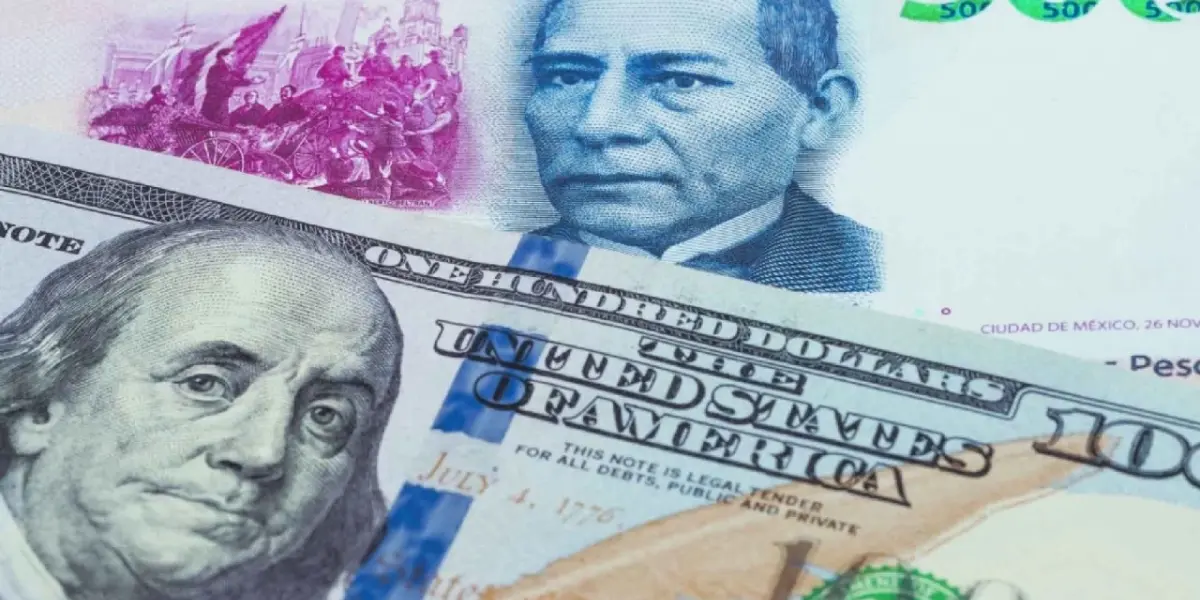
The Mexican peso experienced a slight depreciation against the U.S. dollar last week, marking its second consecutive week of decline, as the greenback strengthened amid uncertainty surrounding U.S. foreign policy. Understanding the factors influencing the Mexican peso‘s performance is crucial for investors adn businesses alike. Let’s delve into the details and explore what this means for you.
Peso Performance: A Recent Overview
According to data from the Bank of Mexico (Banxico), the Mexican currency closed at 17.9836 pesos per dollar on January 12, 2026, representing a modest 0.01% or 0.10 cent appreciation for the day. However, when looking at the weekly comparison, the peso depreciated by 0.39%, signifying its second week of losses against the dollar.
| Currency | Weekly Change |
|---|---|
| Russian Ruble | +1.72% |
| Colombian Peso | +1.65% |
| Chilean Peso | +1.38% |
| israeli Shekel | +1.29% |
| Brazilian Real | +1.09% |
| Argentine Peso | +0.68% |
| Hungarian Florin | -1.35% |
| Canadian Dollar | -1.29% |
| Czech Koruna | -1.27% |
Despite the recent dip, the peso has shown a year-to-date appreciation of 0.14% through the first nine days of 2026. Interestingly, several other currencies experienced varied fortunes during the same period.
Global Currency Trends and the Dollar Index
Several currencies outperformed the peso last week. The Russian ruble led the gains with a 1.72% increase, followed by the Colombian peso (1.65%), the Chilean peso (1.38%), the Israeli shekel (1.29%),the Brazilian real (1.09%), and the Argentine peso (0.68%). Conversely, the Hungarian florin, Canadian dollar, Czech koruna, Swiss franc, South Korean won, and Polish zloty all experienced depreciation.
The U.S. Dollar Index, which measures