Syria Regains Control of Kurdish-held Territories Amidst Shifting Dynamics and Limited recognition
Published - January 18,2026 09:57 am IST
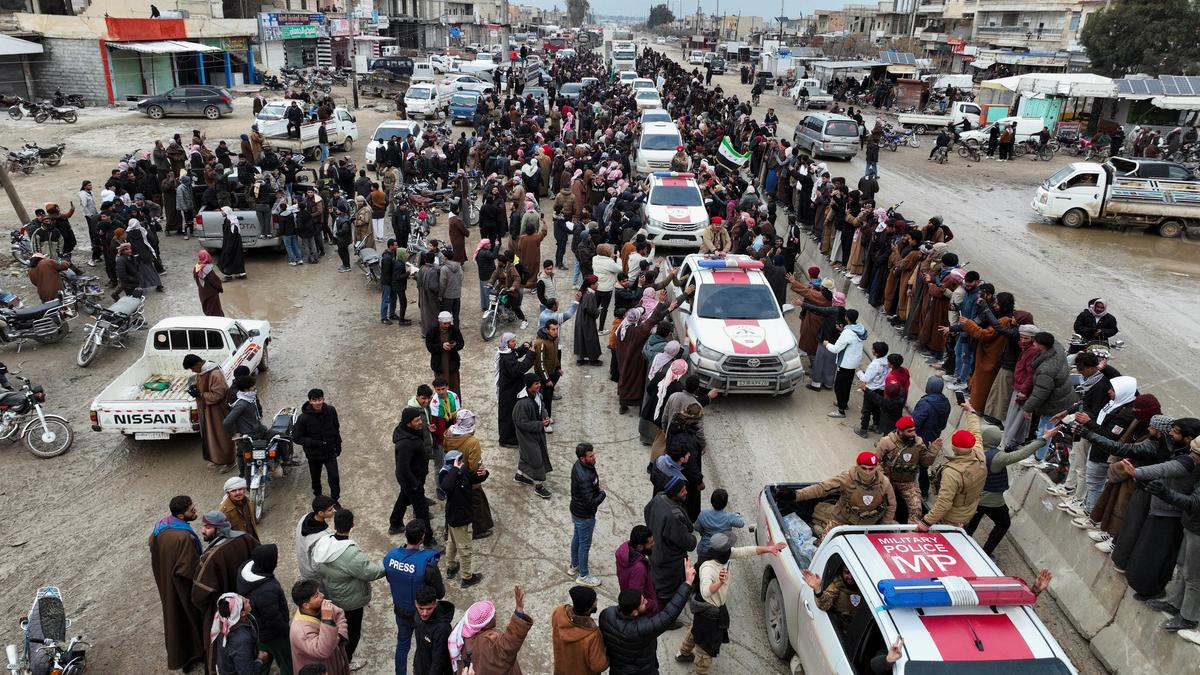
Syria’s army is consolidating its control over important portions of northern Syria,effectively displacing Kurdish forces who have maintained de facto autonomy in the region for over a decade. This resurgence of government authority coincides with a presidential decree recognizing Kurdish as a national language, a move viewed with skepticism by Kurdish leaders who assert it falls short of their long-held aspirations for self-determination.The recent developments signal a complex shift in the Syrian landscape, marked by stalled integration efforts, renewed clashes, and international concern.
Escalating Tensions and Military Advances
the current escalation stems from the breakdown of a March agreement intended to integrate Kurdish forces – primarily the Syrian Democratic Forces (SDF) – into the Syrian state army. With the implementation of this agreement faltering, Syrian government troops launched offensives, successfully driving Kurdish forces from neighborhoods in Aleppo last week and expanding control eastward on Saturday. On Sunday, the Syrian army announced the capture of Tabqa city in the Raqa region, a strategically vital location that includes the Euphrates Dam, Syria’s largest.
Reports from the ground indicate a shifting presence, with SDF fighters withdrawing from areas like Deir Hafer, east of Aleppo, as Syrian army forces move in. Though, this transition has not been without violence. Both sides have accused each other of violating the terms of the withdrawal agreement, and clashes have resulted in casualties on both sides, with reports of at least four Syrian soldiers and an unspecified number of Kurdish fighters killed.
Kurdish Response and Accusations of Betrayal
the Syrian Kurdish leadership has expressed deep dissatisfaction with the recent developments. While acknowledging President Ahmed al-Sharaa’s decree recognizing Kurdish as a national language as a symbolic step,they maintain it does not address fundamental demands for political and cultural rights,including constitutional recognition and self-governance.
The SDF accused the Syrian government of “violating recent agreements and betraying our forces,” following clashes south of Tabqa. In response, kurdish authorities imposed a curfew in the Raqa region and designated territory southwest of the Euphrates River as a “closed military zone,” warning of potential strikes against perceived military targets. Further escalating tensions,the SDF reportedly destroyed a bridge over the Euphrates in Raqa city and allegedly sabotaged the city’s water supply,accusations denied by Kurdish officials. Incidents of cross-border fire have also been reported, with the SDF alleging attacks on government-controlled areas in Deir Ezzor.
International Reactions and Diplomatic Efforts
The escalating conflict has drawn international attention. The United States,a long-time supporter of the SDF in the fight against ISIS,has urged syrian government forces to halt offensive actions between Aleppo and al-Tabqa. U.S.envoy Tom Barrack met with SDF chief Mazloum Abdi in Erbil to discuss the evolving situation.France’s President Emmanuel Macron and the leader of Iraq’s Kurdistan region, Nechirvan Barzani, have also called for de-escalation and a ceasefire.
The Significance of the presidential Decree
President al-Sharaa’s decree represents the first formal recognition of Kurdish rights in Syria’s history as its independence in 1946. The decree acknowledges Kurds as “an essential and integral part” of Syria and addresses historical grievances, including the revocation of citizenship for approximately 20% of Kurds under a 1962 census. Though, analysts like Nanar Hawach of the International Crisis Group suggest the decree is primarily a strategic move to consolidate military control while offering limited cultural concessions.
Looking Ahead
The situation in northern Syria remains volatile. The Syrian government’s military advances,coupled with the limited scope of the recent decree,suggest a continued push for centralized control. The SDF’s response, marked by accusations of betrayal and continued clashes, indicates a reluctance to relinquish its autonomy without substantial political concessions. The involvement of international actors and the potential for further escalation underscore the complexity of the conflict and the urgent need for a negotiated solution that addresses the legitimate concerns of all parties involved.
Keywords: Syria,Syrian Army,Kurdish Forces,SDF,Raqa,tabqa,Euphrates river,Syrian Civil War,Political Recognition,Ceasefire,International Intervention,Middle East Conflict,syrian Politics,kurdish Rights,Ahmed al-Sharaa,Mazloum Abdi,Tom Barrack,Emmanuel Macron,Nechirvan Barzani.
Keep reading