“`html
Robotic Swarms Inspired by Nature: Princeton’s Blooming Robots and the Future of Architecture
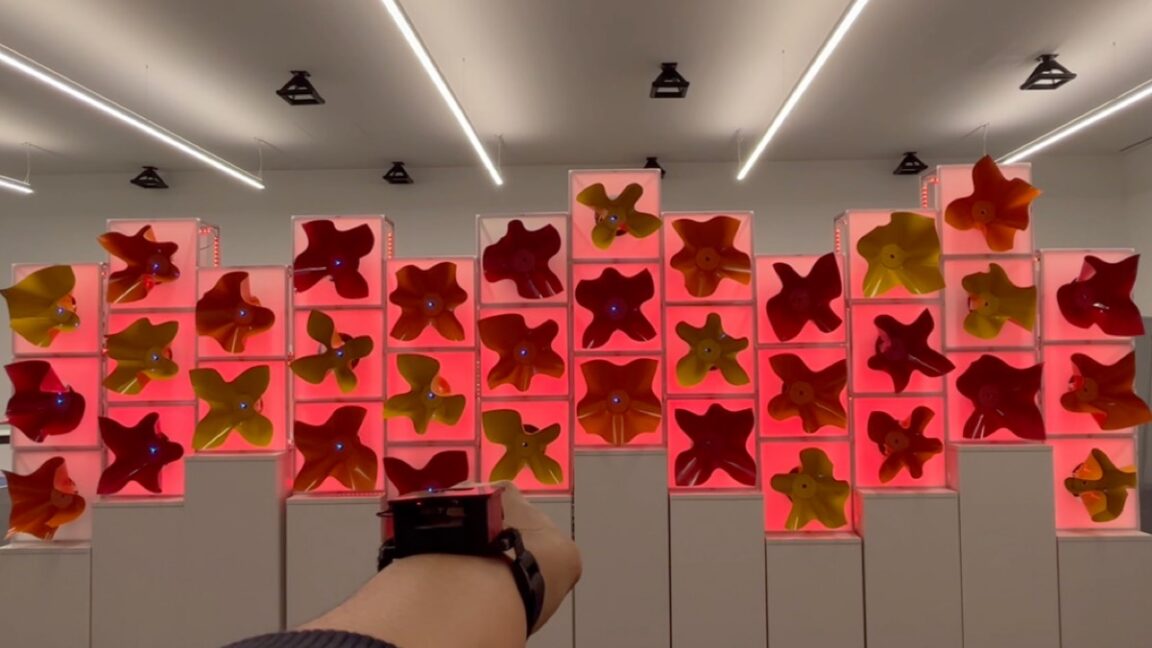
Researchers at Princeton University have developed a swarm of interconnected, miniature robots capable of dynamically changing shape, mimicking the “blooming” of flowers in response too light. This research, detailed in a paper published in Science Robotics, suggests a future where buildings can adapt to environmental conditions and interact with occupants in novel ways.
Bio-Inspired Robotics: Learning from Collective Behavior
The Princeton team drew inspiration from “living architectures” found in nature, notably the collective behavior of social insects like fire ants. fire ants demonstrate emergent properties: individual ants exhibit simple behaviors, but a large group acts as a cohesive unit, displaying both solid and fluid characteristics.As demonstrated in previous research, a colony of fire ants can flow like a liquid, allowing them to escape flooding, or self-assemble into structures like rafts and towers for survival
(ars Technica). They also exhibit remarkable efficiency in traffic flow, avoiding congestion
(Ars Technica).
Previous Research in Swarm Robotics
Mimicking these natural systems has been a growing area of robotics research. In 2018, researchers at Georgia Tech created ant-like robots capable of digging through 3D-printed materials simulating soil
(Science). This technology holds potential for applications in mining and disaster recovery, where human access is limited. Further,studies of jackdaw flocks have revealed that these birds adjust their flight patterns based on their objectives – whether roosting or evading predators
(Ars Technica), paving the way for autonomous robotic swarms that can adapt their behavior to changing circumstances.
Dynamic Architecture and the Potential of Swarm Intelligence
Traditional architecture is largely static, constructed from rigid materials that limit adaptability to changing environmental conditions. The Princeton researchers aim to overcome this limitation by applying swarm intelligence principles, inspired by plants
Related reading