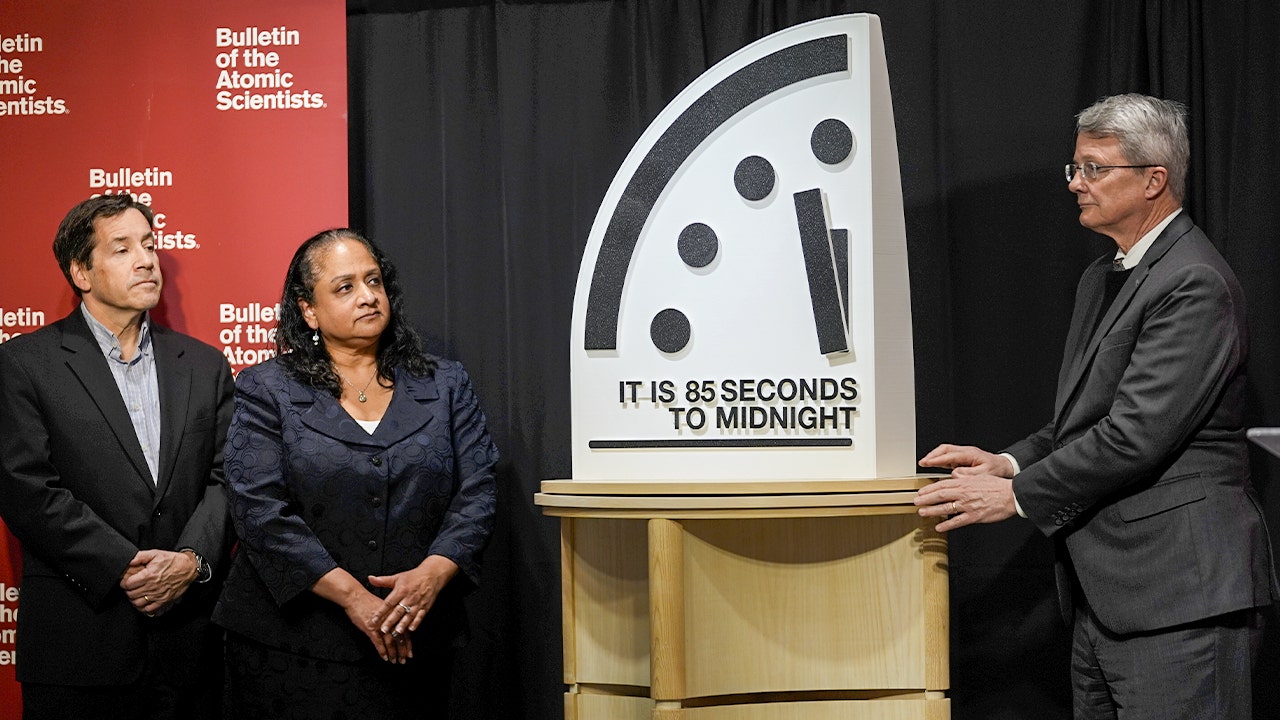
Doomsday Clock Ticks closest to Midnight Ever: Humanity faces Unprecedented Global Risks
Washington D.C. - The Bulletin of the Atomic Scientists announced today a chilling update to the Doomsday Clock, setting it at 85 seconds to midnight – the closest it has ever been to signifying global catastrophe. This symbolic clock, maintained since 1947, reflects the existential threats facing humanity, and the latest adjustment underscores a dramatically heightened level of risk.
The decision to move the clock forward,from 90 seconds to midnight in 2025,is driven by converging crises: escalating nuclear tensions,the accelerating climate crisis,the potential for misuse of biotechnology,and the rapidly evolving dangers posed by artificial intelligence. The Bulletin’s Science and Security Board cites increasing global instability and a worrying trend towards nationalism and aggression among major world powers as key factors in this alarming assessment.
“The Doomsday Clock’s message cannot be clearer. Catastrophic risks are on the rise, cooperation is on the decline, and we are running out of time,” stated Alexandra Bell, President and CEO of the Bulletin of the Atomic Scientists, in a press release.”Change is both necessary and possible, but the global community must demand swift action from their leaders.”
The organization’s statement specifically criticizes the lack of progress in addressing these threats, noting that instead of heeding warnings, nations like Russia, China, and the United States have exhibited increasingly adversarial behavior. The erosion of international agreements and a “winner-takes-all” mentality further exacerbate the situation, creating a perilous habitat ripe for miscalculation and conflict.
The Doomsday Clock was initially set in 1947, following the first detonations of nuclear weapons. Its furthest point from midnight was 17 minutes in 1991, a period of relative stability following the end of the Cold War. However, the clock has steadily moved closer to midnight in recent decades, reflecting renewed nuclear proliferation concerns, the growing threat of climate change, and now, the emergence of disruptive technologies.
While acknowledging a brief period of optimism in early 2025 with initial efforts towards de-escalation in the Russia-Ukraine conflict and discussions around nuclear disarmament, the Bulletin’s assessment ultimately concludes that negative trends have overwhelmingly prevailed. The rise of nationalistic autocracies globally is also identified as a significant concern, hindering the international cooperation necessary to tackle shared challenges.
The Bulletin of the Atomic Scientists doesn’t simply highlight the dangers; it also proposes concrete steps to mitigate them. These include:
* Resuming U.S.-Russia nuclear talks: Re-establishing interaction channels and pursuing arms control agreements are crucial to reducing the risk of nuclear conflict.
* Preventing AI-driven biological threats: Developing safeguards and international regulations to prevent the malicious use of artificial intelligence in the creation of biological weapons.
* Investing in renewable energy: Accelerating the transition to lasting energy sources to combat climate change.
* Multilateral AI governance: Establishing international discussions and agreements on responsible limits for the military application of artificial intelligence.
The Bulletin’s message is a stark call to action. “Our current trajectory is unsustainable,” the organization asserts. “National leaders – especially those in the United States, Russia, and China – must take the lead in finding a path away from the brink. Citizens must insist they do so.” The fate of humanity, the Bulletin warns, hangs in the balance.