Ice storm Fern: A Rural Mississippi Community’s Resilience
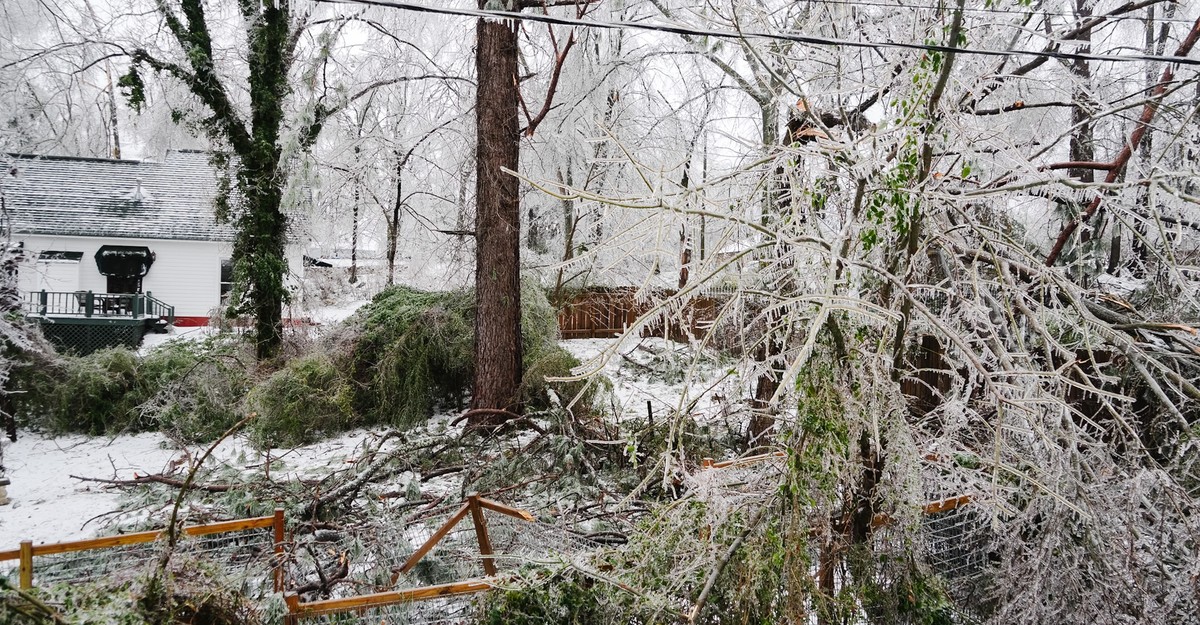
The scent of pine was the first sign. Opening the front door, the unmistakable fragrance hit my son and me, a stark reminder of the storm’s impact on our neighbors, whose homes are surrounded by towering pines. Their driveway was blocked by fallen branches, a scene repeated across our community. The sound of chainsaws echoed down the street as neighbors began the arduous task of clearing roadways. Despite the disruption, the spirit of the season wasn’t entirely dampened; a few children where already enjoying the icy conditions on sleds, hoping the roads would offer a slippery playground.
The Immediate Aftermath
In our backyard, neighbors assessed the damage, gazing up at the broken branches of the pines. A neighbor’s fence lay mangled, entangled with tree limbs. We weren’t spared either; a smaller tree had fallen, pierced by a branch from a larger pine. The storm also brought an unexpected surge in wildlife activity. When I fed the birds on our deck, as I do every day, I counted nearly 40, displaced from their usual habitats and seeking sustenance. I doubled their portion, hoping to offer a small comfort.
Thankfully, my mother, who lives a few blocks away, and my friends were safe. Though, over 150,000 homes and businesses across Mississippi were without power, including ours. Exhausted from a sleepless night, I retreated under a pile of blankets, succumbing to the need for rest. This became our new routine: extended sleep – often exceeding 12 hours – to conserve warmth, and early dinners before the encroaching darkness and silence descended. My husband volunteered overnight at the town warming center, providing support to those in need.
Restoration and Community Effort
Power was finally restored after five and a half days, at 11:30 AM.That Thursday marked the first day the number of utility customers without power in the state dipped below 100,000, though only slightly. In our town,the water Valley Electric Commission,led by its chairman Brandon Presley,had proactively engaged in mutual-aid agreements with other municipal utilities and secured contracts with private companies before the storm hit.This planning proved crucial, allowing businesses on Main Street to quickly resume operations, providing essential resources and support to the community.
Ice storms, while infrequent, are becoming a recurring concern. Another storm years prior had left us stranded on our icy hill.Neighbors are now compiling lists of winter necessities: ice cleats, hand warmers, durable gloves, snow shovels, power banks, and camping stoves.
Lessons Learned: Cold vs. Heat
Storms like these reveal our limits. I recall the summer of 2003 in Memphis, during the derecho nicknamed “Hurricane Elvis”, when I endured 10 days without air conditioning in scorching heat. I believed that was the worst possible discomfort.winter Storm Fern proved me wrong. The chilling cold, the ability to see my breath indoors, is a far more oppressive experience than stifling heat.
Ongoing Challenges and resilience
As of Friday, almost a week after the storm, tens of thousands of households remained without power, particularly in the more rural areas of the state, where restoration timelines remain uncertain. In our neighborhood,a brief thaw offered temporary relief,but the cold has returned,with temperatures dropping below freezing again this weekend. I overestimated my ability to cope with such challenges.
The Trees’ Endurance
The trees,however,demonstrate a diffrent kind of resilience. They will recover, though the process will take far longer than restoring power. Pines regenerate relatively quickly,but oaks are slower to heal. Fortunately, our 133-year-old oak tree survived and stands as a symbol of strength and beauty, a reminder of both the wonder and the potential danger that trees pose during ice storms.
Related reading