Europe Grapples with Nuclear deterrence Amidst Shifting Security Landscape
Published: 2026/02/15 02:11:36
European leaders are increasingly focused on strengthening the continent’s nuclear deterrence capabilities, driven by escalating concerns over a nuclear-armed Russia and growing uncertainty regarding the reliability of U.S. security guarantees [[1]]. This shift marks a significant departure from decades of relying on the United States for protection and signals a potential reshaping of Europe’s defense posture.
Rising Concerns and the Erosion of Trust
the ongoing war in Ukraine has underscored the potential for large-scale conflict in Europe, prompting a reassessment of national security strategies.Many european officials now believe that Moscow’s ambitions extend beyond Ukraine, possibly threatening other European nations, including NATO members [[3]]. This perception, coupled with the increasingly unpredictable nature of U.S. foreign policy under President Donald Trump, has fueled anxieties about the long-term viability of the transatlantic security alliance.
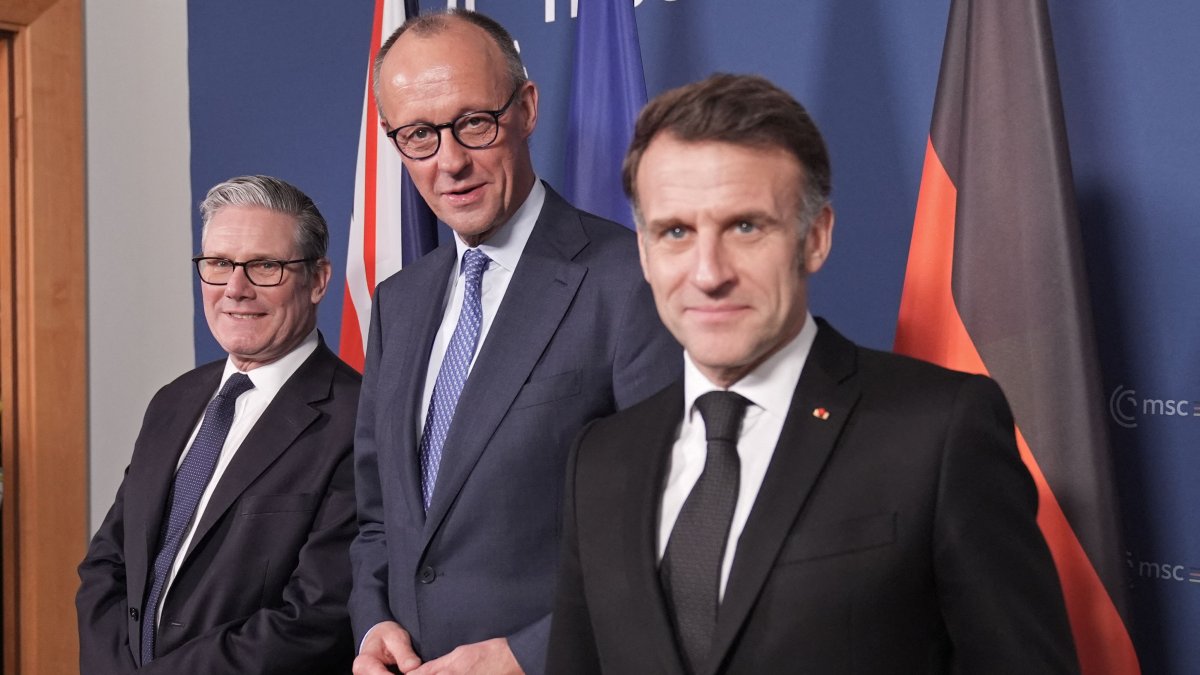
During the Munich Security Conference, German Chancellor friedrich Merz revealed confidential discussions with the French president regarding European nuclear deterrence [[3]]. Prime Minister Keir Starmer of Britain echoed this sentiment, announcing enhanced nuclear cooperation with France, emphasizing the combined strength of the two nuclear powers to deter potential adversaries.
Exploring European Nuclear Options
A recent report assessing “Europe’s nuclear options,” presented at the Munich Security Conference, highlighted the limitations of France and the United Kingdom’s comparatively small nuclear arsenals in the face of a resurgent Russia [[3]]. The report argues that Europeans can no longer defer to the United States on matters of nuclear deterrence and must proactively address the evolving security landscape.
The report outlines five potential pathways forward:
- Continue reliance on American deterrence: Maintaining the status quo within the existing NATO framework.
- Strengthen Franco-British deterrence: Enhancing the role of France and the UK’s nuclear capabilities as a European deterrent.
- Jointly develop European nuclear weapons: Pursuing a collaborative effort to create a shared European nuclear arsenal.
- Expand European nuclear arsenals: Increasing the number of European countries possessing nuclear weapons.
- Enhance conventional military power: Investing in non-nuclear military capabilities to deter aggression.
While the report acknowledges that none of these options are without risks or costs, it stresses that “the era in which Europe could afford strategic complacency has ended” [[3]].
France Takes the Lead and Macron’s Upcoming Address
France, possessing one of only two autonomous nuclear deterrents in Europe (along with the UK), is emerging as a key player in this debate. President Emmanuel Macron has previously floated the idea of extending france’s nuclear umbrella to encompass parts of Europe and is slated to deliver a significant speech on French nuclear doctrine at the end of February [[3]]. This address is anticipated to outline potential frameworks for “special cooperation,joint exercises,and shared security interests” with select European partners.
However, experts note that significantly bolstering European nuclear capacity faces considerable hurdles, including considerable financial investments and complex questions of command and control. Moreover, the UK’s nuclear deterrent remains heavily reliant on U.S. technology, creating a dependency that complicates independent action.
Looking Ahead
The intensifying discussions surrounding European nuclear deterrence represent a pivotal moment for the continent’s security architecture. While fully independent European nuclear capability remains a distant prospect, the growing recognition of potential threats and the erosion of trust in traditional security guarantees are driving a renewed focus on self-reliance and strategic autonomy. Macron’s upcoming speech is expected to provide further clarity on France’s vision for a more secure Europe and it’s role in shaping the future of nuclear deterrence on the continent.
Learn more about the european Union’s role in global security [[2]].
Worth a look