The Rise of Smart Rice Cookers: Catering to Health and Convenience
Following the indulgence of holiday seasons, consumers are increasingly focused on managing thier weight and blood sugar levels, driving demand for low-sugar and whole-grain rice products. As a result, rice cooker manufacturers are responding by prioritizing features that address these health concerns, marking a shift beyond simple convenience and toward proactive wellness support.
The Growing Focus on Metabolic Health
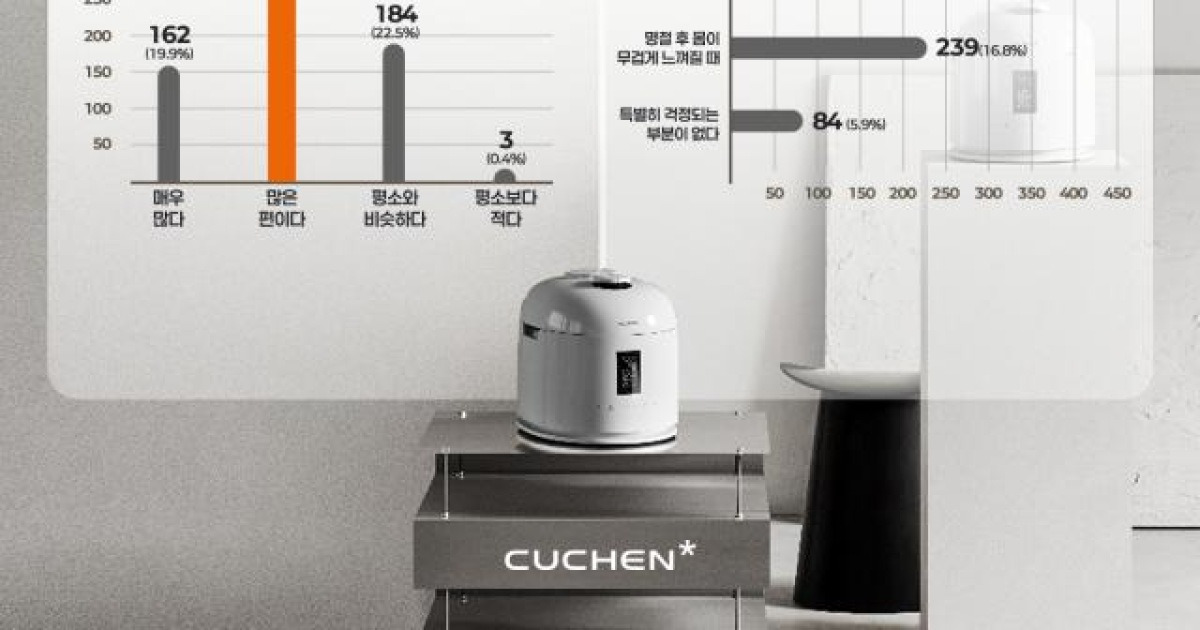
A recent survey conducted by kitchen appliance company cuchen among 816 adults aged 20-60 revealed that 77.1% reported consuming larger portions than usual during the holiday period . Following overeating, the primary concerns were indigestion (30.4%), weight gain (24.8%), and worries about rising blood sugar levels (22.1%). This demonstrates a growing awareness of metabolic health that extends beyond superficial weight management. This concern is expanding beyond middle-aged and older adults to encompass younger demographics as well.
The “Slow Aging” Trend and Dietary Shifts
This heightened awareness is translating into behavioral changes. Over 70.6% of respondents reported actively managing their diet and health after the holidays, with 61.1% focusing on portion control and incorporating whole grains like brown rice into their meals.This reflects a broader “slow aging” trend, where individuals are prioritizing dietary choices that minimize blood sugar spikes and support insulin sensitivity. Consequently, even a staple like rice is now being viewed as something to be carefully managed within a health-conscious diet. The emphasis is shifting from simply less food to better food.
Addressing Consumer Barriers to Healthy Rice Consumption
While consumers recognize the health benefits of brown rice and other whole grains, there are still challenges to regular consumption. A significant 27.8% cited a “coarse and hard texture” as a deterrent, while 26.8% found the soaking time required for many whole grains inconvenient. This highlights the need for solutions that balance health benefits with palatability and ease of preparation.
Technological Innovations in Rice Cookers
Appliance manufacturers are tackling these challenges with technological innovations. Cuchen’s ‘123 Rice cooker’ utilizes high-pressure and high-temperature technology to reduce cooking time and improve the texture of whole grains.For example,mixed grains (excluding beans) can now be cooked in as little as 19 minutes. Similarly, other models offer optimized cooking programs for various grains like black rice, barley, and quinoa, with some offering up to ten specialized settings.
Low-Sugar Rice Cookers: A New Focus
Cuckoo is also gaining traction with its ‘Miseok Collection 4th Generation Low-Sugar Rice Cooker,’ focusing on reducing carbohydrate content. This model employs a patented ‘4th Generation Tray’ designed to uniformly remove starch from the rice, reducing sugar content by up to 30% for white rice. The technology uses a submersion tray – immersing the rice in water to uniformly remove starch – coupled with direct heating to minimize cooking time and preserve flavor.Specialized modes are also available for low-sugar white rice and mixed grains.
The Future of Rice Cooking: Health as a core Feature
Industry experts predict continued demand for low-sugar and whole-grain focused rice cookers, driven by the sustained interest in health and wellness. “Today, rice cookers are no longer simply cooking appliances; they are evolving into health and diet management tools,” states an industry representative. This signifies a broader trend where kitchen appliances are increasingly integrated into preventative healthcare and lifestyle management.
Key Takeaways
- Consumers are increasingly aware of the link between diet and metabolic health.
- Demand for low-sugar and whole-grain rice products is rising.
- Rice cooker manufacturers are innovating to address barriers to healthy rice consumption, such as texture and cooking time.
- Technological advancements, like specialized cooking programs and starch-reduction technologies, are key drivers of this trend.
- The future of rice cooking lies in integrated health and convenience.
Related reading