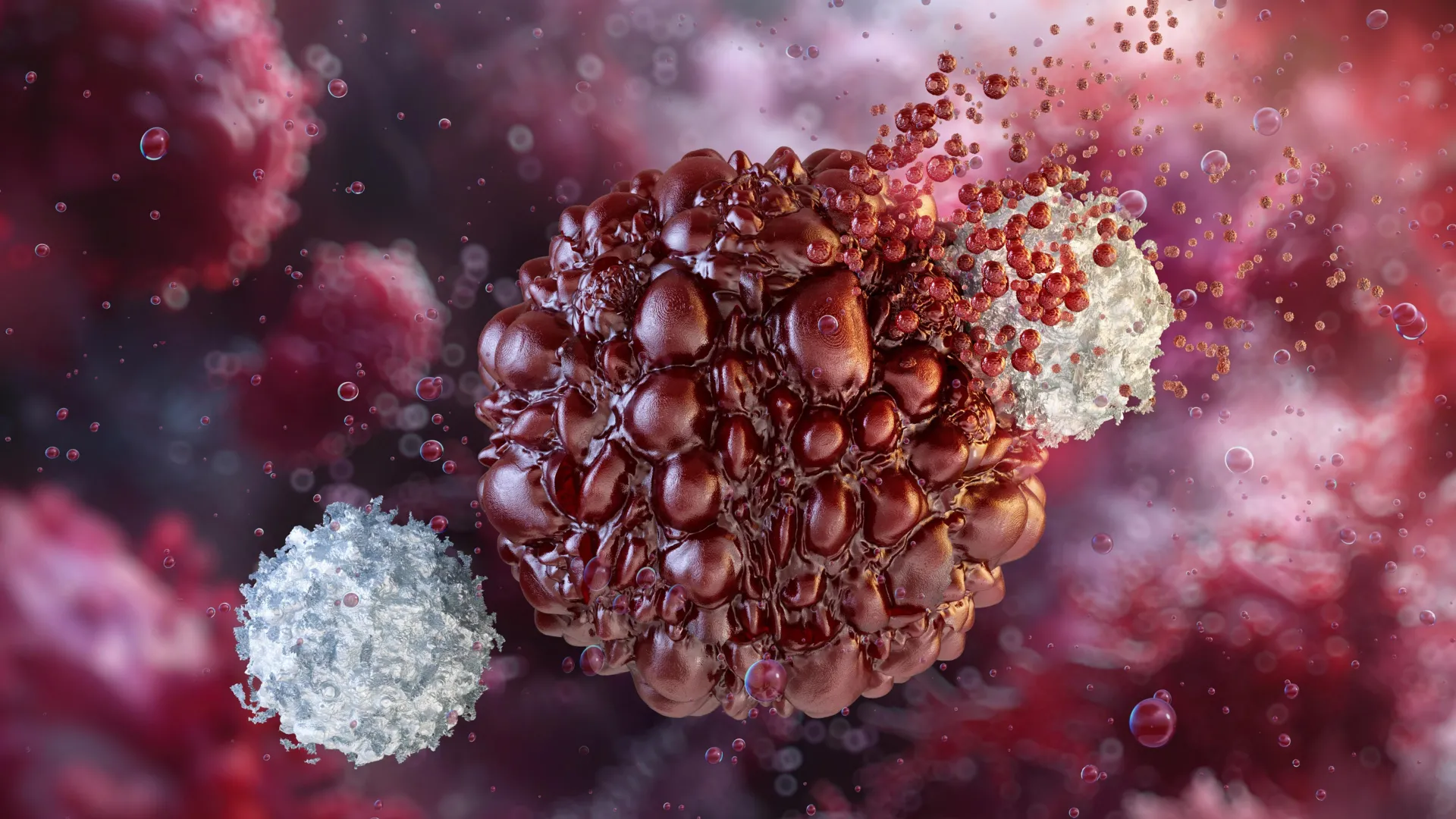
The fight against cancer is witnessing a significant leap forward, thanks to a groundbreaking development from researchers in China. A new strategy for mass-producing natural killer (NK) cells – a crucial component of the body’s immune system – promises to make this powerful immunotherapy more accessible and affordable. This innovation tackles long-standing challenges in NK cell production, potentially paving the way for wider-scale treatment of various cancers. The ability to generate vast quantities of these tumor-fighting cells from a single source of cord blood represents a major step towards personalized cancer care.
Natural killer cells are vital in the body’s initial defense against viral infections and the development of cancer. Unlike other immune cells, NK cells don’t need prior sensitization to identify and destroy abnormal cells, making them an attractive target for cancer immunotherapy. A particularly promising approach, chimeric antigen receptor (CAR)-NK therapy, involves engineering NK cells to express receptors that specifically recognize and attack cancer cells. However, traditional methods of obtaining and modifying NK cells have been hampered by limitations in scalability, cost, and efficiency. These hurdles have restricted the widespread adoption of CAR-NK therapy, despite its potential.
For years, scientists have relied on mature NK cells sourced from peripheral blood or cord blood for CAR-NK therapies. But this approach presents significant obstacles. Variability between cells, difficulties in genetic modification, and the high cost of production have all contributed to the leisurely progress in this field. Now, a team led by Professor WANG Jinyong at the Institute of Zoology of the Chinese Academy of Sciences has unveiled a novel strategy that addresses these challenges head-on. Their research, published in Nature Biomedical Engineering, focuses on starting with early-stage stem cells, rather than attempting to modify mature NK cells directly.
A New Approach: Harnessing the Power of Stem Cells
The team’s innovative approach centers on utilizing CD34+ hematopoietic stem and progenitor cells (HSPCs) derived from cord blood. These early-stage cells possess the remarkable ability to differentiate into various blood cell types, including NK cells. Instead of directly modifying mature NK cells, the researchers focused on generating induced NK (iNK) cells and CAR-engineered iNK (CAR-iNK) cells from these HSPCs. This shift in strategy proved to be a game-changer, significantly improving both the efficiency and scalability of NK cell production. Previous attempts to generate NK cells from cord blood-derived HSPCs faced issues with low efficiency and immature cell function, but Professor Wang’s team overcame these limitations by strategically timing the genetic engineering process.
The key to their success lies in moving the genetic engineering step earlier in the developmental process, working directly at the CD34+ HSPC stage. This approach combines CAR transduction – the process of introducing the CAR gene into the cells – with robust expansion of the progenitor cells and guided commitment to the NK cell lineage. By optimizing these three elements, the researchers were able to achieve unprecedented levels of NK cell production.
The Three-Step Expansion and Differentiation Process
The researchers developed a meticulously designed three-stage system to maximize NK cell yield and functionality. The first stage involves expanding the CD34+ HSPCs (or CD19 CAR-transduced HSPCs) using irradiated AFT024 feeder cells. Within just 14 days, the cells multiply an impressive 800- to 1,000-fold. This initial expansion provides a substantial pool of cells for subsequent differentiation. Feeder cells are crucial in this process, providing essential growth factors and support for the developing cells.
Next, the expanded cells are cultured with OP9 feeder cells, which are engineered to create artificial hematopoietic organoid aggregates. These aggregates mimic the natural environment of the bone marrow, providing a supportive microenvironment that promotes efficient NK lineage commitment and development. The organoid structure allows for enhanced cell-to-cell interactions and signaling, guiding the HSPCs towards becoming fully functional NK cells.
In the final stage, the cells that have committed to becoming NK cells are allowed to mature and multiply further. This maturation process results in highly pure iNK or CAR-iNK cells that express endogenous CD16, a protein crucial for NK cell activation and tumor cell killing. The resulting cells are not only abundant but also highly potent, ready to target and destroy cancer cells.
A Single Stem Cell Yields Millions of Tumor Fighters
The most remarkable outcome of this new strategy is the sheer number of NK cells that can be generated from a single CD34+ HSPC. The researchers found that a single stem cell could generate as many as 14 million iNK cells or 7.6 million CAR-iNK cells. This extraordinary yield has profound implications for the scalability of CAR-NK therapy. According to the research team, one-fifth of a typical cord blood unit could theoretically yield enough cells for thousands, even tens of thousands, of treatment doses. ScienceDaily reports this breakthrough could dramatically reduce the cost and logistical challenges associated with producing NK cell therapies.
Beyond the increased cell yield, the new method also significantly reduces the amount of viral vector needed for CAR engineering. Viral vectors are used to deliver the CAR gene into the NK cells, but they can be expensive and potentially cause unwanted side effects. The researchers found that their approach required only about 1/140,000 (by Day 42 of culture) to 1/600,000 (by Day 49) as much viral vector compared to traditional methods. This reduction in viral vector usage not only lowers costs but also enhances the safety profile of the therapy.
Promising Results in Leukemia Models
To assess the efficacy of their newly generated iNK and CAR-iNK cells, the researchers conducted laboratory testing using cell line-derived xenograft (CDX) and patient-derived xenograft (PDX) mouse models of human B-cell acute lymphoblastic leukemia (B-ALL). The results were highly encouraging. CD19 CAR-iNK cells demonstrated potent tumor-killing ability, reducing tumor growth and extending the survival of the animals. These preclinical findings suggest that this new approach holds significant promise for treating B-ALL and potentially other cancers as well.
The researchers emphasize that this new strategy not only improves the efficiency of producing iNK and CAR-iNK cells but also substantially lowers the cost of CAR engineering. This cost reduction is crucial for making CAR-NK therapy more accessible to patients worldwide. The potential for widespread availability of this innovative treatment could revolutionize cancer care, offering hope to individuals who currently face limited options.
Key Takeaways
- Massive Cell Production: A single stem cell can generate millions of tumor-killing NK cells.
- Reduced Costs: The new method significantly lowers the cost of CAR engineering and overall production.
- Enhanced Efficiency: The three-step process optimizes NK cell yield and functionality.
- Promising Preclinical Results: CAR-iNK cells demonstrated potent anti-tumor activity in leukemia models.
The development of this innovative NK cell production strategy represents a major advancement in cancer immunotherapy. While further research and clinical trials are necessary to fully evaluate its potential, this breakthrough offers a glimmer of hope for more effective and affordable cancer treatments in the future. The next step will be to translate these promising preclinical findings into clinical trials to assess the safety and efficacy of this approach in human patients. Researchers are currently planning the first phase I clinical trials, expected to begin in late 2026, to evaluate the feasibility and safety of this new therapy in patients with relapsed or refractory B-ALL.
What are your thoughts on this exciting development in cancer research? Share your comments below, and please share this article with anyone who might find it informative.
Worth a look