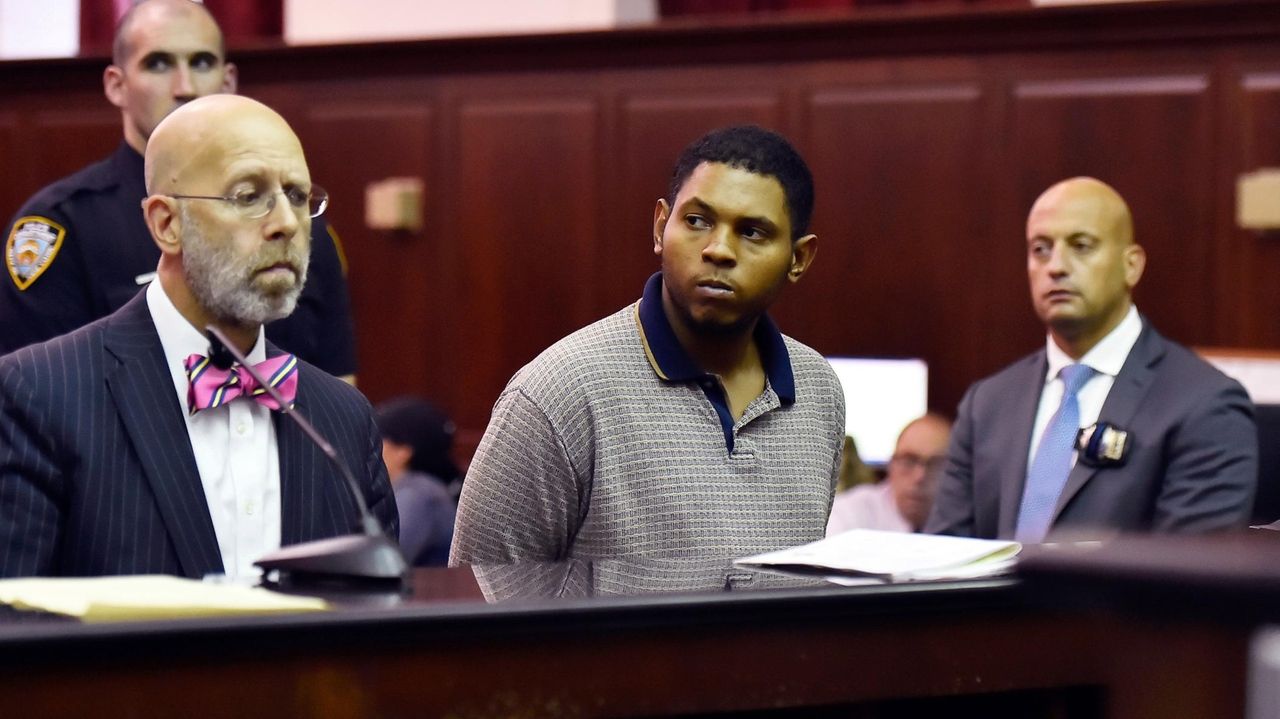
New York City is awaiting a verdict that will weigh the complexities of mental illness and criminal responsibility as jurors began deliberations Thursday in the case of Randy Santos. Santos, 31, stands accused of brutally beating four men to death while they slept on the streets of Manhattan in October 2019. While his defense team concedes he committed the horrific acts, they argue that severe mental illness rendered him incapable of understanding the moral wrongness of his actions, and not criminally culpable. The case has reignited scrutiny of New York City’s ongoing struggles to provide adequate support and protection for its growing homeless population.
The trial, unfolding in state court in Manhattan, centers on the question of insanity. Santos’s lawyers presented evidence suggesting he was suffering from schizophrenia and experiencing auditory hallucinations, believing he was compelled to kill 40 people or face his own death. This claim is supported by testimony regarding his mental state prior to the attacks, including a diagnosis of schizophrenia months before the rampage. The prosecution, however, contends that Santos was aware of the illegality and immorality of his actions, pointing to instances where he demonstrated awareness of his surroundings and potential witnesses. The outcome of the deliberations will have profound implications, potentially leading to a life sentence or involuntary commitment to a psychiatric facility.
The October 2019 Attacks and the Victims
The attacks occurred over several weeks in October 2019, primarily in the Chinatown neighborhood of Manhattan. The victims – Chuen Kok, Anthony Manson, Florencio Moran, and Nazario Vásquez Villegas – ranged in age from 39 to 83 and were all experiencing homelessness. According to the Associated Press, Santos was apprehended with a bloodied metal bar shortly after the final attack, immediately raising concerns about the safety of vulnerable populations in the city. The killings prompted a wave of grief and outrage, and intensified calls for increased resources for homeless services and mental health care.
A man walks past a makeshift memorial made for Chuen Kok, Oct. 18, 2019, in New York. Credit: AP/Bebeto Matthews
The Insanity Defense and Legal Arguments
The core of Santos’s defense rests on the assertion that his mental state at the time of the killings prevented him from understanding the nature and consequences of his actions. Defense attorney Arnold Levine argued in closing statements that Santos was driven by psychosis, stating, “Psychosis replaced Randy’s moral judgment.” As reported by NBC New York, Levine emphasized that Santos believed he had to kill 40 people to save his own life, a delusion fueled by the voices he was hearing. The legal standard for an insanity defense varies by jurisdiction, but generally requires demonstrating that the defendant was unable to appreciate the wrongfulness of their conduct due to a mental disease or defect.
However, prosecutors maintain that Santos possessed a degree of awareness that negates the insanity claim. Manhattan Assistant District Attorney Alfred Peterson highlighted instances where Santos appeared to be cognizant of his actions and their potential repercussions, even looking out for potential witnesses. Peterson also pointed to a statement Santos made to a psychiatrist in 2024, stating, “I understand it’s not a good action,” suggesting an understanding that his behavior was wrong. The prosecution’s argument hinges on demonstrating that Santos, despite his mental illness, retained a sufficient level of moral reasoning to be held accountable for his crimes.
Understanding the Legal Threshold for Insanity
The concept of legal insanity is a complex one, rooted in centuries of legal and medical debate. Generally, it requires a defendant to demonstrate a severe mental defect that prevented them from forming the necessary intent to commit a crime. This often involves demonstrating an inability to understand the nature of the act or to appreciate that it was wrong. The specific criteria for establishing an insanity defense vary by state, and the burden of proof typically falls on the defense to demonstrate the defendant’s mental incapacity. A successful insanity defense does not result in an acquittal in the traditional sense; rather, it typically leads to involuntary commitment to a psychiatric facility for treatment.
Santos’s History and Mental Health
Randy Santos’s history reveals a pattern of mental health struggles. He had been diagnosed with schizophrenia prior to the 2019 attacks and had been released from jail months earlier. The defense presented evidence indicating that Santos had been experiencing auditory hallucinations and delusional beliefs for some time, and that these symptoms were not adequately addressed following his release. This raises questions about the adequacy of mental health services available to individuals experiencing homelessness and the challenges of providing continuity of care for those transitioning from incarceration to the community.
The case also highlights the broader issue of mental illness and homelessness. Individuals experiencing homelessness are disproportionately affected by mental health conditions, and often lack access to the resources they need to manage their illness. This can create a cycle of vulnerability and instability, increasing the risk of both victimization and involvement in the criminal justice system. The tragedy in Chinatown underscores the urgent need for increased investment in affordable housing, mental health services, and supportive care for vulnerable populations.
Potential Outcomes and Next Steps
The jury now faces a difficult decision with far-reaching consequences. If they locate Santos not guilty by reason of insanity, he could be committed to a psychiatric facility for an indefinite period, subject to ongoing evaluation and potential release based on his mental state. If they convict him on the murder charges, he faces a potential sentence of life in prison. The deliberations are expected to be lengthy and complex, requiring jurors to carefully weigh the evidence and consider the legal and ethical implications of their decision.
Regardless of the outcome, this case is likely to spark further debate about the intersection of mental illness, homelessness, and criminal justice. Advocates for mental health reform are calling for increased funding for community-based treatment programs, improved access to care for individuals experiencing homelessness, and a more compassionate and effective response to individuals in crisis. The city of New York is also facing renewed scrutiny of its efforts to address the root causes of homelessness and provide adequate support for its most vulnerable residents.
The next step in this case is the jury’s verdict, which is expected in the coming days. Updates will be provided as they become available. The outcome will undoubtedly have a lasting impact on the families of the victims, the mental health community, and the city of New York as a whole.
This represents a developing story. We encourage readers to share their thoughts and perspectives in the comments below.
Keep reading