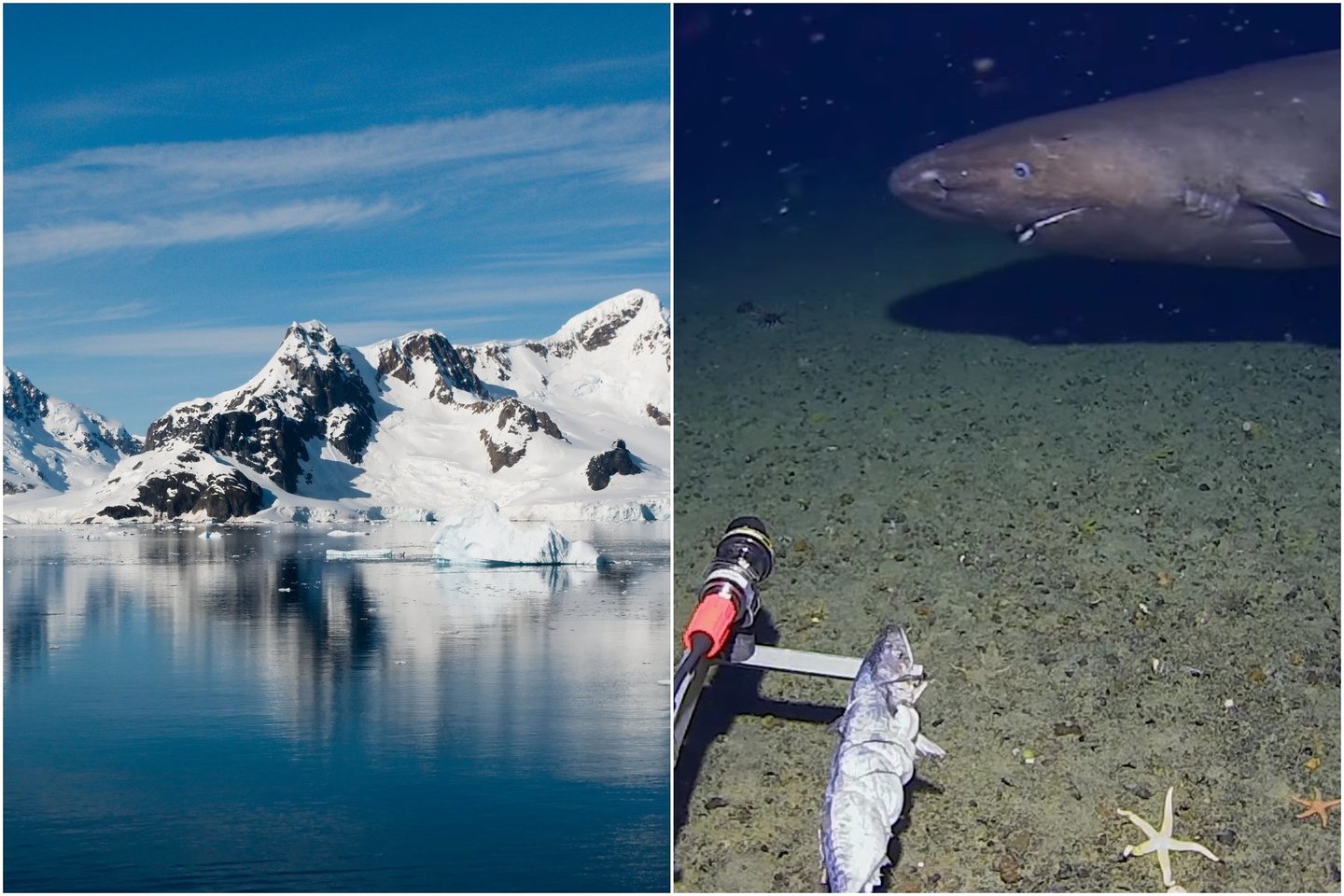
LONDON – A remarkable discovery in the frigid depths of the Southern Ocean is challenging long-held assumptions about marine life in Antarctica. Scientists have captured footage of a southern sleeper shark – a species rarely observed even in more temperate waters – swimming nearly 500 meters below the surface near the South Shetland Islands. The sighting, confirmed by researchers at the Minderoo-University of Western Australia (UWA) Deep Sea Research Centre, raises questions about the resilience of deep-sea creatures and the potential for undiscovered biodiversity in the planet’s most extreme environments.
The encounter occurred in January 2025, as part of an ongoing research project utilizing a specialized underwater camera deployed to study the Antarctic ecosystem. The footage, captured near the South Shetland Islands, initially sparked disbelief among the research team. “It was very unexpected, because we didn’t think there would be sharks in Antarctic waters, let alone such a large and well-known species as the southern sleeper shark,” explained Alan Jamieson, director of the Minderoo-UWA Deep Sea Research Centre. The South Shetland Islands, a group of eleven major islands and numerous smaller ones, lie approximately 150 kilometers north of the Antarctic Peninsula, and are largely covered in ice – 80-90% according to the Wikipedia entry for the South Shetland Islands.
A Rare Glimpse into the Deep
The southern sleeper shark (Somniosus microcephalus) is a slow-moving, deep-water shark known for its large size and longevity. These sharks can live for an astonishing 250 to 300 years, and are characterized by a sluggish metabolism that allows them to survive for extended periods without feeding. The individual observed in the Antarctic waters was estimated to be between three and four meters in length, according to reporting by the Associated Press. Jamieson emphasized the distinctiveness of the species, stating, “It was immediately recognizable, because no other shark looks like these.”
The moment of discovery was captured on camera, with marine geoscientist and centre member Heather Stewart audibly questioning, “What is that… that’s gliding in the background?” This seemingly casual observation has now become a significant data point in understanding the distribution of this elusive species. Scientists believe this represents the southernmost confirmed sighting of a southern sleeper shark to date. The discovery underscores the challenges of studying deep-sea environments, where observation is difficult and the potential for unexpected encounters remains high.
Antarctic Waters: A Surprisingly Hospitable Corridor?
The waters where the shark was filmed were relatively warm, at approximately 2 degrees Celsius. This slightly warmer corridor, researchers believe, may allow southern sleeper sharks to venture further south than previously thought. Dylan White-Kiely, a science assistant at the Minderoo-UWA Deep Sea Research Centre, explained in the video footage, “These animals are quite rare to see because they live at such depth. These animals have essentially evolved to be quite long-lived, and like many deep-sea animals, they have a very slow metabolism, so they can go for long periods without feeding.”
The presence of a southern sleeper shark in Antarctic waters suggests that it may not be alone. Researchers are now considering the possibility that other deep-sea species may also inhabit these remote and challenging environments. “This changes our understanding of shark distribution and their ability to tolerate extreme environmental conditions,” the research team stated. The South Shetland Islands, as noted by the Visuotinė lietuvių enciklopedija, are characterized by a subantarctic marine climate and tundra vegetation along the coastlines, creating a unique habitat for a variety of species.
Understanding the Southern Sleeper Shark
Southern sleeper sharks are found in temperate and polar waters worldwide, typically at depths of 200 to 2,000 meters. They are opportunistic feeders, consuming a variety of prey including fish, squid, and marine mammals. Their slow metabolism and large size contribute to their longevity, making them one of the longest-lived vertebrate species on Earth. However, their deep-sea habitat and slow reproductive rate make them vulnerable to potential threats, including climate change and deep-sea fishing.
The Minderoo-UWA Deep Sea Research Centre has been at the forefront of deep-sea exploration, utilizing advanced technology to study the biodiversity and ecological processes of the world’s oceans. Their perform is crucial for understanding the impacts of human activities on these fragile ecosystems and for developing effective conservation strategies. The centre’s research extends beyond the South Shetland Islands, encompassing projects in other remote and under-explored regions of the ocean.
Implications for Antarctic Ecosystems
The discovery of a southern sleeper shark in Antarctic waters has broader implications for our understanding of the region’s ecosystem. Antarctica is a critical area for climate regulation and biodiversity, and its marine ecosystems are particularly vulnerable to change. The presence of a top predator like the southern sleeper shark suggests a more complex food web than previously assumed, and highlights the need for further research to assess the potential impacts of climate change and human activities on this unique environment.
The South Shetland Islands themselves are subject to territorial claims by Argentina, Chile, and the United Kingdom, as detailed in the Wikipedia entry. Multiple research stations from various countries are located on the islands, including Argentina’s Chubanio base (established 1953), Bulgaria’s St. Kliment Ohridski base (1988), and the Polish Henryk Arctowski Antarctic Station (1977). These stations play a vital role in conducting scientific research and monitoring the Antarctic environment.
Further research is needed to determine the extent of the southern sleeper shark’s presence in Antarctic waters, its role in the ecosystem, and its vulnerability to environmental change. The Minderoo-UWA Deep Sea Research Centre plans to continue its exploration of the region, utilizing advanced technology and collaborative research efforts to unravel the mysteries of the deep Antarctic Ocean. The team hopes to deploy additional cameras and sensors to monitor shark populations and track their movements, providing valuable insights into their behavior and ecology.
Key Takeaways:
- A southern sleeper shark was filmed near the South Shetland Islands in January 2025, representing the southernmost confirmed sighting of the species.
- The discovery challenges previous assumptions about the distribution of sharks in Antarctic waters.
- The relatively warm water temperatures in the area may allow southern sleeper sharks to venture further south than previously thought.
- Further research is needed to understand the shark’s role in the Antarctic ecosystem and its vulnerability to environmental change.
Researchers will continue to analyze the footage and data collected from the underwater camera, hoping to gain further insights into the behavior and ecology of this elusive species. The next phase of the research project will involve deploying additional cameras and sensors to monitor shark populations and track their movements, providing a more comprehensive understanding of their distribution and habitat use. The team is also collaborating with other research institutions to share data and expertise, fostering a collaborative approach to deep-sea exploration and conservation.
What are your thoughts on this incredible discovery? Share your comments below, and don’t forget to share this article with your network!
Worth a look