The seemingly simple question of whether “bouba” sounds round and “maluma” sounds spiky has captivated researchers for decades, revealing surprising insights into how our brains connect sound and shape. Now, a new study suggests this connection isn’t uniquely human – even newly hatched chickens exhibit the same preference, challenging long-held assumptions about the origins of this fascinating phenomenon known as the bouba/kiki effect. This discovery, published in the journal Science, adds a new layer to our understanding of sensory perception and the potential evolutionary roots of abstract thought.
The bouba/kiki effect, first observed in 1947, demonstrates a consistent cross-cultural tendency for people to associate rounded shapes with the made-up word “bouba” and spiky shapes with “kiki.” This isn’t a learned association based on existing language; the effect persists even when participants are speakers of languages with vastly different phonetic structures. Researchers have found the association present in infants as young as four months traditional, suggesting an innate, pre-linguistic basis for this sensory coupling. For years, scientists debated whether this ability was a uniquely human trait, tied to our complex language capabilities.
The Bouba/Kiki Effect: A History of Investigation
The initial observation, made by Wolfgang Köhler, a German Gestalt psychologist, sparked a wave of research. Köhler noticed that participants consistently linked the sound “bouba” to rounded forms and “kiki” to angular ones. The effect quickly gained traction within the field of psychology, becoming a cornerstone example of sound symbolism – the idea that certain sounds inherently evoke specific sensory experiences. The Wikipedia entry for the bouba/kiki effect details the extensive research conducted over the years, highlighting the numerous attempts to explain the underlying mechanisms.
Early theories proposed that the association stemmed from phonetic similarities between the sounds and actual words, or from the visual appearance of the written forms. However, studies involving speakers of diverse languages and writing systems quickly debunked these explanations. The universality of the effect pointed towards a more fundamental cognitive process, potentially rooted in the way our brains process auditory and visual information. Attempts to replicate the effect in other primates, however, proved unsuccessful, leading some to believe it was a uniquely human ability linked to language development.
Chickens Join the Conversation: A New Perspective
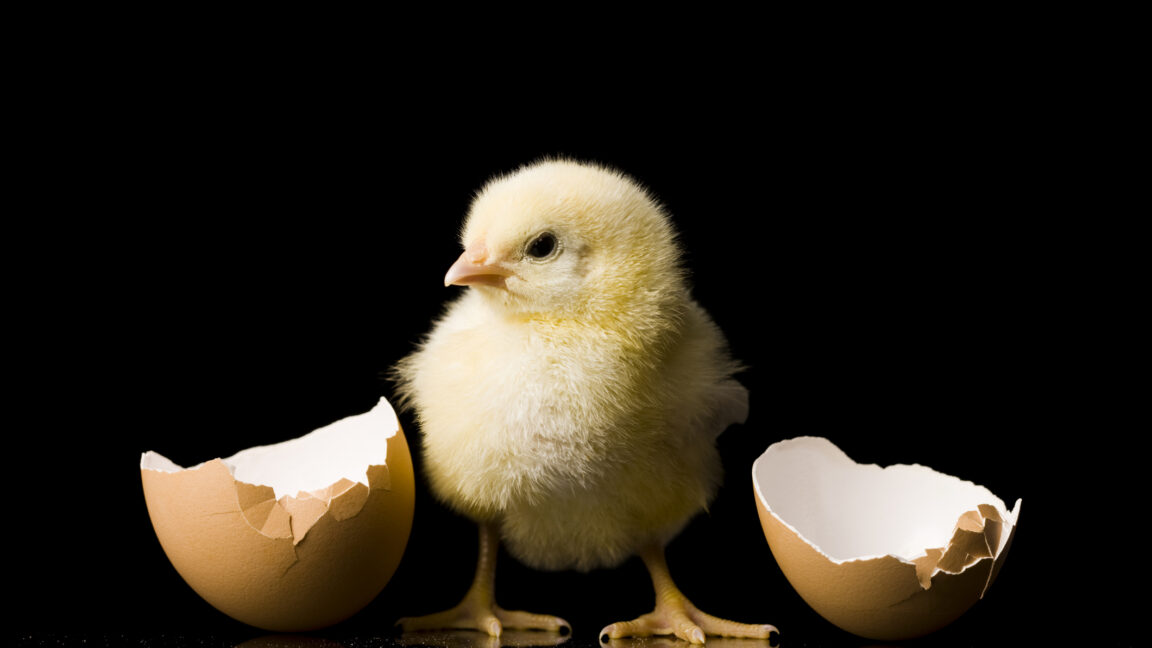
A team of Italian researchers – Maria Loconsole, Silvia Benavides-Varela, and Lucia Regolin – challenged this notion by extending the investigation beyond primates. Their study, detailed in Science and a pre-print on bioRxiv.org, focused on newly hatched domestic chickens (Gallus gallus). The researchers chose chicks specifically as, unlike human infants, they are immediately mobile and capable of actively interacting with their environment shortly after hatching. This allowed for a more direct assessment of their preferences without the complexities of developmental stages that might influence responses.
The experiment involved presenting chicks with visual stimuli – rounded and spiky shapes – even as simultaneously playing the sounds “bouba” and “maluma” (and “takete,” often used as the spiky counterpart). The researchers then observed the chicks’ movements, tracking which shapes they approached when hearing each sound. The results were striking: the chicks consistently oriented towards the rounded shapes when hearing “bouba” and the spiky shapes when hearing “maluma,” mirroring the responses observed in human infants and adults. This finding, reported just three hours ago according to Ars Technica, suggests the bouba/kiki effect is not a uniquely human phenomenon.
Why Chickens? The Advantages of a Non-Primate Model
The decision to use chickens wasn’t arbitrary. As the researchers explained, chicks offer a unique advantage in studying early perceptual development. Their relatively simple nervous systems and rapid development allow for a clearer understanding of the underlying neural mechanisms driving the bouba/kiki effect. Their mobility allows for a more naturalistic experimental setup, minimizing the potential for confounding factors that might arise when studying human infants.
“Unlike a 4-month-old human, newly hatched chicks are fully mobile and able to interact with the world,” the researchers noted in their study. This active engagement with the environment provides a more robust measure of their perceptual preferences than passive observation alone.
Implications for Understanding Sensory Perception
The discovery that chickens exhibit the bouba/kiki effect has significant implications for our understanding of sensory perception and the evolution of cognitive abilities. It suggests that the association between sound and shape may be deeply rooted in the brain’s fundamental architecture, predating the development of complex language. This could indicate a shared neural mechanism across species, potentially linked to the way the brain processes basic sensory features like curvature and angularity.
The findings likewise challenge the notion that the bouba/kiki effect is a uniquely human adaptation. If it exists in chickens, it’s likely present in other animals as well, suggesting it evolved for a purpose beyond language. One hypothesis is that this association may have played a role in early foraging behavior, helping animals quickly identify edible (rounded) versus dangerous (spiky) objects. Another possibility is that it reflects a more general principle of sensory integration, allowing the brain to efficiently process and categorize information from different modalities.
The Role of Motor Systems in Sound-Shape Association
Some researchers propose that the bouba/kiki effect may be linked to the motor systems involved in speech production. The rounded sound “bouba” requires a more open and relaxed mouth shape, while the spiky sound “kiki” involves a more constricted and angular articulation. It’s possible that the brain unconsciously associates these motor movements with the visual shapes that evoke similar sensations. This theory, however, doesn’t fully explain the effect’s presence in animals that don’t produce speech.
Further research is needed to fully unravel the neural mechanisms underlying the bouba/kiki effect. Future studies could investigate the brain activity of chicks and humans during the experiment, using techniques like electroencephalography (EEG) or functional magnetic resonance imaging (fMRI) to identify the specific brain regions involved. Comparing the neural responses across species could provide valuable insights into the evolutionary origins of this fascinating phenomenon.
What’s Next in Bouba/Kiki Research?
The Italian research team plans to continue investigating the bouba/kiki effect in other animal species, including fish and reptiles, to further explore its evolutionary origins. They are also interested in examining how the effect is influenced by factors such as age, experience, and individual differences. The team’s ongoing work promises to shed further light on the fundamental principles governing sensory perception and the remarkable plasticity of the brain.
The bouba/kiki effect, once considered a quirky curiosity, has emerged as a powerful tool for understanding the intricate relationship between sound, shape, and the brain. From human infants to newly hatched chickens, the consistent association between these seemingly arbitrary stimuli suggests a deep-seated cognitive mechanism that transcends species boundaries. As research continues, One can expect to gain even greater insights into the origins of abstract thought and the remarkable adaptability of the animal mind.
Researchers will continue to analyze the data collected from the chick experiments, and further studies are planned to investigate the neural correlates of the effect. The next step will be to publish a more detailed analysis of the behavioral data and to explore the potential implications for understanding sensory processing disorders. Stay tuned to World Today Journal for updates on this evolving story.
What do *you* feel? Does “bouba” sound round to you? Share your thoughts in the comments below, and don’t forget to share this article with your friends!