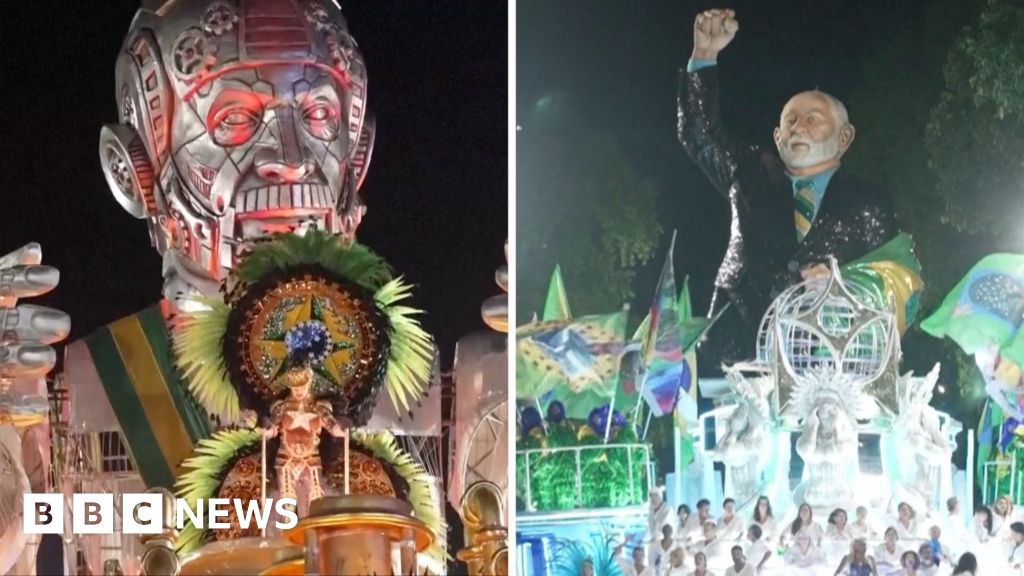
Rio de Janeiro’s vibrant Carnival celebrations took an unexpected political turn this week as a samba school’s tribute to Brazilian President Luiz Inácio Lula da Silva finished in last place, triggering both controversy and a demotion to a lower competition tier. The performance by Academicos de Niterói, intended as an homage to Lula’s life and career, drew criticism from opposition parties who alleged it amounted to premature campaigning ahead of the October presidential elections. Despite the backlash, the spectacle unfolded with the president himself in attendance, observing the parade from the stands of the Sambadrome arena.
The annual Carnival parade competition, a cornerstone of Brazilian culture, is renowned for its elaborate floats, energetic dance performances, and powerful storytelling. This year, however, the focus shifted beyond artistic merit to the realm of political debate. Academicos de Niterói’s presentation traced Lula’s journey from humble beginnings – depicting his youth as a shoeshine boy and metalworker – to his rise as a prominent union leader and the President of Brazil. The samba school’s ambitious display aimed to celebrate Lula’s legacy and his commitment to social welfare policies, but it quickly became a flashpoint in the already heated political landscape.
Political Backlash and Legal Challenges
The decision to feature a sitting president in a Carnival parade sparked immediate condemnation from opposition groups. Critics argued that the performance, which included imagery referencing Lula’s political career and achievements, violated campaign rules and unfairly influenced public opinion. Several lawsuits were filed seeking to block the parade, alleging that it provided Lula with an undue advantage in the upcoming elections. However, these legal challenges were ultimately rejected by the courts, allowing the performance to proceed as planned. Yahoo News reported that the controversy extended to rehearsals, with protests erupting even before the official parade.
The timing of the parade, just months before the October presidential election, fueled accusations of early campaigning. Lula, who is seeking a fourth term in office, has consistently led in opinion polls, but the opposition is determined to challenge his bid for re-election. The Carnival parade became a symbolic battleground in this struggle, with both sides vying to shape the narrative and mobilize their supporters. The controversy highlights the deep political divisions within Brazil and the sensitivity surrounding electoral campaigns.
A Tribute in Song and Spectacle
Despite the political storm, Academicos de Niterói’s performance was a visually stunning and emotionally charged spectacle. The parade featured towering floats, elaborate costumes, and a vibrant cast of performers who brought Lula’s life story to life. Tiago Martins, a carnival parade designer at the school, described the performance as a deeply personal story, emphasizing the theme of social mobility and the possibility for individuals from humble backgrounds to achieve success. “The samba says it: there are children of the poor becoming doctors, and me, a child of the poor, becoming a carnival designer,” Martins told Reuters.
The parade also included a pointed political statement, depicting former far-right leader Jair Bolsonaro as Bozo the Clown behind bars. This imagery, a direct jab at Lula’s political rival, further inflamed tensions and drew criticism from Bolsonaro’s supporters. Bolsonaro, who served as president from 2019 to 2022, is currently serving a 27-year sentence for a failed coup attempt, as reported by The Strait Times. The inclusion of this imagery underscored the deep ideological divide that continues to shape Brazilian politics.
Judgement and Relegation
the controversy surrounding the parade did not translate into success in the competition. Academicos de Niterói finished in last place, receiving the lowest score among all participating samba schools. The school will be relegated to the “second division,” known as Série Ouro (Gold Series), in 2027. This demotion represents a significant setback for the school, which had hoped to showcase its artistic talent and political message on the grandest stage of Brazilian Carnival. France24 detailed the outcome, noting the disappointment felt by the school’s members.
In contrast to Academicos de Niterói’s fate, Samba school Unidos do Viradouro was crowned the champion of the 2026 Rio Carnival, earning accolades for its tribute to its legendary drum director. This victory provided a moment of celebration amidst the political turmoil, highlighting the enduring power of Carnival as a cultural expression and a source of national pride. The contrast between the two schools’ performances underscores the complex interplay between art, politics, and public opinion in Brazil.
The Broader Context of Brazilian Politics
The controversy surrounding the Lula tribute reflects the broader political climate in Brazil, which remains deeply polarized following the contentious 2022 presidential election. Lula’s victory over Bolsonaro was narrow, and the country continues to grapple with issues of economic inequality, social justice, and political corruption. The upcoming October elections are expected to be fiercely contested, with both Lula and his opponents seeking to mobilize their bases and appeal to undecided voters. The Carnival parade, while ostensibly a cultural event, became a microcosm of this larger political struggle.
Lula’s presidency has been marked by efforts to address social and economic disparities, as well as to restore Brazil’s international standing. However, he faces significant challenges, including a fragmented Congress and a persistent economic slowdown. The opposition, led by Bolsonaro’s supporters, remains a formidable force, and they are determined to undermine Lula’s agenda. The Carnival controversy serves as a reminder of the deep divisions that continue to plague Brazilian society.
Looking Ahead
The relegation of Academicos de Niterói to the Série Ouro competition marks a turning point for the samba school. The school will now have to rebuild and compete in a lower tier, aiming to regain its place among the elite samba schools of Rio de Janeiro. The outcome of the October presidential elections will undoubtedly have a significant impact on the political landscape and the future of Brazilian Carnival. The next major political event to watch will be the official launch of the election campaign in August, which is expected to intensify the debate over key issues and further polarize the electorate.
As Brazil prepares for another pivotal election, the events surrounding the Carnival parade serve as a cautionary tale about the intersection of art, politics, and public opinion. The controversy underscores the importance of safeguarding artistic freedom while also upholding the principles of fair and transparent elections. The future of Brazilian Carnival, and indeed the future of Brazilian democracy, will depend on the ability of all stakeholders to engage in respectful dialogue and to find common ground in the face of deep political divisions.
What are your thoughts on the intersection of politics and cultural events like Carnival? Share your perspectives in the comments below, and don’t forget to share this article with your network.
- Why Moroccan Migrants Risk Everything to Cross the Spanish Border: Economic Despair Explored
- Iran’s Geopolitical Tension: Strait of Hormuz Negotiations and US Relations
- Cambridge Professor Faces New Allegations of Plagiarism and Misconduct (world-today-news.com)
- Oxford Homeowner Faces Storm Damage and Bridgeport Fire Chief Retires (news-usa.today)