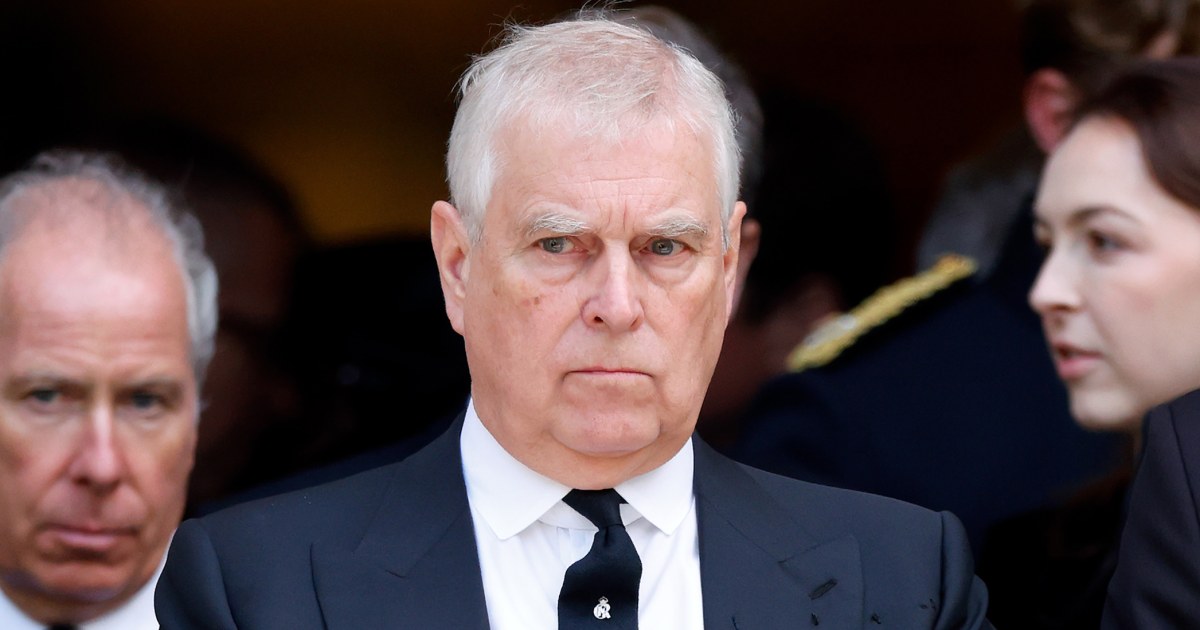
London – The British government is weighing a historic and potentially unprecedented move: removing Andrew Mountbatten-Windsor from the line of succession to the throne. This consideration comes amid renewed scrutiny following his recent arrest and ongoing investigations into allegations of misconduct, further deepening a crisis that has plagued the monarchy for years. The debate centers on whether the severity of the allegations, and the damage to the institution, necessitate such a drastic step, even if it sets a new precedent in centuries of royal tradition.
The possibility of legislative action to strip Andrew of his place in the line of succession, currently eighth, represents a significant escalation in the response to the controversies surrounding him. While he is highly unlikely to ever ascend to the throne, his continued inclusion raises questions about the monarchy’s commitment to accountability and public trust. The move would require an Act of Parliament, a complex and potentially lengthy process, and could also necessitate the approval of other Commonwealth realms, including Canada and Australia, where the British monarch remains head of state. This potential upheaval within the royal family underscores the evolving relationship between the monarchy and the public, and the increasing demand for transparency and ethical conduct.
Andrew Mountbatten-Windsor, formerly known as Prince Andrew, Duke of York, was arrested on February 15, 2026, on suspicion of misconduct in public office, according to reports from the BBC and other news outlets. He was released under investigation eleven hours later, meaning he has not been charged with any crime. The arrest stems from an investigation by Thames Valley Police into claims that he shared confidential documents with convicted sex offender Jeffrey Epstein while serving as the UK’s Special Representative for International Trade and Investment in 2010. Police are currently searching Royal Lodge, his Windsor property, with the search expected to continue until Monday, February 23, 2026.
A History of Controversy and Allegations
The current investigation is just the latest chapter in a long-running saga of controversy surrounding Andrew Mountbatten-Windsor. His close association with Jeffrey Epstein has been a source of intense public criticism for years. Epstein, who died by suicide in 2019 while in jail awaiting trial on sex trafficking charges, was accused of running a sex trafficking ring involving underage girls. Andrew’s relationship with Epstein, including allegations of inappropriate conduct, led to significant public backlash and ultimately to his removal from royal duties in 2019.
Prior to the recent arrest, Andrew faced serious allegations from Virginia Roberts Giuffre, who accused him of sexual assault as part of Epstein’s trafficking scheme. In February 2022, Andrew reached an out-of-court settlement with Giuffre for an undisclosed sum, without admitting any wrongdoing. He consistently denied the allegations. Giuffre died by suicide in 2023. The settlement did little to quell the public outcry, and the renewed scrutiny prompted King Charles III to strip Andrew of his military affiliations and royal patronages in October 2022.
The Line of Succession and Potential Changes
Currently, Andrew Mountbatten-Windsor is eighth in line to the throne. The line of succession, as of February 21, 2026, is as follows: Prince William, Prince George, Princess Charlotte, Prince Louis, Prince Harry, Prince Archie, Princess Lilibet, and then Andrew Mountbatten-Windsor. Born in 1960, Andrew was once second in line to the throne, but the births of subsequent generations have shifted his position.
Removing Andrew from the line of succession would require a significant legal undertaking. As noted by the BBC, any such move would necessitate an Act of Parliament. Given that the British monarch is also head of state in 14 other Commonwealth realms – including Canada, Australia, and New Zealand – their consent would likely be required. This adds a layer of complexity to the process, as it would require international cooperation and agreement. The 2013 Succession to the Crown Act, which ended male-preference primogeniture, demonstrates that changes to the rules of succession are possible, but this would be a fundamentally different situation, involving the removal of an individual rather than a change to the rules themselves.
Political and Public Reaction
The prospect of removing Andrew from the line of succession has sparked a debate within the UK political landscape. Defence Minister Luke Pollard stated that the move was the “right thing to do,” regardless of the outcome of the police investigation. Several members of Parliament, including those from the Liberal Democrats and the Scottish National Party (SNP), have voiced their support for legislation to remove him. However, the issue is not without its complexities, and there is likely to be resistance from those who believe that such a move would set a dangerous precedent.
Public opinion appears to be overwhelmingly in favor of removing Andrew from the line of succession. A YouGov poll conducted on February 20, 2026, found that 82% of Britons believe he should be removed. This strong public sentiment is likely to put pressure on lawmakers to capture action. However, the government must also consider the potential implications of such a move for the monarchy’s reputation and its relationship with the Commonwealth realms.
The Commonwealth’s Role
The involvement of the Commonwealth realms is a crucial aspect of this potential change. Each of the 14 countries where the King is head of state would need to approve any legislation altering the line of succession. This process could be lengthy and politically sensitive, as it would require navigating the different legal and political systems of each country. Canada and Australia, in particular, have shown increasing independence from the UK in recent years, and their willingness to support such a move is not guaranteed.
The Canadian government, for example, would likely face domestic political pressure to consider the issue carefully, given the country’s own evolving relationship with the monarchy. Similarly, Australia, which held a referendum on becoming a republic in 1999, may see this as an opportunity to revisit the debate about its constitutional ties to the UK. The need for consensus among the Commonwealth realms adds a significant hurdle to the process, and it is unclear whether the UK government will be able to secure the necessary support.
The government’s consideration of this legislation comes at a sensitive time for the monarchy, as King Charles III continues to navigate his role as head of state. The ongoing investigations and the potential for further revelations about Andrew’s conduct threaten to overshadow the King’s efforts to modernize the institution and strengthen its relevance in the 21st century. The outcome of the police investigation and the subsequent decisions made by the government will undoubtedly have a lasting impact on the future of the British monarchy.
As the Thames Valley Police investigation continues at Royal Lodge, the future of Andrew Mountbatten-Windsor’s place within the royal family, and the line of succession, remains uncertain. The coming weeks and months will be critical in determining whether the government will proceed with legislation to remove him, and whether the Commonwealth realms will support such a move. The situation is evolving rapidly, and further updates will be provided as they become available.
What happens next? The Thames Valley Police investigation is expected to conclude in the coming days, after which a decision will be made on whether to press charges against Andrew Mountbatten-Windsor. The government is expected to announce its intentions regarding legislative action shortly thereafter. Stay tuned to World Today Journal for continued coverage of this developing story.
Do you believe Andrew Mountbatten-Windsor should be removed from the line of succession? Share your thoughts in the comments below, and please share this article with your networks.
Worth a look