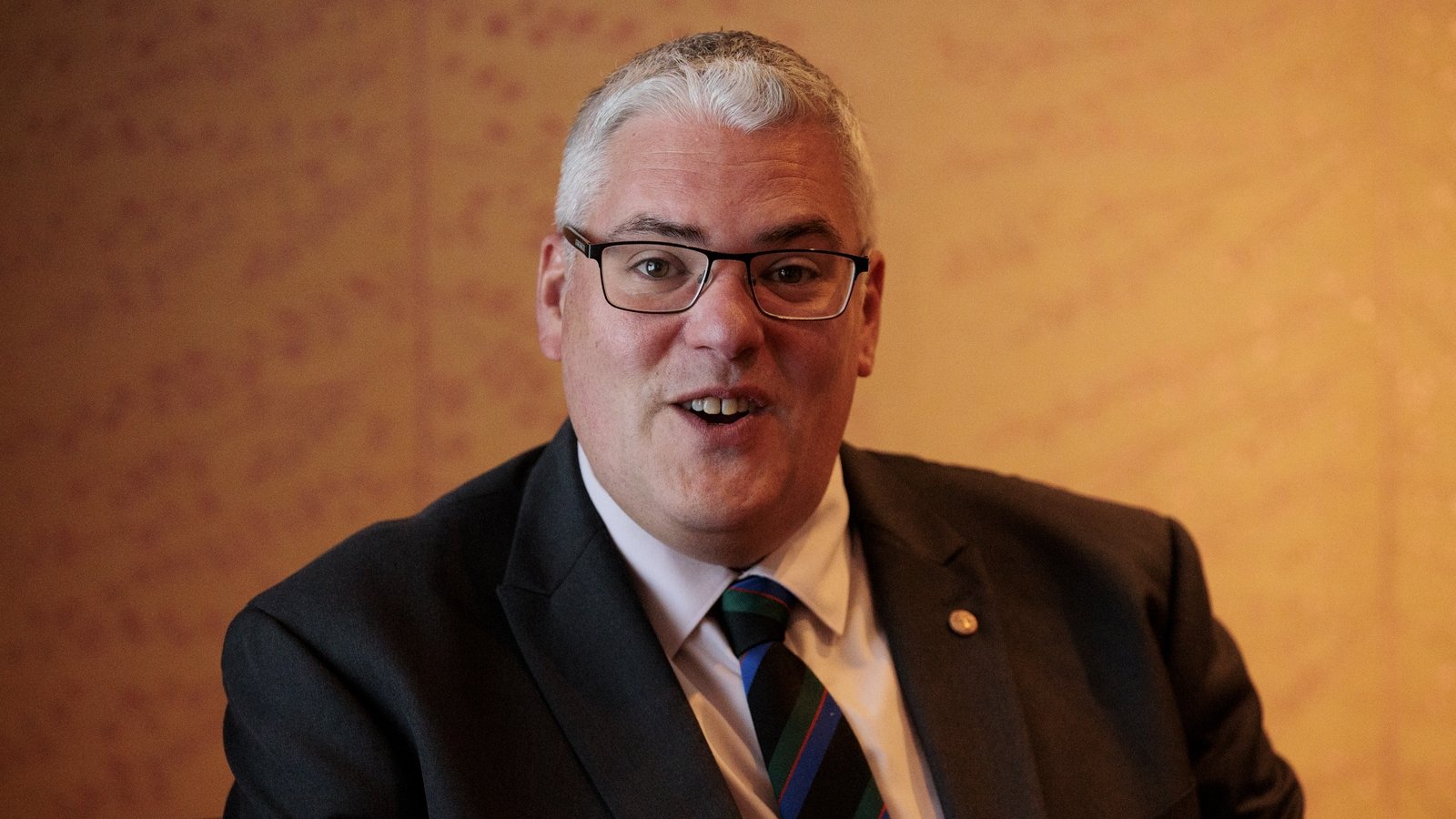
Belfast – Concerns are mounting over representation within the Police Service of Northern Ireland (PSNI) following the release of recent recruitment figures showing a decline in Catholic applicants. The debate has reignited discussion around previous affirmative action policies, specifically the 50:50 recruitment initiative implemented between 2001 and 2011. Democratic Unionist Party (DUP) leader Gavin Robinson has firmly stated that a return to such a system would be a “mistake,” arguing it would undermine merit and reintroduce discrimination. This comes amid accusations from Robinson that there has been insufficient leadership from republican parties in addressing barriers to Catholic participation in policing.
The latest recruitment campaign, with over 4,000 applicants, revealed that 65.6% identified as Protestant, 26.7% as Catholic and 7.7% as undetermined. These figures, released this week, represent the lowest percentage of Catholic applicants in over a decade, prompting renewed calls for measures to improve inclusivity within the PSNI. The issue is particularly sensitive given the historical context of policing in Northern Ireland and the ongoing efforts to build a truly representative and community-based police force.
The History of 50:50 Recruitment
The 50:50 recruitment initiative, in place from 2001 to 2011, aimed to address the significant under-representation of Catholics within the PSNI – then the Royal Ulster Constabulary (RUC) – following decades of sectarian conflict. The policy mandated that one Catholic recruit be accepted for every recruit from a Protestant or other background. The goal was to rapidly increase Catholic representation and foster greater trust in policing within nationalist communities. While the initiative demonstrably increased the number of Catholic officers, it as well faced criticism for potentially prioritizing religious affiliation over merit and for being perceived as discriminatory by some. The initiative was formally ended in 2011, with the PSNI stating it had achieved its objectives and that a merit-based system was now sufficient to ensure fair representation.
However, the recent drop in Catholic applicants has led some to question whether a return to a similar, albeit potentially modified, system is necessary. Robinson’s opposition stems from a belief that such a policy would be counterproductive, arguing that representation should be achieved through encouraging applications from all backgrounds and selecting candidates based solely on their qualifications. He contends that excluding qualified applicants based on their religious background would be a step backward, undermining the principles of fairness and equal opportunity.
Political Reactions and Accusations
Robinson’s criticism extends beyond the potential reintroduction of 50:50 recruitment. He has also accused republican leaders of failing to adequately address the “chill factors” that may deter Catholic applicants. He specifically pointed to the fact that it took 20 years after the formation of the PSNI for Sinn Féin leadership to attend a passing-out parade or recruitment event, suggesting a historical lack of engagement with policing within the republican community. He argues that this historical distance has created a legacy of distrust that continues to impact recruitment figures.
“You cannot question the legitimacy of the police for a generation and then express surprise when recruitment reflects that history,” Robinson stated in a communication to party members. He called for “sustained and wholehearted leadership” within republicanism to actively challenge barriers to Catholic participation and demonstrate a genuine commitment to inclusive policing. He emphasized the importance of consistency and visibility from republican leaders in supporting the PSNI.
Sinn Féin MLA and Policing Board member Linda Dillon, however, has dismissed the suggestion that her party bears further responsibility for encouraging nationalist applicants. In a recent interview with the BBC, Dillon argued that any political party actively calling for people to join the PSNI would likely see only a marginal increase in applications from any community. She attributed the issue to the “legacy issue,” stating it remains a significant obstacle for the PSNI.
The “Chill Factor” and Legacy Issues
The concept of a “chill factor” refers to the lingering sense of unease or intimidation that may deter Catholic individuals from joining the PSNI, stemming from historical experiences of discrimination and violence. This is linked to the legacy of the Troubles, a period of ethno-nationalist conflict in Northern Ireland that lasted from the late 1960s to 1998. During this time, the RUC – the predecessor to the PSNI – was often perceived as biased against the Catholic/nationalist community.
Addressing this legacy is a complex undertaking. It requires not only continued efforts to reform policing practices and build trust but also a willingness from all stakeholders – including political leaders, community groups, and the PSNI itself – to acknowledge the past and work towards reconciliation. The PSNI has implemented various initiatives aimed at improving community relations and increasing diversity within its ranks, but progress has been uneven.
Funding and Future Challenges for the PSNI
The debate over recruitment figures is occurring against a backdrop of broader concerns about the PSNI’s resources and capabilities. Robinson has also called for additional funding for the PSNI, citing recent disorder as evidence of the need for increased police presence and resources. He argues that adequate funding is essential to ensure the PSNI can effectively address security challenges and maintain law and order.
The PSNI faces a number of ongoing challenges, including dealing with paramilitary activity, organized crime, and cyber threats. It also has a responsibility to investigate legacy cases related to the Troubles, a task that is often fraught with difficulty and controversy. The PSNI’s budget has been subject to scrutiny in recent years, and there are concerns that cuts to funding could undermine its ability to effectively carry out its duties. The current political climate in Northern Ireland, marked by ongoing instability and division, further complicates the situation.
The issue of police recruitment and representation remains a critical one for Northern Ireland. Achieving a truly representative police force is seen as essential for building trust within all communities and ensuring the long-term stability of the region. The debate over the 50:50 initiative and the broader challenges facing the PSNI highlight the complex and sensitive nature of this issue.
Key Takeaways
- Recent PSNI recruitment figures reveal a decline in Catholic applicants, raising concerns about representation.
- DUP leader Gavin Robinson opposes a return to the 50:50 recruitment initiative, arguing it would be discriminatory.
- Robinson accuses republican leaders of failing to address “chill factors” that may deter Catholic applicants.
- Sinn Féin MLA Linda Dillon argues that the “legacy issue” remains a significant obstacle to increasing Catholic representation.
- The PSNI faces ongoing challenges related to funding, security threats, and legacy cases.
The Policing Board, responsible for overseeing the PSNI, is scheduled to discuss recruitment figures and strategies for improving representation at its next meeting on March 15, 2026. Stakeholders are encouraged to submit their views and contribute to the ongoing dialogue on this essential issue. Further updates on the PSNI’s recruitment efforts and initiatives to address legacy issues can be found on the official PSNI website: https://www.psni.police.uk/. We invite readers to share their perspectives on this critical issue in the comments section below.
Related reading