The economic reverberations of a recent Supreme Court decision striking down a series of tariffs imposed by the Trump administration are being felt by businesses in Orange County, California, and beyond. While the ruling offered a glimmer of hope for companies struggling with increased costs, a swift response from the former president – announcing a new 10% global tariff – has injected renewed uncertainty into the market. The situation highlights the complex and often unpredictable nature of trade policy and its impact on local economies.
For years, tariffs have acted as a significant headwind for businesses reliant on imported goods. The Supreme Court’s February 20, 2026, ruling, which found that President Trump did not have the authority to impose certain tariffs using the International Emergency Economic Powers Act (IEEPA), initially sparked optimism. However, this relief was tempered by the immediate announcement of a new tariff under the Trade Act of 1974, a move that has left many businesses bracing for continued challenges. The initial tariffs, and now the potential for new ones, have demonstrably impacted pricing, sales, and consumer behavior, creating a ripple effect throughout the supply chain.
Supreme Court Ruling and Trump’s Response
The Supreme Court’s decision centered on the legality of tariffs imposed under IEEPA, a law typically used to address national security emergencies. The court found that the Trump administration had overstepped its authority in using this act to justify broad tariffs not directly linked to a specific emergency. NBC Los Angeles reported that the ruling was met with cautious optimism by Orange County businesses, many of whom had been absorbing increased costs or passing them on to consumers.
However, President Trump swiftly countered the ruling by announcing a temporary 10% global tariff under the Trade Act of 1974. This act, while providing the president with broader tariff authority, is subject to a 150-day limitation and has historically not been used to implement broad-based tariffs. The move underscores the former president’s continued commitment to protectionist trade policies and introduces a new layer of complexity for businesses attempting to navigate the evolving trade landscape. The legality of this new tariff is already facing scrutiny, with legal experts questioning whether it aligns with the intent of the 1974 Act.
Impact on Orange County Businesses
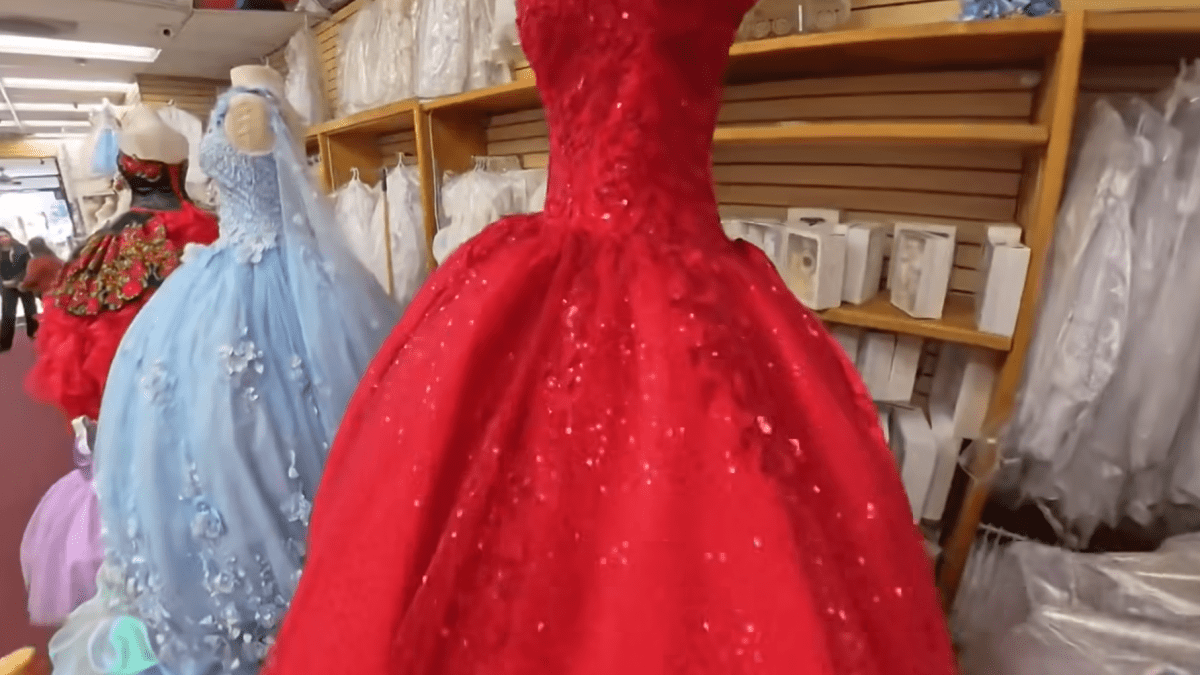
In downtown Santa Ana, business owners are reporting that the initial tariffs led to higher prices and difficult conversations with customers. Leticia Cortez, owner of Celene’s Bridal, a quinceañera dress shop that has operated for over 30 years, explained that tariffs on imported goods significantly increased her costs. She was forced to raise prices, leading to a decline in sales. “People do not want to pay so much for the dresses,” Cortez stated, illustrating the direct impact of tariffs on consumer demand. She cited an example of a blue dress imported from China, whose price increased from $950 to $1,200, representing the lowest price she could now offer.
Cortez’s experience is not isolated. Broader economic data indicates a widespread increase in prices across various sectors. According to reports, clothing prices have risen by 18% due to tariffs, while shoe prices have increased by 19%. New car prices are estimated to have increased by 5%, and electronics have become 7.5% more expensive. The Los Angeles Times highlighted the impact on the trade-reliant economy of Southern California, noting that the tariffs disrupted supply chains and port logistics.
The increased prices are changing consumer spending habits. Eduardo Hernandez, a local resident, expressed his frustration with the rising costs, stating, “I like to switch out my outfits and my shoes, but now it’s kind of hard.” This sentiment reflects a broader trend of consumers becoming more price-sensitive and reducing discretionary spending.
Economic Analysis and Future Outlook
Economists suggest that the Supreme Court’s initial ruling could eventually lead to price stabilization if the tariffs are fully rolled back. However, Carsten Lange, a professor of economics at Cal Poly Pomona, cautioned that the process could be delayed and the extent of price relief remains uncertain. “I think we will see for sure reductions. But we don’t know when there might be a time delay. And we don’t know by how much,” Lange explained, adding that the newly announced 10% global tariff could negate any potential benefits. The uncertainty surrounding future trade policy is a major concern for businesses, making it difficult to plan for the long term.
The situation is further complicated by the potential for retaliatory tariffs from other countries. If the United States imposes tariffs on their goods, other nations may respond in kind, leading to a trade war that could harm all parties involved. The Trade Act of 1974, while granting the president tariff authority, does not guarantee a favorable outcome in international trade negotiations. The Act was originally intended for specific trade imbalances, not as a broad tool for reshaping global trade relationships.
The Broader Impact on Supply Chains
The tariffs have not only affected prices but have also disrupted global supply chains. Businesses have been forced to find alternative suppliers, which can be costly and time-consuming. The Los Angeles County Economic Development Corp. Noted that the tariffs have had a “significant impact” on supply chains, manufacturers, and the port logistics sector. Stephen Cheung, the organization’s chief executive, stated that the Supreme Court’s decision could have a “significant impact” on the Los Angeles economy, but cautioned that it would take time to unravel the disruptions caused by the tariffs.
The Port of Los Angeles, a major gateway for international trade, has been particularly affected. The port has been grappling with congestion and delays, exacerbated by the tariffs and other global economic factors. Port officials are working to address these challenges through infrastructure investments and climate initiatives, but the long-term impact of the tariffs remains uncertain.
Looking Ahead
The future of trade policy remains unclear. The newly announced 10% global tariff is likely to face legal challenges, and its ultimate impact will depend on how It’s implemented and whether other countries respond with retaliatory measures. Businesses in Orange County and across the country are bracing for continued volatility and uncertainty. Cortez, the owner of Celene’s Bridal, expressed cautious optimism, hoping that relief will come soon. She and other business owners are also concerned about the impact of immigration enforcement operations, which they say have further hurt sales.
The situation underscores the interconnectedness of the global economy and the importance of stable and predictable trade policies. The Supreme Court’s ruling and President Trump’s response highlight the ongoing debate over the role of tariffs in promoting economic growth and protecting domestic industries. The coming months will be critical in determining the long-term consequences of these developments.
The next key development to watch will be the legal challenges to the newly imposed 10% global tariff. Court filings are expected in the coming weeks, and the outcome of these challenges will significantly shape the future of trade policy. Stay tuned to World Today Journal for ongoing coverage of this evolving situation.
What are your thoughts on the Supreme Court’s decision and the president’s response? Share your comments below and join the conversation.
Keep reading
- 25-Year-Old AI Prodigy Aschenbrenner Faces Margin Call After 270% Returns
- Coinbase UK Boss: FCA Crypto Crackdown Will ‘Wipe Out’ Bad Actors and Boost Trust
- The Senate Blue Slip, Explained: The Custom Trump Wants Gone (daybreakwire.com)
- At typically tranquil Camp David, Trump publicly lashes out at political enemies (archyworldys.com)