Visakhapatnam, India – Google is significantly expanding its global infrastructure with the “America-India Connect” initiative, a project designed to bolster AI connectivity across four continents. Announced at the India AI Impact Summit 2026 on February 18, the initiative centers around a substantial $15 billion investment in India’s AI infrastructure, aiming to increase the reach, reliability, and resilience of digital connectivity worldwide. This expansion isn’t simply about faster internet; it’s a strategic move to prevent the growing digital divide from evolving into an “AI divide,” ensuring broader access to the benefits of artificial intelligence.
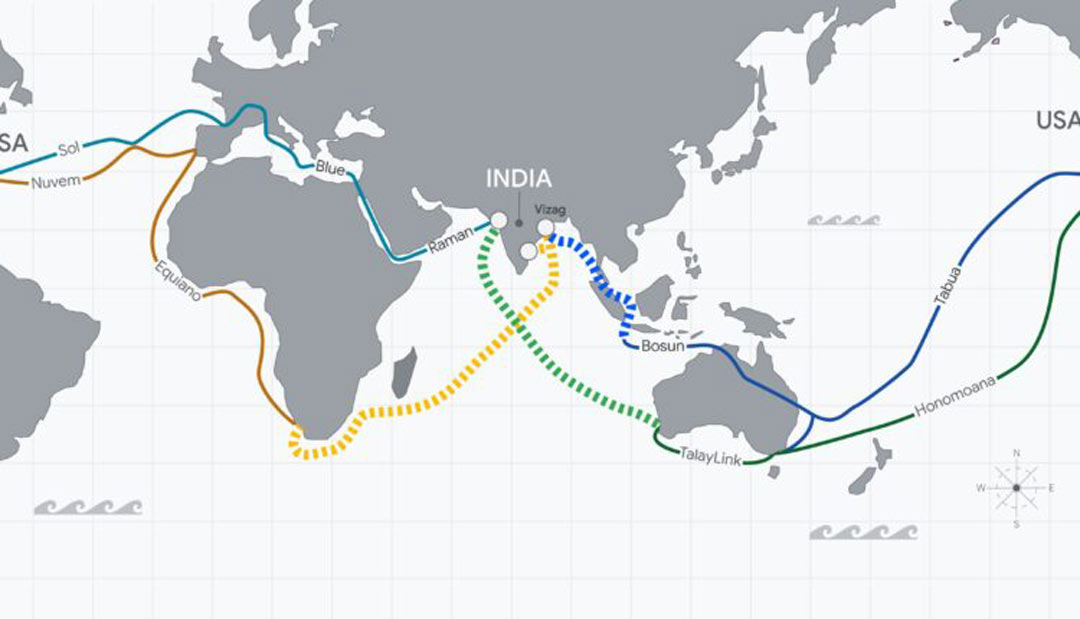
The core of America-India Connect involves the creation of a novel international subsea gateway in Visakhapatnam (Vizag), India, alongside the establishment of three new subsea paths connecting India directly to Singapore, South Africa, and Australia. Complementing these underwater routes are four strategic fiber-optic routes designed to enhance network capacity and resilience between the United States, India, and various locations throughout the Southern Hemisphere. This ambitious undertaking underscores Google’s commitment to building a more interconnected and equitable digital future.
Building a Robust Subsea Network
The project’s foundation lies in the construction of several key subsea and terrestrial fiber optic routes. A direct fiber-optic path is being developed between Vizag and Chennai, on India’s eastern coast, extending onward to South Africa. This route will integrate with existing subsea cable systems – Equiano and Nuvem – creating a redundant, high-capacity connection that loops around Africa, linking the American east coast to Vizag. According to Google, this redundancy is crucial for maintaining consistent connectivity even in the event of disruptions.
Further expanding connectivity in the Asia-Pacific region, a direct path is also being established between Vizag, and Singapore. This will connect with the Bosun and Tabua subsea cable systems, forming a South Pacific route that links the American west coast to Vizag via Australia. These connections are vital for supporting the increasing data demands of businesses and individuals across these regions.
Google is also constructing a direct fiber-optic route between Mumbai and Perth, Australia. This will integrate with the TalayLink and Honomoana subsea cable systems, creating another South Pacific route connecting the American west coast around Australia to Mumbai. These new routes complement existing infrastructure, including the Blue, Raman, and Sol cables, which already form a data corridor from the eastern United States, through the Red Sea, to Mumbai.
The $15 Billion Investment and its Implications
The America-India Connect initiative is anchored by Google’s previously announced five-year, $15 billion investment in India’s AI infrastructure. This investment, first announced last year, reflects the growing importance of India as a key market and a hub for technological innovation. Brian Quigley, VP of Global Network Infrastructure at Google Cloud, emphasized that increased connectivity through subsea cables demonstrably improves internet affordability and reliability, driving long-term economic productivity and growth. Google Cloud Blog
The project isn’t solely a technological undertaking; it’s a collaborative effort involving local partners. Google is working closely with regional stakeholders to ensure the infrastructure is developed and maintained in a sustainable and responsible manner. This collaborative approach is intended to maximize the benefits of the investment for local communities and economies.
Addressing the AI Divide
A central motivation behind America-India Connect is the desire to prevent a widening “AI divide.” As artificial intelligence becomes increasingly integrated into various aspects of life, access to the necessary infrastructure and resources is crucial for ensuring equitable participation. Without sufficient connectivity, communities risk being left behind, exacerbating existing inequalities. Google’s initiative aims to address this challenge by expanding access to AI technologies and opportunities across a broader geographic area.
The initiative’s focus on India is particularly significant, given the country’s large population and rapidly growing digital economy. By strengthening India’s digital infrastructure, Google hopes to empower individuals and businesses to leverage the potential of AI for economic growth, social development, and innovation. The strategic location of Vizag as a key gateway further solidifies India’s role as a central hub for global connectivity.
The Role of Subsea Cables in Global Connectivity
Subsea cables are the backbone of the modern internet, transmitting over 99% of international data. These cables, often spanning thousands of kilometers, provide the high bandwidth and low latency necessary for supporting data-intensive applications such as video streaming, cloud computing, and artificial intelligence. Investing in new subsea infrastructure is therefore essential for meeting the ever-increasing demand for data connectivity.
The construction and maintenance of subsea cables is a complex and costly undertaking, requiring specialized expertise and significant capital investment. Google’s America-India Connect initiative represents a major commitment to expanding this critical infrastructure, ensuring that more communities have access to the benefits of a connected world. The redundancy built into the new routes – utilizing existing cables like Equiano, Nuvem, Bosun, Tabua, Blue, Raman, and Sol – is a key element of the project’s resilience.
Looking Ahead
The America-India Connect initiative is expected to have a significant impact on global connectivity, particularly in the regions directly served by the new infrastructure. By increasing bandwidth, reducing latency, and enhancing network resilience, the project will enable faster and more reliable access to digital services, fostering economic growth and innovation. The project’s success will depend on continued collaboration with local partners and a commitment to sustainable development.
Google has not yet announced a specific completion date for the America-India Connect initiative, but the company is actively working with partners to accelerate the deployment of the new infrastructure. Further updates on the project’s progress are expected to be shared at future industry events and through Google’s official channels. The company’s ongoing investment in India’s AI infrastructure signals a long-term commitment to the region and a belief in the transformative potential of artificial intelligence.
As the world becomes increasingly reliant on digital connectivity, initiatives like America-India Connect are crucial for ensuring that the benefits of technology are shared by all. The project represents a significant step towards bridging the digital divide and creating a more inclusive and equitable future.
Stay tuned for further updates on the America-India Connect initiative as Google continues to expand its global infrastructure and drive innovation in the field of artificial intelligence. We encourage you to share your thoughts and comments on this exciting development below.
Keep reading