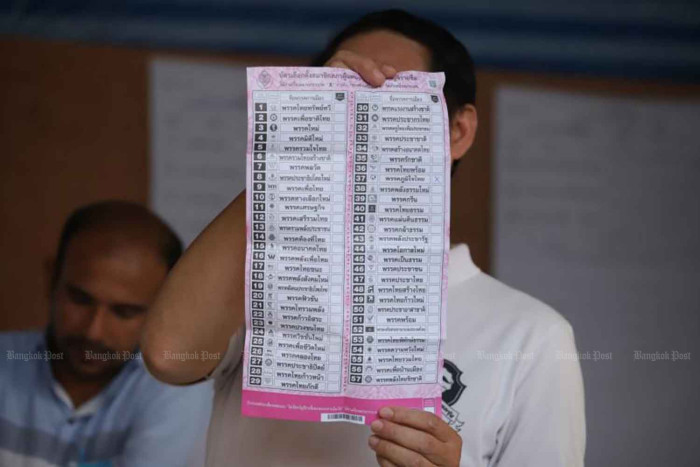
Bangkok – Concerns over ballot secrecy and potential vulnerabilities in Thailand’s electoral process resurfaced on Sunday as the Election Commission (EC) conducted revotes in three polling units and a recount in another, all stemming from irregularities during the February 8th elections. The renewed scrutiny centers on the use of QR codes and barcodes on ballots, raising questions about whether voter anonymity was compromised. The events unfolded at the Amornphan Satellite Condominium Town (R4) in the Kannayao district of Bangkok, drawing observers from across the political spectrum, including media representatives, senators, and IT specialists.
The necessitate for revotes and a recount arose after a tent housing polling stations collapsed during a rainstorm on February 8th, damaging ballots and necessitating a fresh vote in affected areas. This incident, coupled with pre-existing anxieties about the security of the voting system, has fueled a debate about the integrity of the electoral process. The focus on QR codes and barcodes is particularly acute, with critics alleging they could potentially allow ballots to be traced back to individual voters, undermining the principle of a secret ballot. Thailand’s political landscape remains highly sensitive following years of instability and military intervention, making the assurance of fair and transparent elections paramount.
The revotes involved 716 eligible voters across the three polling units, with officials anticipating a turnout of approximately 70%, or around 500 voters. Sub Lieutenant Samphan Saengkamlerd, director of the Bangkok Election Office, reported that operations proceeded smoothly overall. Still, he stopped short of confirming whether the recent ballots utilized the same QR code and barcode technology that sparked the initial concerns. This lack of clarity has intensified calls for greater transparency from the EC regarding the ballot design and counting procedures. The EC maintains its commitment to maintaining ballot secrecy, asserting that there is currently no evidence to suggest ballots could be traced back to voters, but this assurance has done little to quell the anxieties of some observers.
Concerns Over Ballot Technology and Transparency
The controversy surrounding the QR codes and barcodes began shortly after the February 8th elections, when blockchain specialist Thanarat Kuawattanaphan, CEO of DomeCloud, publicly raised concerns about their potential to compromise voter anonymity. Kuawattanaphan argued that the codes could be used to link ballots to individual voters, even if not intentionally, and called for a thorough investigation into the matter. His concerns were echoed by Senator Noraset Pratchayakorn, who attended Sunday’s revote as an observer, emphasizing the crucial need to ensure the untraceability of ballots. The senator’s presence underscores the seriousness with which these concerns are being taken within the Thai government.
Kuawattanaphan similarly criticized the EC for what he described as a lack of responsiveness to public inquiries and questioned the commission’s decision to prohibit the photographing of blank ballots for independent verification. He argued that allowing independent verification would help to build public trust in the electoral process. The ban on photographing ballots has been interpreted by some as an attempt to conceal potential irregularities, further fueling the controversy. The EC has not yet publicly addressed these criticisms in detail.
The debate over ballot technology comes against a backdrop of increasing scrutiny of electoral processes worldwide. Concerns about election security, disinformation, and foreign interference have prompted calls for greater transparency and accountability in voting systems. Thailand is not alone in grappling with these challenges, as countries around the globe seek to safeguard the integrity of their democratic institutions. The use of technology in elections, while offering potential benefits in terms of efficiency and accessibility, also introduces new vulnerabilities that must be carefully addressed.
Recount Results and Party Performance
Alongside the revotes, a recount was conducted at Polling Unit 10 in Constituency 15. The initial count showed the People’s Party (PP) candidate receiving 224 constituency votes, followed by the Pheu Thai Party with 103 votes and the Bhumjaithai Party with 81 votes. On the party-list vote, the People’s Party again led with 233 votes. The recount, which took approximately one hour and 40 minutes to complete, confirmed these results, with officials sealing the ballots and posting the results before transferring the materials onward. These results, while not dramatically different from the initial count, underscore the competitive nature of the election in this constituency.
The People’s Party, a relatively new political force, has emerged as a significant contender in Thai politics, appealing to younger voters and advocating for progressive policies. The Pheu Thai Party, linked to former Prime Minister Thaksin Shinawatra, remains a major player, while the Bhumjaithai Party has also gained prominence in recent years. The outcome of the election will likely have a significant impact on the future direction of Thailand, shaping its political landscape and economic policies. The EC is currently investigating the Pheu Thai Party, alleging potential undue influence from Thaksin Shinawatra, a probe initiated on October 18, 2024. Thailand TV News
Addressing Voter Concerns and Maintaining Trust
The EC faces a critical challenge in addressing the concerns raised about ballot secrecy and restoring public trust in the electoral process. Transparency is key to achieving this goal. The commission should consider providing a detailed explanation of the technology used in the ballots, including the purpose of the QR codes and barcodes, and how they are intended to enhance, rather than compromise, ballot security. Allowing independent verification of the ballots, such as by permitting the photographing of blank ballots, could help to alleviate concerns and build confidence in the system.
The incident involving the collapsed tent and damaged ballots highlights the importance of adequate infrastructure and contingency planning for elections. Ensuring that polling stations are safe, secure, and accessible is essential for facilitating a smooth and fair voting process. The EC should review its procedures for setting up and maintaining polling stations to prevent similar incidents from occurring in the future. The February 8th rainstorm, while an unforeseen event, exposed vulnerabilities in the electoral infrastructure that need to be addressed.
The broader context of Thailand’s political landscape adds another layer of complexity to the situation. The country has experienced periods of political instability and military intervention in recent years, and the current election is seen as a crucial test of its democratic institutions. Maintaining the integrity of the electoral process is essential for ensuring a peaceful and stable transition of power. The international community is closely watching the events unfolding in Thailand, and the EC has a responsibility to uphold the highest standards of transparency and fairness.
Recent reports indicate a rise in election-related complaints, with vote-buying being the most prevalent issue. At least 113 complaints alleging election irregularities have been lodged with the EC to date. Newswav This underscores the need for robust enforcement mechanisms to deter electoral fraud and ensure that the will of the people is accurately reflected in the election results. The EC must investigate these complaints thoroughly and take appropriate action against those found to have engaged in illegal activities.
The advance voting process, which took place on February 2nd, 2026, was largely hailed as smooth, with 8,610 voters casting their ballots within their constituencies and 2.206 million voting outside of their registered areas. Bangkok Post However, the concerns raised about ballot secrecy and the subsequent revotes and recount serve as a reminder that even seemingly smooth elections can be subject to scrutiny and challenge. The EC must remain vigilant and proactive in addressing any potential vulnerabilities in the electoral process to maintain public trust and ensure the integrity of future elections.
Looking ahead, the EC is expected to announce the official results of the election in the coming days. The outcome will determine the composition of the House of Representatives and the formation of the next government. The political parties will then begin the process of negotiating coalition agreements and forming a governing alliance. The next key checkpoint will be the certification of the election results and the convening of the new parliament. The future of Thai democracy hinges on a transparent and credible electoral process, and the EC has a crucial role to play in ensuring that the will of the people is respected.
What are your thoughts on the recent developments in Thailand’s elections? Share your comments below and join the conversation. Don’t forget to share this article with your network to spread awareness about these important issues.
Keep reading