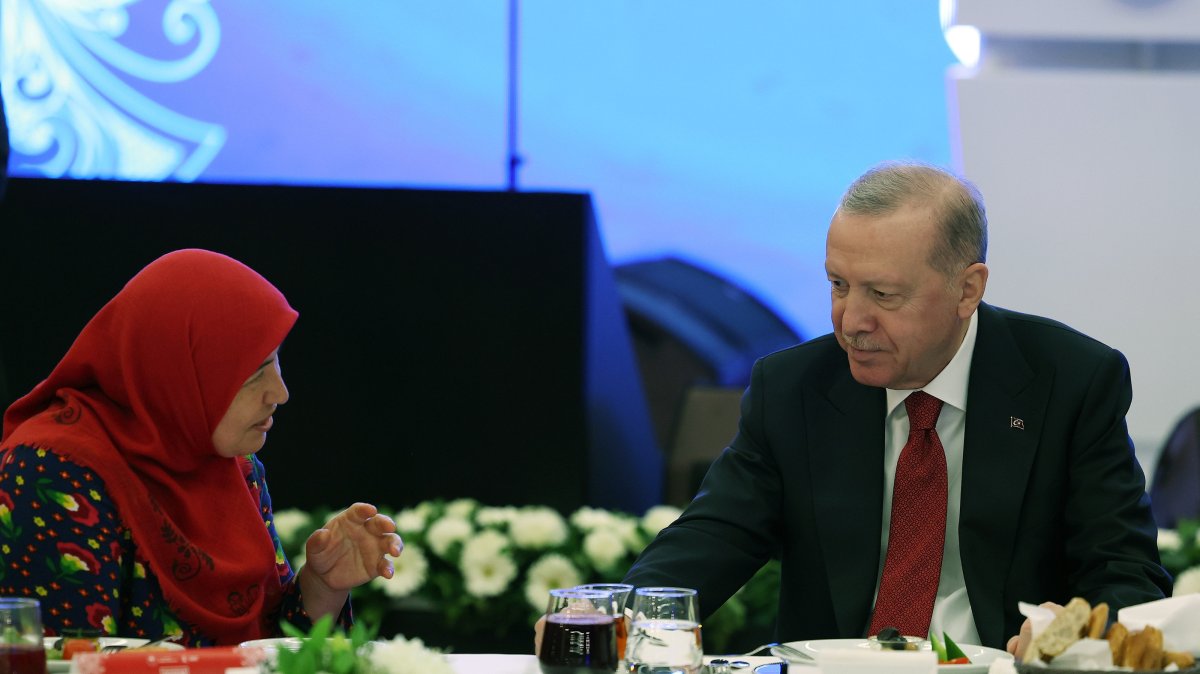
As political maneuvering intensifies in Ankara, the future of Turkish President Recep Tayyip Erdoğan remains a central question. Despite calls from opposition parties for an early election, Erdoğan’s Justice and Development Party (AK Party) is firmly advocating for him to continue in office, potentially seeking another term in the 2028 presidential elections. This stance comes amid a complex political landscape shaped by recent electoral victories for the opposition and ongoing economic challenges within Türkiye.
The AK Party’s endorsement of Erdoğan’s continued leadership was publicly voiced by Ahmet Büyükgümüş, the party’s deputy chair, during a Sunday interview with Kanal 7. Büyükgümüş asserted that Erdoğan should be nominated for the presidency, emphasizing the party’s belief in his ability to continue “serving the people.” This declaration underscores the AK Party’s commitment to maintaining stability and continuity in governance, even as the opposition seeks to capitalize on recent gains.
The Mechanics of an Early Election
While the opposition, led by the Republican People’s Party (CHP), has been vocal in its demands for an early election, Büyükgümüş clarified the procedural hurdles involved. He explained that triggering an early election is technically possible, but requires a significant majority in Parliament – specifically, the votes of 360 lawmakers. Currently, the AK Party, even in coalition with the Nationalist Movement Party (MHP), does not possess the necessary parliamentary strength to unilaterally call for a snap election. This reality significantly diminishes the likelihood of an early vote in the immediate future.
The AK Party’s position is not to rush into an election but to consider a potential rescheduling of the existing date, currently set for May 2028, with local elections scheduled for March 2029. According to Büyükgümüş, any such rescheduling would be a decision for Parliament to make, reflecting the collective political will of the assembly. This strategy too has implications for Erdoğan’s eligibility, potentially allowing him to be nominated for the presidency before the complete of his current term, which began following the 2023 elections.
Opposition Confidence and Municipal Election Gains
The CHP has been particularly assertive in its calls for an early election, at one point suggesting a vote as early as spring 2026. This push is fueled by a sense of momentum following the party’s notable success in the 2024 municipal elections. These victories, widely seen as a rebuke of the AK Party’s long-held dominance, have emboldened the CHP and its supporters to believe they have a strong chance of winning a national election. Though, the parliamentary arithmetic remains a significant obstacle to their immediate goal.
The current electoral framework in Türkiye dictates that the next general election is slated for May 2028. Any deviation from this schedule requires parliamentary approval, a hurdle the AK Party and MHP coalition currently cannot overcome independently. This legislative constraint underscores the complexities of the Turkish political system and the challenges faced by the opposition in attempting to force an early vote.
Erdoğan’s Position and Economic Context
President Erdoğan himself has remained relatively reserved regarding his future political ambitions. While he has indicated an openness to running again if there is sufficient public support, he has also cautioned against the potential disruption that an early election could cause to Türkiye’s stability. In May of the previous year, Erdoğan voiced concerns that a snap election could undermine the country’s economic and political progress. This stance reflects a broader emphasis on maintaining continuity and avoiding unnecessary political upheaval.
Erdoğan’s comments on stability come at a time when Türkiye is navigating a complex economic landscape. The country has faced significant challenges including high inflation and currency devaluation. In February 2024, Türkiye’s annual inflation rate stood at 55.18%, according to the Turkish Statistical Institute (TurkStat) [TurkStat]. The government has implemented various measures to address these issues, but the economic situation remains a key factor influencing the political climate.
The Role of Turkish Media and International Perception
Recent media coverage within Türkiye has also drawn attention. Reports have surfaced regarding criticism of Turkish Channel 7 for airing Indian serials, sparking debate about cultural influence and economic priorities. The Week reported on the controversy, highlighting concerns that the channel was prioritizing revenue from Indian content over domestic programming. While seemingly unrelated to the political debate surrounding Erdoğan’s future, this incident reflects broader societal discussions about national identity and economic priorities within Türkiye.
Internationally, Türkiye’s political and economic situation is closely monitored. The country’s strategic importance as a NATO member and its role in regional geopolitics make it a key player in international affairs. Any significant political changes, such as an early election or a shift in leadership, would likely have ripple effects throughout the region and beyond.
Looking Ahead
The coming months will be crucial in determining the trajectory of Turkish politics. While the AK Party currently lacks the parliamentary support to force an early election, the political landscape remains fluid. The CHP’s continued success in gaining public trust, coupled with any potential shifts in the economic situation, could alter the dynamics and increase pressure for a snap vote. However, as it stands, all indications point towards a general election in May 2028, with President Erdoğan potentially seeking to extend his two-decade-long rule.
The question of whether Erdoğan will ultimately run again and whether he will succeed, remains open. His decision will undoubtedly shape the future of Türkiye, impacting its domestic policies, regional relationships, and international standing. The AK Party’s continued support for his leadership suggests a strong desire for continuity, but the opposition’s growing strength and the challenges facing the Turkish economy could present significant obstacles to his re-election bid.
Key Takeaways:
- The AK Party is advocating for President Erdoğan to remain in office and potentially run again in the 2028 elections.
- An early election is unlikely in the short term due to the AK Party’s lack of parliamentary majority.
- The CHP is pushing for an early election, buoyed by its success in the 2024 municipal elections.
- Türkiye’s economic challenges, including high inflation, are a significant factor influencing the political climate.
- President Erdoğan has expressed reservations about the potential disruption of an early election.
Stay informed about developments in Turkish politics as we continue to monitor the situation. Share your thoughts and perspectives in the comments below.
Keep reading