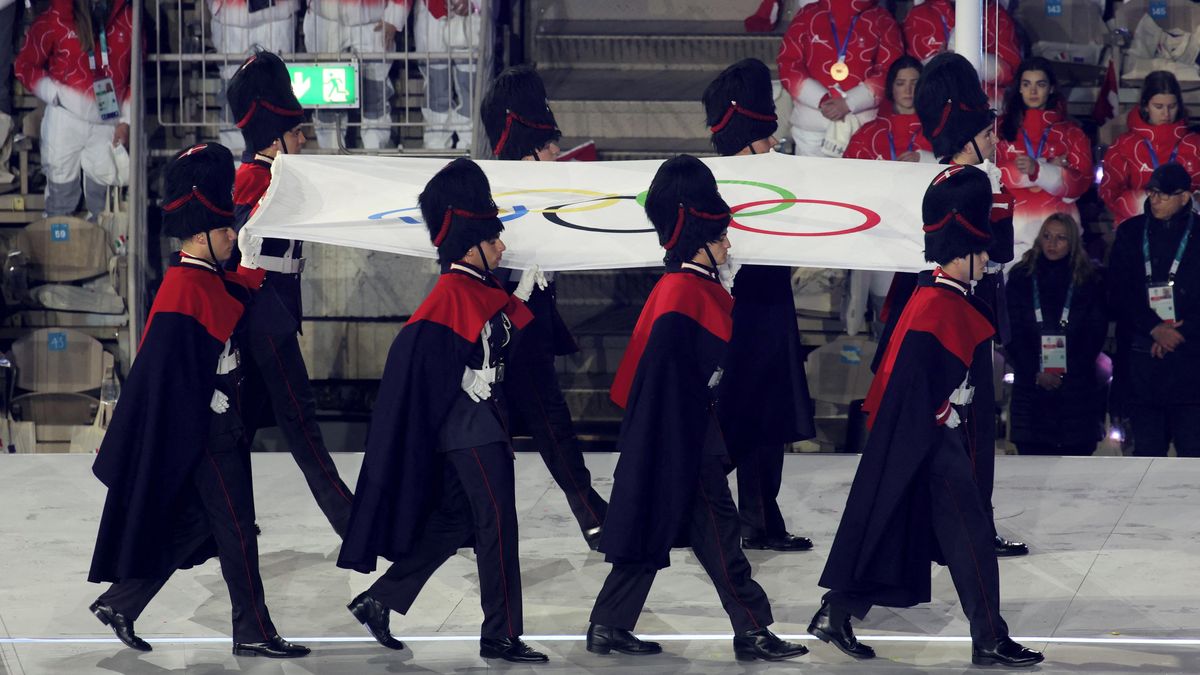
The 2026 Winter Olympics in Milan and Cortina d’Ampezzo, Italy, officially came to a close on Sunday, February 23rd, marking the end of 16 days of competition. The closing ceremony, held in the historic Verona Arena, saw the extinguishing of the Olympic cauldrons – one in Milan and one in Cortina d’Ampezzo – symbolizing the end of the Games. International Olympic Committee (IOC) President Kirsty Coventry hailed the event as a success, setting a new precedent for future Winter Olympic Games.
Coventry lauded the Games as a “new kind of Winter Games,” emphasizing the innovative approach taken by organizers in utilizing primarily existing venues spread across a vast geographical area within the Italian Alps. This dispersed model, while presenting logistical challenges, proved to be a defining characteristic of the Milan-Cortina Games. The IOC President acknowledged the strong public support and record global engagement that contributed to the overall success of the event. The Games showcased exceptional athletic performances, captivating audiences worldwide.
A Dispersed Games and a Passing of the Torch
The decision to utilize existing venues, rather than constructing new ones, was a key element of the Milan-Cortina Games’ sustainability strategy. This approach aimed to minimize environmental impact and reduce costs, aligning with the IOC’s broader efforts to promote more sustainable Olympic events. The Games spanned hundreds of kilometers, requiring careful coordination and logistical planning to ensure smooth operations. The Verona Arena, an ancient Roman amphitheater, provided a fittingly historic backdrop for the closing ceremony, underscoring Italy’s rich cultural heritage.
During the ceremony, the Olympic flag was formally handed over to representatives from the French regions that will host the 2030 Winter Olympics. The 2030 Games are slated to be held in the French Alps, encompassing the Nice region and several alpine resorts. This transfer of the Olympic flag represents a symbolic passing of the torch, signifying the continuation of the Olympic spirit and the anticipation for the next Winter Games. The handover signifies France’s commitment to upholding the values and traditions of the Olympic movement.
Athletic Highlights and Record-Breaking Performances
The Milan-Cortina Games witnessed a number of remarkable athletic achievements. Chinese freestyle skier Eileen Gu secured a gold medal in her final event of the Games, adding to her already impressive collection of accolades. According to the IOC, the USA men’s ice hockey team achieved a historic victory, winning the gold medal for the first time since 1980, defeating Canada in a thrilling overtime match. Norwegian cross-country skier Johannes Klaebo was also celebrated during the closing ceremony, receiving one of his six gold medals won at the Games.
Klaebo’s performance was particularly noteworthy, as he became the first athlete to win all six races he entered at a single Winter Olympics. His achievement brought his career total to 11 Winter Olympic gold medals, establishing a new record in the history of the Games. The Games also saw impressive performances across a wide range of disciplines, including alpine skiing, snowboarding, figure skating, and biathlon, showcasing the diversity and athleticism of winter sports.
A New Standard for Future Winter Games
IOC President Coventry emphasized that the Milan-Cortina Games had created a blueprint for future Winter Olympics. The success of the dispersed model, combined with the focus on sustainability and the utilization of existing infrastructure, provides a valuable framework for organizing future events. As reported by the Mcduffie Progress, Coventry stated, “You delivered a new kind of Winter Games and set a new standard for the future.” This sentiment reflects the IOC’s commitment to adapting the Olympic Games to meet the evolving needs of athletes, host cities, and the global community.
The extinguishing of the Olympic cauldrons in both Milan and Cortina d’Ampezzo marked a poignant moment, signifying the official end of the Games. This symbolic act brought to a close a period of intense competition, celebration, and international camaraderie. The Games provided a platform for athletes from around the world to showcase their talents and inspire audiences with their dedication and perseverance. The legacy of the Milan-Cortina Games will undoubtedly be felt for years to come, both within Italy and throughout the Olympic movement.
Looking Ahead to the 2030 Winter Olympics in France
With the Milan-Cortina Games concluded, attention now turns to preparations for the 2030 Winter Olympics in France. The French Alps are set to host the next edition of the Games, promising another exciting chapter in the history of the Winter Olympics. The organizers in France will undoubtedly draw upon the lessons learned from the Milan-Cortina Games, particularly in the areas of sustainability, logistical planning, and community engagement. The success of the 2030 Games will depend on their ability to build upon the foundations laid by their Italian predecessors.
The French bid for the 2030 Games was selected by the IOC in June 2023, as noted by Olympics.com, after Salt Lake City, USA, withdrew their bid. The French proposal focuses on utilizing existing venues and infrastructure to minimize costs and environmental impact. The Games are expected to boost tourism and economic activity in the region, while also promoting winter sports and a healthy lifestyle.
The next key milestone for the 2030 Winter Olympics will be the announcement of the official mascot and emblem, expected in late 2026 or early 2027. Further details regarding the competition schedule, venue plans, and ticketing information will be released in the coming months. As the preparations progress, the world will be watching with anticipation, eager to witness another spectacular celebration of winter sports and international cooperation.
The Milan-Cortina 2026 Winter Olympics have concluded, leaving behind a legacy of athletic achievement, innovation, and sustainability. The Games have set a new standard for future Winter Olympics, and the world now looks forward to the next chapter in the Olympic story – the 2030 Winter Olympics in France. Stay tuned to World Today Journal for continued coverage of the Olympic movement and its impact on global health and well-being.
Do you have thoughts on the innovative approach taken by the Milan-Cortina Games? Share your comments below, and be sure to share this article with your network!