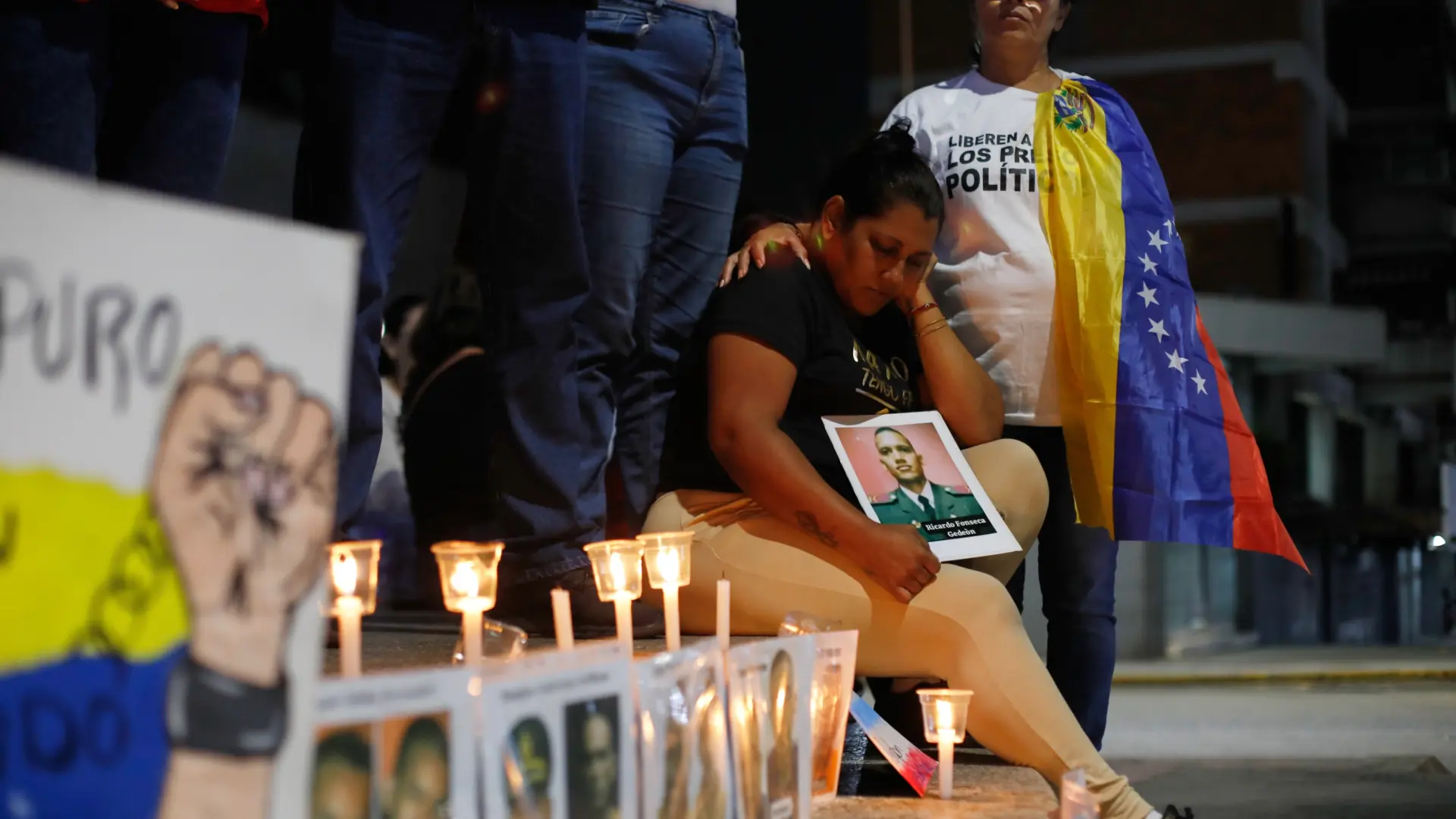
Caracas, Venezuela – More than 2,000 individuals with precautionary measures and 177 prisoners have been released or had their legal statuses adjusted under Venezuela’s recently enacted Amnesty Law, according to officials. The move, heralded by the government as a step towards national reconciliation, has been met with cautious optimism and scrutiny from human rights organizations and opposition groups who question the law’s scope and implementation. The releases come after a period of prolonged political turmoil and a significant number of detentions linked to political opposition and dissent.
The Amnesty Law, approved by the Venezuelan National Assembly last week, aims to address cases stemming from political events over the past 27 years. However, concerns have been raised that the legislation excludes individuals involved in acts of violence or those accused of crimes against humanity, potentially leaving hundreds of political prisoners still incarcerated. The law’s passage follows the ousting of Nicolás Maduro and the establishment of an interim government led by Delcy Rodríguez, signaling a potential shift in the country’s approach to political justice.
Jorge Arreaza, a member of the National Assembly and president of the commission overseeing the law’s implementation, announced the initial figures on Monday, February 23, 2026. He stated that the releases include individuals detained in connection with events such as the 2002 coup attempt against Hugo Chávez, the 2002-2003 oil strike, and subsequent protests throughout the years, including those related to the 2024 presidential elections and the 2025 regional and National Assembly elections. Deutsche Welle reports that 379 of those initially released were expected to be fully released from prison by Saturday, February 21, 2026.
The Scope of the Amnesty Law and Remaining Concerns
While the government portrays the Amnesty Law as a broad gesture of goodwill, critics point to specific exclusions that limit its impact. The legislation does not cover individuals implicated in the alleged 2018 assassination attempt against Maduro, nor those involved in “Operation Gideon,” a 2019-2020 attempt to overthrow the government. These omissions have fueled accusations that the law is selectively applied and designed to protect certain individuals while leaving others behind bars.
According to Foro Penal, a Venezuelan non-governmental organization that monitors political prisoners, approximately 2,742 individuals were expected to be immediately eligible for amnesty under the law, while around 400 would be excluded. DW reports that prior to this latest round of releases, nearly 650 political prisoners remained incarcerated. The organization has long maintained detailed records of detentions and legal proceedings related to political cases in Venezuela.
Government Response and Justification
President Encargada Delcy Rodríguez has defended the Amnesty Law as a crucial step towards building “a more democratic, more just, and more free Venezuela.” She emphasized the importance of fostering national unity and moving beyond the polarization that has characterized Venezuelan politics for decades. The government argues that the law is a necessary component of a broader effort to stabilize the nation and promote reconciliation.
Vladimir Padrino, the Minister of Defense and head of the Armed Forces, echoed this sentiment, stating that the law should be interpreted as a sign of “maturity and political strength.” He highlighted the role of the Armed Forces in supporting the “Bolivarian Revolution” and maintaining national stability. The military’s backing is considered crucial for the success of the interim government’s initiatives.
Implementation and Challenges
The implementation of the Amnesty Law is being overseen by a legislative commission led by Jorge Arreaza. The process involves reviewing individual cases, verifying eligibility, and coordinating releases with the judicial system. However, challenges remain, including concerns about the independence and impartiality of the courts. Critics fear that the judiciary, still largely composed of individuals appointed during the Maduro era, may delay or obstruct the release of political prisoners.
Arreaza announced on Monday, February 23, 2026, that 177 prisoners had been released and that 2,021 individuals with precautionary measures had benefited from the law. He also stated that over 3,000 requests for evaluation of new cases had been received through the Venezuelan courts. Corre del Orinoco reports that more than 800 excarcelations and over 2,735 precautionary measures have been carried out to date.
The Role of International Observers
International organizations and human rights groups are closely monitoring the implementation of the Amnesty Law. Many have called for independent observers to be granted access to Venezuelan prisons and courts to ensure transparency and accountability. The United States, which played a role in the events leading to Maduro’s removal, has expressed cautious support for the law but has also urged the interim government to release all political prisoners without exception.
The European Union has similarly called for a comprehensive and impartial implementation of the amnesty, emphasizing the importance of due process and respect for human rights. Several international organizations have offered technical assistance to the Venezuelan government to support the implementation process and ensure that it meets international standards.
Looking Ahead
The coming weeks will be critical in determining the true impact of the Amnesty Law. The pace of releases, the criteria used for evaluating cases, and the response of the judiciary will all be closely watched. The interim government faces the challenge of balancing the need for reconciliation with the demands for justice and accountability.
The success of the law will depend on the willingness of all parties to engage in good faith and to prioritize the rule of law. Continued international pressure and monitoring will also be essential to ensure that the Amnesty Law delivers on its promise of a more democratic and just Venezuela. The next key development is expected to be a report from the legislative commission detailing the status of outstanding cases and outlining plans for future releases, scheduled for release in early March 2026.
Key Takeaways:
- More than 2,000 individuals have had their legal statuses adjusted, and 177 prisoners have been released under Venezuela’s new Amnesty Law.
- The law excludes individuals involved in certain violent acts, raising concerns about its scope and fairness.
- International organizations are monitoring the implementation process and calling for transparency and accountability.
- The success of the law hinges on the willingness of all parties to prioritize reconciliation and the rule of law.
What are your thoughts on the Venezuelan Amnesty Law? Share your comments below and let us know what you think. Don’t forget to share this article with your network to spread awareness about this significant development.
Related reading