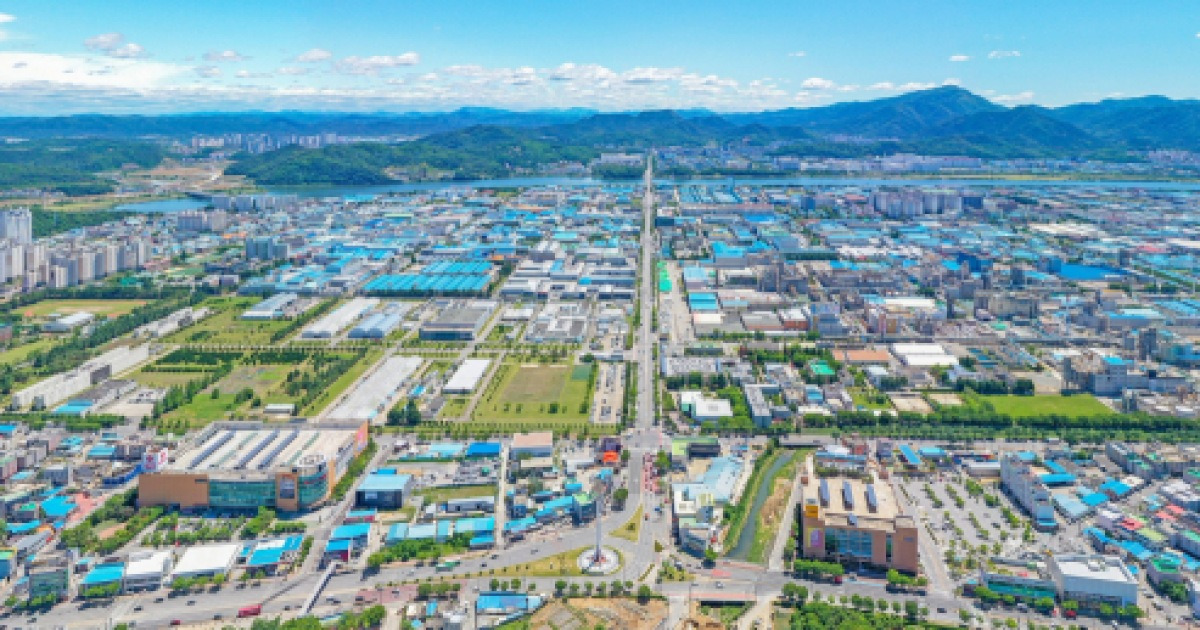
The industrial hub of Gumi, South Korea, is experiencing a remarkable economic surge, with its January trade surplus more than doubling compared to the same period last year. Driven by a significant increase in exports of electronic products and a successful push into the American market, the region’s economic performance is defying global headwinds. This positive trend signals a potential shift in South Korea’s trade dynamics and highlights the resilience of its key manufacturing sector.
According to data released by the Gumi Customs Office on February 24, 2026, total exports from the Gumi region reached $2.931 billion in January, a substantial 41.3% increase year-over-year. Simultaneously, imports rose by a more modest 2.5% to $1.34 billion. This disparity resulted in a trade surplus of $1.591 billion, a staggering 107.2% increase compared to January of the previous year. The figures underscore a strengthening export-oriented economy within the Gumi industrial complex, a cornerstone of South Korea’s manufacturing capabilities.
Electronic Exports Fuel Growth
A detailed breakdown of the export figures reveals that electronic products constitute the dominant share, accounting for 73.3% of all exports. This sector’s strong performance is the primary driver of the overall growth. Other significant export commodities include aluminum products (5.3%), plastic products (4.9%), machinery (2.6%), textiles (2.4%), chemical products (2.4%), optical products (0.8%) and glass products (0.5%). The concentration of exports in the electronics sector highlights the region’s specialization and its importance in the global supply chain.
The value of electronic product exports surged by 54.7% compared to the previous year, spearheading the overall export increase. Optical products also experienced substantial growth, with a 44.1% increase, alongside aluminum (16.5%), plastic (10.5%), and textile (2.7%) exports. Conversely, exports of glass products (-18.6%), machinery (-14.6%), and chemical products (-0.1%) experienced declines, indicating varying performance across different sub-sectors. These fluctuations suggest a dynamic market landscape requiring adaptability and strategic adjustments from manufacturers.
The United States as a Key Market
Geographically, China and the United States represent the largest export destinations for Gumi-manufactured goods, collectively accounting for over half of all exports. Notably, exports to the United States experienced a remarkable surge, increasing by 183.7%. This substantial growth suggests a successful strategy to penetrate the American market, potentially benefiting from shifting trade dynamics and increased demand for South Korean electronics. Exports also increased to Hong Kong (95.4%), Europe (49.1%), Vietnam (40.1%), Southeast Asia (35.1%), the Middle East (35.0%), Japan (8.1%), and China (3.7%). However, exports to Central and South America experienced a 10.1% decrease, highlighting regional variations in demand.
The success in the U.S. Market is particularly noteworthy given ongoing trade negotiations and potential tariff adjustments. In July 2025, reports indicated that a planned 25% tariff imposed by the United States on goods from the Gumi region was reduced to 15%, averting a potential crisis for local exporters. According to the Yeongnam Ilbo, this reduction provided a degree of relief, allowing companies to maintain a competitive edge in the American market. However, even a 15% tariff remains a significant cost factor, particularly for smaller component suppliers.
Import Trends and Raw Material Demand
The import landscape mirrors the export profile, with raw materials essential for the production of electronic goods dominating the import list. Electronic products accounted for a substantial 83.0% of all imports, followed by optical products (7.7%), machinery (4.6%), and chemical products (2.2%). Imports of steel products saw a significant increase of 142.8%, alongside machinery (56.6%), textiles (36.9%), optical products (20.5%), and chemical products (10.3%). A notable exception was a 53.2% decrease in imports of non-ferrous metals. This data suggests a strong demand for materials used in the production of electronic components and finished goods.
The primary sources of imports are Southeast Asia (32.0%), Japan (22.0%), Vietnam (20.6%), and China (17.6%). Imports from Europe and the Middle East experienced substantial increases of 197.0% and 106.9%, respectively, whereas imports from Vietnam (36.8%), Southeast Asia (23.6%), and China (19.7%) also rose. Conversely, imports from Hong Kong (-72.3%), Central and South America (-52.4%), Japan (-39.8%), and the United States (-21.7%) declined. These shifts in import patterns reflect evolving supply chain dynamics and regional economic conditions.
Challenges and Future Outlook
Despite the positive trade figures, challenges remain for the Gumi industrial region. Concerns about potential protectionist measures from the United States, particularly under a potential second term of the Trump administration, continue to loom large. As reported by the Yeongnam Ilbo in February 2025, manufacturers expressed anxieties about the impact of trade policies on their businesses. Fluctuations in exchange rates, with the Korean won experiencing volatility against the US dollar, add to the uncertainty. In early 2025, the won traded around 1,346 to the dollar, but by January 2026, it had risen to 1,453, impacting import costs and export competitiveness.
The Gumi region’s reliance on the electronics sector also presents a potential vulnerability. While the current surge in demand is positive, diversifying export markets and product offerings will be crucial for long-term sustainability. Investing in research and development, fostering innovation, and strengthening partnerships with other industries are essential steps to mitigate risks and ensure continued growth. The region’s ability to adapt to changing global economic conditions and navigate potential trade barriers will determine its future success.
Looking ahead, the Gumi region’s economic performance will likely be closely tied to the global demand for electronic products and the evolution of trade policies. Continued success in the American market, coupled with diversification efforts and strategic investments, will be key to sustaining the current momentum. The region’s proactive approach to addressing challenges and capitalizing on opportunities will be crucial in maintaining its position as a leading manufacturing hub in South Korea.
The next key economic indicator to watch will be the February 2026 trade data, scheduled for release by the Gumi Customs Office in late March. This report will provide further insights into the sustainability of the current growth trend and the impact of evolving global economic conditions. We encourage readers to share their thoughts and perspectives on this developing story in the comments below.
Related reading