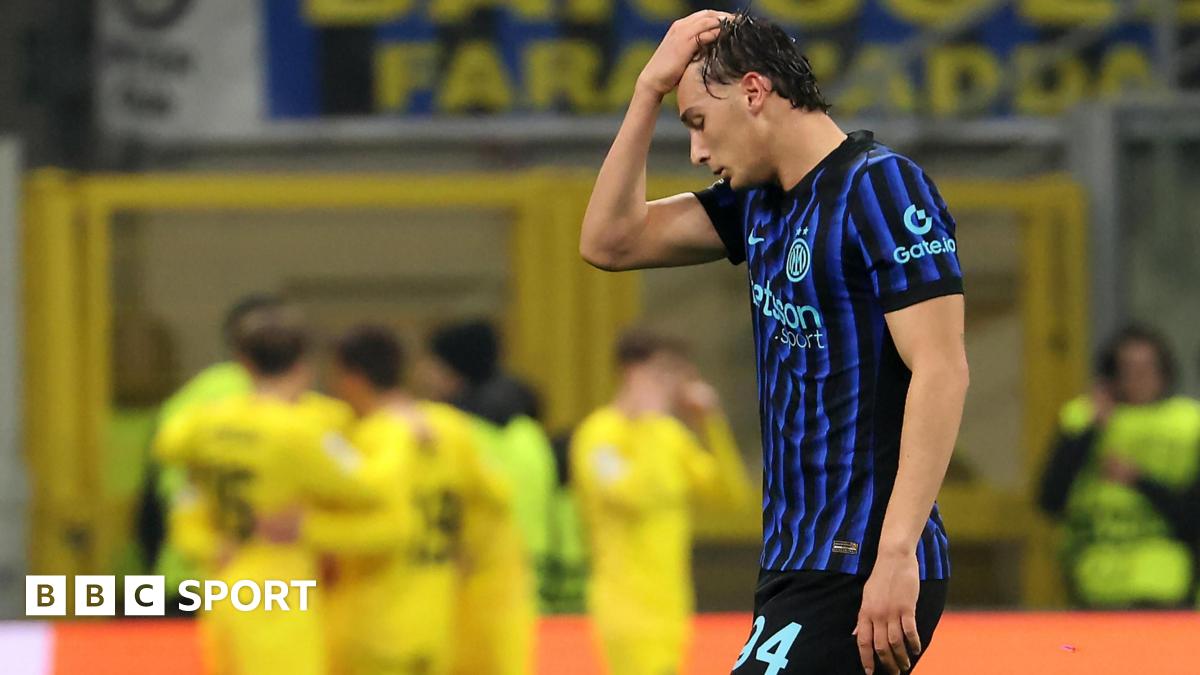
The recent Champions League performances of Italian clubs have sparked a wave of concern and introspection within the nation’s footballing landscape. Once the dominant force in European competition, Serie A finds itself facing a period of significant underperformance, with none of its representatives reaching the quarter-finals of the 2024-2025 Champions League – a stark contrast to the league’s illustrious past. This collective failure, coupled with the national team’s precarious position in qualifying for the World Cup, raises serious questions about the structural issues plaguing Italian football and its ability to compete at the highest level.
The exit of Inter Milan, despite their commanding lead in Serie A, has been particularly jarring. While they currently hold a ten-point advantage over AC Milan and a fourteen-point lead over defending champions Napoli in the domestic league, their European campaign ended in disappointment. This disconnect between domestic success and continental failure underscores a growing disparity in the quality of football played in Italy compared to other top European leagues. The situation isn’t isolated to Inter. Juventus and Atalanta also failed to progress beyond the group stages, finishing 10th and 15th respectively, highlighting a systemic problem rather than isolated incidents. The last Italian side to lift the Champions League trophy was Jose Mourinho’s Inter Milan in 2010, a drought that now feels increasingly difficult to break.
A History of European Dominance Fades
For decades, Italian clubs reigned supreme in European football. The late 1990s and early 2000s witnessed a golden era for Serie A, attracting the world’s most talented players. Inter Milan, for example, famously signed Ronaldo Luís Nazário de Lima and Christian Vieri for world-record fees, demonstrating the league’s financial power, and ambition. Ronaldo, nicknamed “O Fenômeno,” became a symbol of this era, captivating fans with his skill and athleticism. AC Milan further cemented Italian dominance, winning the Champions League in 2003 and again in 2007, defeating Liverpool in a thrilling final after a penalty shootout. They had previously lost to Liverpool on penalties in 2005. This period showcased the tactical sophistication and defensive prowess that characterized Italian football.
While Italian clubs have enjoyed some success in UEFA’s secondary competitions – Atalanta winning the Europa League in 2024 and Roma claiming the Conference League title in 2021 – these victories haven’t translated into consistent success in the Champions League. The competition remains the benchmark for European footballing excellence, and Italy’s absence from the latter stages is a clear indication of its declining influence. The current situation is a far cry from the days when Serie A was widely considered the most competitive and prestigious league in the world.
The Slow Pace and Lack of Intensity
Analysts and observers point to a fundamental issue with the style of play in Italy as a key contributor to its struggles in Europe. A common refrain is that Italian football has become too slow and tactical, lacking the intensity and dynamism of leagues like the English Premier League and the Spanish La Liga. As Claudio Ranieri reportedly stated, as cited in reports, the difference isn’t necessarily about training volume, but rather the intensity with which that training is applied during matches. “People don’t train more than in Italy. They just do it with another intensity, and then they keep up that intensity during the games,” he is quoted as saying. This lack of pace and aggression makes it difficult for Italian teams to compete against opponents who are physically fitter and more willing to press high up the pitch.
Journalist Vincenzo Credendino described the current situation as “a piece of history,” lamenting the decline of Italian football on the European stage. He suggested that a long-term perspective is needed, acknowledging that the issues run deeper than short-term fixes. European football expert Julien Laurens echoed this sentiment, stating on BBC Radio 5 Live that Inter Milan, despite their domestic dominance, were unable to replicate that success in Europe, and that Napoli’s performance was equally disappointing. The inability of Italian teams to overcome opponents who may be lower in the league standings but possess a greater intensity highlights the need for a fundamental shift in approach.
Structural Issues and the National Team’s Struggles
The problems facing Italian club football are mirrored by the national team’s difficulties. Italy is currently facing a play-off in March to secure its place in the World Cup, having failed to qualify automatically. This is the third consecutive World Cup qualification campaign where Italy has been forced to rely on a play-off, a situation that is unprecedented in the nation’s footballing history. Italy last lifted the World Cup trophy in 2006, and the prospect of missing out on a third consecutive tournament is a source of national embarrassment.
The underlying issues are structural. The focus on tactical rigidity and defensive organization, while historically successful, appears to have stifled creativity and attacking flair. Investment in youth development has also been insufficient, leading to a shortage of talented young players capable of competing at the highest level. The financial disparities between Serie A and other top European leagues make it difficult for Italian clubs to attract and retain the best players. The lack of competitive intensity within the league itself may also contribute to the problem, as teams are not consistently tested against high-quality opposition.
What Needs to Change?
Addressing these issues will require a comprehensive overhaul of the Italian footballing system. Increased investment in youth academies, a greater emphasis on attacking football, and a willingness to embrace new training methods are all essential. Clubs need to prioritize player development and create a more competitive environment within Serie A. The national team also needs to adopt a more proactive and dynamic approach, moving away from the overly cautious tactics that have characterized its recent performances.
The current situation demands a serious and sustained effort to revitalize Italian football. The nation’s proud footballing heritage is at stake, and failure to address these issues could result in a prolonged period of decline. The need for change is not merely a matter of sporting pride; it is a matter of national identity. The future of Italian football hinges on its ability to adapt and compete in an increasingly demanding and competitive global landscape.
The next crucial step for the Italian national team is navigating the World Cup play-off matches in March. The outcome of these games will determine whether Italy will participate in this summer’s tournament and will serve as a further indicator of the state of Italian football. Fans and analysts alike will be watching closely, hoping for a sign that the tide is turning and that Italy can once again reclaim its place among the elite nations in world football.
What are your thoughts on the challenges facing Italian football? Share your opinions and predictions in the comments below. Don’t forget to share this article with fellow football enthusiasts!
Keep reading
- Julio Velázquez Confirms Akram Bouras to Miss Match Against Kairat Almaty
- Natan Dzięgielewski Joins Arka Gdynia on Loan from Górnik Zabrze
- Daytime Cortisol Patterns Link to Cognitive Decline but Not Alzheimer’s Risk (archyworldys.com)
- Arsenal Reportedly Agree Blockbuster Deal to Make Vinicius Junior Highest-Paid Premier League Player (archynewsy.com)