
Despite a challenging global economic climate and shifting regulatory landscapes, Apple has reported a record-breaking year in 2025, particularly demonstrating strong performance in the European smartphone market. According to recent data from the analytics firm Omdia, the tech giant shipped 36.9 million iPhones, a new record representing a 6% increase year-over-year. This success propelled Apple to a 27% market share in Europe, a first for the company, even as the overall European smartphone market experienced a slight 1% decline, totaling 134.2 million units shipped. Omdia’s report highlights Apple’s ability to grow against prevailing market trends.
The resilience of Apple’s sales comes amidst a period of broader market weakness attributed to decreased consumer demand and the impact of new European Union regulations. New requirements concerning ecodesign and the mandatory adoption of USB-C connectivity have prompted restructuring within the industry, particularly affecting older devices that did not meet these new standards. These changes, while intended to promote sustainability and standardization, initially created disruption and uncertainty for both manufacturers and consumers. The shift to USB-C, mandated by the EU to reduce e-waste and provide a universal charging solution, required significant adjustments to production lines and product design. Strong iPhone demand, however, appears to have mitigated some of these challenges for Apple.
Omdia attributes Apple’s success to the popularity of the iPhone 16, the Pro Max versions of the latest iPhone generation, and the introduction of the iPhone 16e. The iPhone 16e, Apple’s more affordable model, proved particularly appealing to consumers switching from other brands. This strategic move allowed Apple to fill gaps in its product lineup, especially as devices lacking USB-C were phased out of the market to comply with EU regulations. The iPhone 16e’s success demonstrates Apple’s ability to cater to a wider range of price points while maintaining its brand appeal. This is a significant development, as Apple has traditionally focused on the premium segment of the smartphone market.
Samsung Remains the Leader in Europe
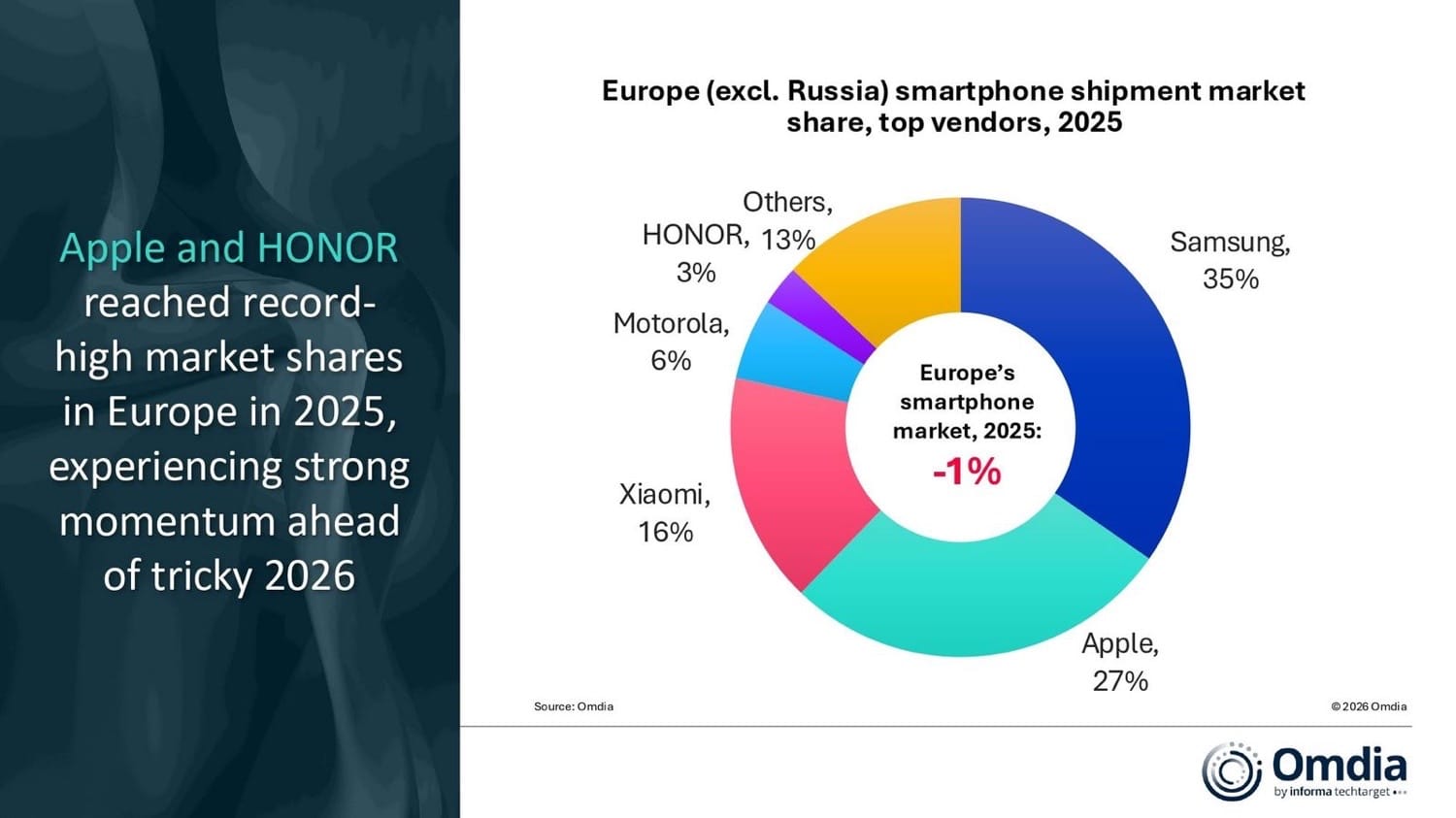
Despite Apple’s gains, Samsung continues to hold the top position in the European smartphone market. The South Korean manufacturer sold 46.6 million smartphones, securing its leading status. Xiaomi follows in third place with 21.8 million units and a stable market share of 16%. Notably, HONOR achieved a breakthrough, entering the top 5 in Europe for the first time with a 3% market share, indicating a growing dynamism in the mid-range smartphone segment. This suggests that consumers are increasingly seeking value-for-money options without compromising on features and performance. The rise of HONOR also highlights the competitive landscape of the European smartphone market, where multiple brands are vying for market share.
Apple’s European record is not an isolated incident. Globally, 2025 was also an exceptional year for the company, marking the first time it surpassed all competitors in annual smartphone shipments. This achievement underscores the effectiveness of Apple’s premium strategy, brand strength, and adaptability to regulatory changes. The company’s ability to navigate complex regulations, such as the EU’s USB-C mandate, while simultaneously maintaining strong sales demonstrates its resilience and strategic foresight. Apple’s strong financial performance in 2025 is a testament to its continued innovation and customer loyalty.
Apple’s success in India is contributing significantly to its overall growth. In September 2025, Apple’s India sales hit a record $9 billion following a major retail push, according to Bloomberg. The opening of additional Apple Stores in India has played a crucial role in expanding its reach and attracting new customers in this rapidly growing market. This expansion into emerging markets is a key component of Apple’s long-term growth strategy.
Looking Ahead: Regulatory Impacts and Market Trends
The smartphone market is expected to continue evolving in response to both technological advancements and regulatory pressures. The EU’s focus on sustainability and consumer rights will likely lead to further regulations impacting smartphone design and manufacturing. These regulations could include stricter requirements for repairability, battery life, and the use of recycled materials. Manufacturers will need to adapt to these changes to remain competitive in the European market. The ongoing global chip shortage, while easing, remains a potential risk factor that could impact smartphone production and availability. Supply chain disruptions could lead to increased prices and longer wait times for consumers.
The increasing adoption of 5G technology is also expected to drive demand for new smartphones. 5G offers faster download speeds, lower latency, and improved network capacity, enabling new applications and services. Consumers are increasingly upgrading to 5G-enabled smartphones to accept advantage of these benefits. The development of new technologies, such as foldable displays and augmented reality (AR) applications, is also expected to shape the future of the smartphone market. These innovations could create new opportunities for manufacturers to differentiate their products and attract new customers.
Apple is scheduled to release its next quarterly earnings report in late April 2026, which will provide further insights into its performance and outlook. Investors and analysts will be closely watching for updates on iPhone sales, market share trends, and the impact of regulatory changes. The company’s ability to maintain its momentum in the face of these challenges will be crucial to its continued success. Stay tuned to World Today Journal for ongoing coverage of Apple and the broader technology industry.
Worth a look