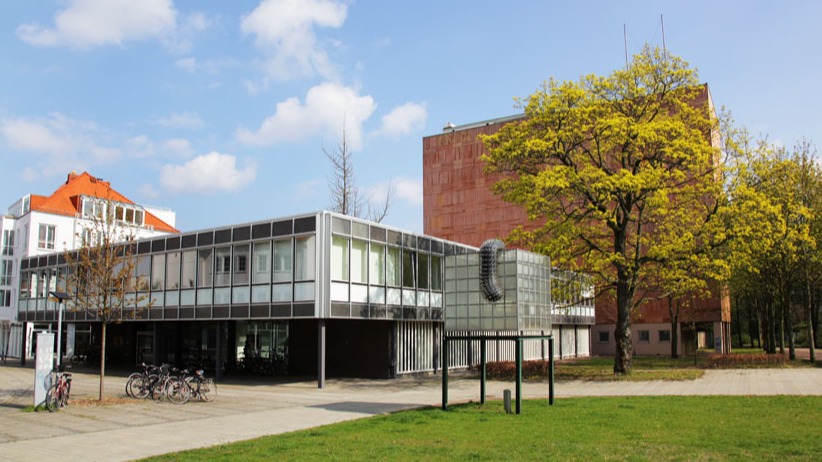
Bremen, Germany – The Staatsarchiv Bremen, the state archive of Bremen, plays a crucial role in preserving the region’s history and ensuring governmental transparency. More than simply a repository of old documents, the archive actively selects materials for long-term research and makes them accessible to the public, bridging the gap between the past, present and future. This commitment to accessibility has recently been bolstered by significant digitization efforts, making historical records available online to a global audience.
Founded on the principles of preserving Bremen’s collective memory, the Staatsarchiv Bremen operates under the Bremen Archive Law. Its core function is to evaluate and safeguard documents of enduring value, offering a window into the administrative processes and societal evolution of the city and state. This includes not only official government records but too historically significant materials donated by private individuals, companies, and organizations – diaries, photographs, prints, posters, maps, and pamphlets all locate a home within its walls. The archive’s dedication extends beyond preservation; it actively promotes research and public engagement with history.
The Archive’s Multifaceted Role
The Staatsarchiv Bremen functions as a modern documentation and information center, serving as a vital link between administration and citizens, research and the public. Its work is fundamental to a functioning democracy, ensuring accountability and providing a historical context for current events. The archive doesn’t merely store documents; it actively facilitates their use through a comprehensive library with a focus on local history and a publicly accessible reading room. Researchers and interested citizens can explore the archive’s holdings both on-site and increasingly, through online resources.
A key component of the archive’s digital strategy is ARCINSYS, its online database. Recently, on October 16, 2023, a major milestone was reached with the addition of nearly 1,000,000 scans representing 4,570 archival units from the 4.60/5 (Persons Register), 4.60/3 (Civil Status), and 4.60/7 (Family Trees) collections. This digitization project, a collaboration with “DIE MAUS – Gesellschaft für Familienforschung e.V., Bremen,” provides continuous records of Bremen’s civil status documents from 1811 to 1912/1942/1992 (births, marriages, and deaths) freely available worldwide, 24/7, without registration. The scans can be downloaded directly using the “Download/Print” function and a right-click “Save Image As” command.
Genealogical Resources and the “MAUS” Collaboration
The collaboration with “DIE MAUS – Gesellschaft für Familienforschung e.V., Bremen” has been particularly impactful for genealogical research. A team of volunteer researchers, led by Heinz Wiemann, has meticulously indexed the data, creating a database that links directly to the scanned documents within ARCINSYS. This indexing work, described as unique in its scale and format across Germany, significantly enhances the user experience and facilitates efficient research. Index data for deaths from the civil registry offices (precursors to the registry offices in Bremen from 1811-1875) and family trees of the original city area are also indexed on the MAUS website, though not yet linked to the scans. Indexing of births and marriages from the civil registry is nearing completion and will soon be available online.
The accessibility of these records is particularly significant given Bremen’s historical role as a major European port of emigration and immigration. As the archive notes, this wealth of information is likely to be of interest to researchers beyond Bremen, offering valuable insights into migration patterns and family histories.
Beyond Civil Records: The Archive’s Diverse Collections
While the recent digitization of civil records has garnered significant attention, the Staatsarchiv Bremen’s collections extend far beyond genealogical resources. The archive maintains an extensive library focused on local history, providing researchers with a wealth of secondary sources to complement the primary documents. The archive actively engages with the public through exhibitions, lectures, and publications.
The archive’s flagship publication, the Bremisches Jahrbuch (Bremen Yearbook), has been published annually since 1863 in collaboration with the Historische Gesellschaft Bremen (Historical Society of Bremen). The 2021 edition (Volume 100) features articles on a diverse range of topics, including Curt Wittenbechers’s city landscape, the seals of Bremen archbishops, the dating of the Bremen illustrated manuscript of the Saxon World Chronicle, piracy on the Weser and North Sea, and the impact of the Spanish Flu in Bremen. Other articles explore the history of photography as a profession for women in Bremen, the relationship between Rudolf Alexander Schröder and Wilhelm Kaisen, and the challenges of clearing unexploded ordnance in Bremen after World War II. The yearbook demonstrates the archive’s commitment to scholarly research and the dissemination of historical knowledge.
Recent Research Highlights
Recent research facilitated by the Staatsarchiv Bremen has shed light on various aspects of Bremen’s history. Studies have examined the role of private companies in the formation of archival records, particularly within the maritime industry. Researchers have also explored the significance of the archive’s collections for understanding contemporary history, including the value of collections of personal papers and photographs. The archive’s holdings have also been instrumental in researching the history of seals and their symbolic meaning, as well as the impact of historical events like piracy on the region.
The Staatsarchiv Bremen’s commitment to making its collections accessible is evident in its ongoing digitization efforts and its collaborative partnerships. By preserving the past and making it available to the public, the archive plays a vital role in shaping our understanding of Bremen’s history and its place in the world.
Looking Ahead
The Staatsarchiv Bremen continues to expand its digital offerings and enhance its services to researchers and the public. Future plans include further digitization of key collections, improved online search capabilities, and increased outreach to engage new audiences. The archive remains dedicated to its mission of preserving Bremen’s historical heritage and making it accessible for generations to come. The next major update to ARCINSYS is scheduled for the spring of 2026, with the anticipated release of indexed birth and marriage records from the civil registry.
The Staatsarchiv Bremen stands as a testament to the importance of preserving historical records and making them available for research and public engagement. Its ongoing efforts ensure that Bremen’s rich history will continue to inform and inspire for years to come. We encourage readers to explore the archive’s resources online and to contribute to the ongoing dialogue about Bremen’s past.
Keep reading