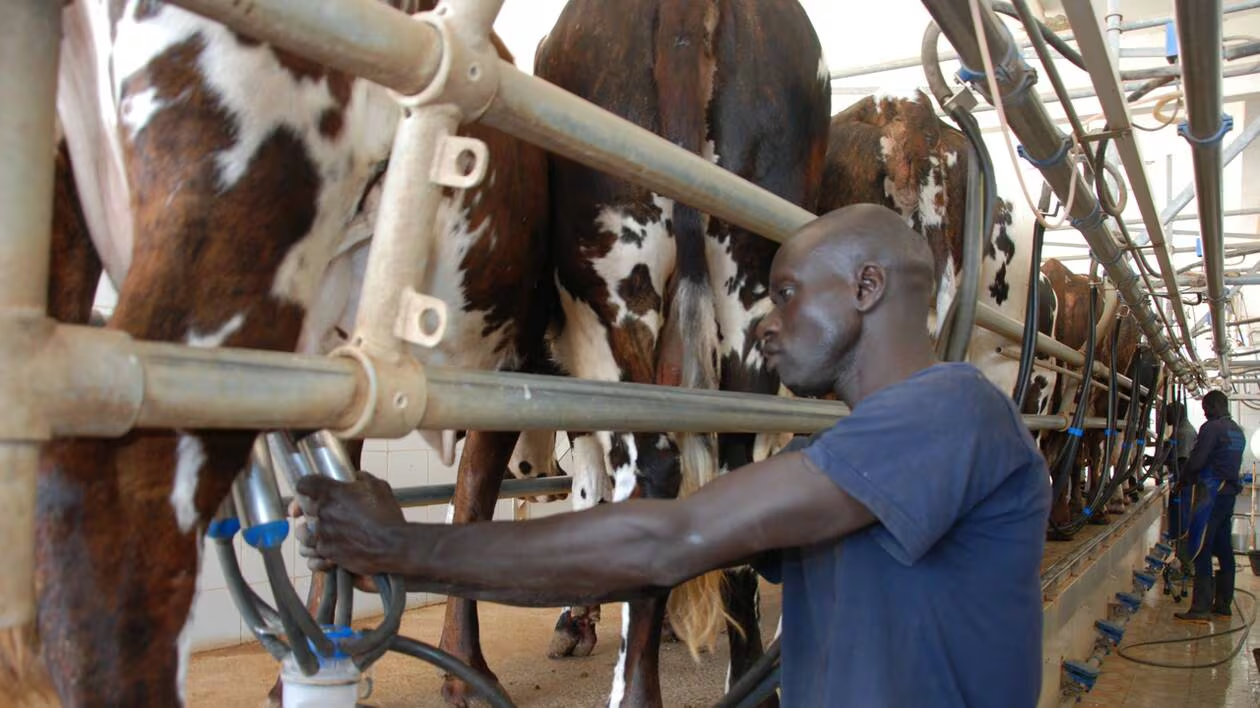
Dakar, Senegal – A new strategic partnership between Senegal and Brazil aims to dramatically increase milk production in Senegal, moving the West African nation closer to self-sufficiency in dairy and bolstering its food security. The agreement, formalized on the sidelines of the International Conference on Agrarian Reform and Rural Development (ICARRD+20) in Colombia, signals a significant step in strengthening agricultural cooperation between the two countries.
The initiative comes at a critical time for Senegal, which, like many nations in the region, relies heavily on imported dairy products. Achieving self-sufficiency in milk production is viewed by Senegalese authorities as a key component of national sovereignty and a vital step towards reducing economic vulnerability. The partnership with Brazil, a global leader in agricultural technology and efficiency, is expected to provide Senegal with the expertise and resources needed to transform its dairy sector.
Senegal’s Minister of Agriculture, Food Sovereignty and Livestock, Dr. Mabouba Diagne, met with his Brazilian counterpart, Paulo Teixeira, Minister of Family Agriculture and Agrarian Development, to discuss the details of the collaboration. Both ministers expressed a commitment to finalizing a protocol of agreement within seven days, outlining a comprehensive plan to accelerate milk production and reduce reliance on imports. This timeline underscores the urgency with which both nations view the project.
Boosting Senegal’s Dairy Capacity: A Multi-Faceted Approach
The proposed agreement encompasses a wide range of initiatives designed to modernize Senegal’s dairy industry. A central component of the plan is a significant investment in human capital, with provisions for the training of over 100 Senegalese technicians, researchers, and livestock agents. This training will focus on advanced dairy farming techniques, herd management, and agricultural research methodologies. The goal is to build a skilled workforce capable of sustaining long-term growth in the sector.
Beyond training, the partnership will facilitate the transfer of Gir cattle embryos, a breed renowned for its high milk yield and adaptability to tropical climates. The introduction of Gir genetics is expected to significantly improve the productivity of Senegalese dairy herds. The Gir breed originates from India, but has been successfully integrated into Brazilian dairy farming, demonstrating its potential for success in similar climates. RTS.sn reports that this transfer of embryos is a key element of the agreement.
Scientific collaboration will also be a cornerstone of the partnership. The agreement calls for increased cooperation between EMBRAPA, the Brazilian Agricultural Research Corporation, and the Institut Sénégalais de Recherches Agricoles (ISRA). EMBRAPA is a globally recognized leader in agricultural research, and its expertise will be invaluable in developing innovative solutions tailored to the specific challenges and opportunities facing Senegal’s dairy sector. This collaboration will focus on areas such as animal nutrition, breeding, and disease management.
Public-Private Partnerships and Inclusive Growth
The success of this initiative hinges on the establishment of sustainable partnerships between the public and private sectors. The agreement emphasizes the importance of attracting private investment to modernize dairy farms, improve processing facilities, and strengthen the overall supply chain. These partnerships will be crucial for ensuring the long-term viability of the project.
A key priority of the partnership is to promote inclusive economic growth within the dairy sector. The agreement specifically targets the economic empowerment of women, young people, and recent graduates in rural areas. This will be achieved through targeted training programs, access to credit, and opportunities for entrepreneurship. By empowering these groups, the partnership aims to create a more equitable and sustainable dairy industry.
the plan includes the development of high-quality forage crops and animal feed rations, with a target productivity rate of over 30 liters of milk per cow per day. This ambitious goal reflects a commitment to maximizing efficiency and improving the overall quality of milk production. Achieving this level of productivity will require significant investment in infrastructure and technology, as well as the adoption of best practices in animal husbandry.
Regional Collaboration and Food Security
The Senegal-Brazil partnership extends beyond a bilateral agreement, with a broader regional focus. The initiative aims to foster collaboration within the Economic Community of West African States (ECOWAS) and Mauritania, with plans to organize a regional forum dedicated to developing a coordinated strategy for achieving dairy self-sufficiency. This regional approach is essential for addressing the challenges of food security and reducing dependence on imported dairy products across West Africa.
The forum, envisioned as a platform for knowledge sharing and policy coordination, will bring together government officials, industry stakeholders, and researchers from across the region. The goal is to identify common challenges, develop joint solutions, and promote regional trade in dairy products. This collaborative effort is expected to accelerate progress towards achieving food security and strengthening the resilience of West African economies.
ICARRD+20: A Catalyst for Agricultural Reform
The announcement of this partnership took place during the International Conference on Agrarian Reform and Rural Development (ICARRD+20), held in Colombia. Via Campesina highlights ICARRD+20 as a platform for renewing global commitments to land rights, agrarian reform, and food sovereignty. The conference, endorsed by the UN Committee on World Food Security (CFS) and the FAO Council, serves as a crucial forum for discussing and promoting sustainable agricultural development.
ICARRD+20 builds upon the foundations laid by the first ICARRD conference in 2006, which brought together governments, social movements, Indigenous Peoples, and rural communities to address critical issues related to agrarian reform and rural development. The 2006 conference emphasized the importance of policies that favor poor populations’ access to resources, improved natural resource management, and the need for agrarian reform grounded in social justice, and sustainability. The current ICARRD+20 aims to revitalize these commitments and accelerate progress towards achieving these goals.
The Senegal-Brazil partnership exemplifies the type of collaborative effort that ICARRD+20 seeks to promote. By combining the expertise and resources of two nations, the partnership has the potential to transform Senegal’s dairy sector and contribute to broader regional food security. The initiative also underscores the importance of investing in human capital, promoting inclusive growth, and fostering regional cooperation.
Key Takeaways
- Senegal and Brazil have agreed to a strategic partnership to boost milk production in Senegal.
- The partnership will focus on training, technology transfer, and scientific collaboration.
- A key goal is to achieve self-sufficiency in milk production and reduce reliance on imports.
- The initiative aims to empower women, young people, and recent graduates in rural areas.
- The partnership is part of a broader regional effort to enhance food security in West Africa.
Senegalese and Brazilian authorities view the protocol of agreement as a pivotal moment in the transformation of the livestock sector in Senegal and, more broadly, in West Africa. The next step is the finalization and signing of the protocol within the agreed-upon seven-day timeframe. The implementation of this ambitious plan will require sustained commitment and collaboration from both governments, as well as the active participation of the private sector and civil society.
We encourage readers to share their thoughts on this developing story and to engage in a constructive dialogue about the challenges and opportunities facing the agricultural sector in Africa. Your comments and insights are valuable as we continue to follow this important initiative.
Worth a look