The global balance of power is undergoing a dramatic shift, marked by an increasingly assertive competition between the United States and China. This isn’t simply a trade dispute. it’s a multifaceted power struggle encompassing resources, energy, technology, and access to vital markets. As these two economic giants vie for dominance, nations like Germany find themselves navigating a complex geopolitical landscape, forced to reassess their strategic alignments and economic dependencies. The implications of this “duel for the world,” as some observers have termed it, are far-reaching, impacting international trade, technological innovation, and the very structure of the global order.
The relationship between the US and China has grow arguably the most consequential bilateral relationship of the 21st century. While economic interdependence remains significant, a growing number of flashpoints – from Taiwan and the South China Sea to trade imbalances and human rights concerns – are fueling tensions. This competition isn’t necessarily destined for outright conflict, but it does demand careful management and a clear understanding of the stakes involved. For countries like Germany, traditionally positioned as a bridge between the US and China, the challenge lies in maintaining economic opportunities while safeguarding national security interests and upholding democratic values.
Recent data underscores the evolving dynamics of this relationship. Notably, China has surpassed the United States as Germany’s largest trading partner, a significant shift that reflects China’s growing economic clout. Al Jazeera reported this change in trade dynamics, highlighting the increasing importance of the Chinese market for German exports. However, despite this economic reliance, German Foreign Minister Annalena Baerbock recently affirmed that Germany remains closer to the United States than to China, even amidst existing tensions. According to Reuters, this statement underscores a continued commitment to transatlantic ties, even as Germany seeks to balance its economic interests.
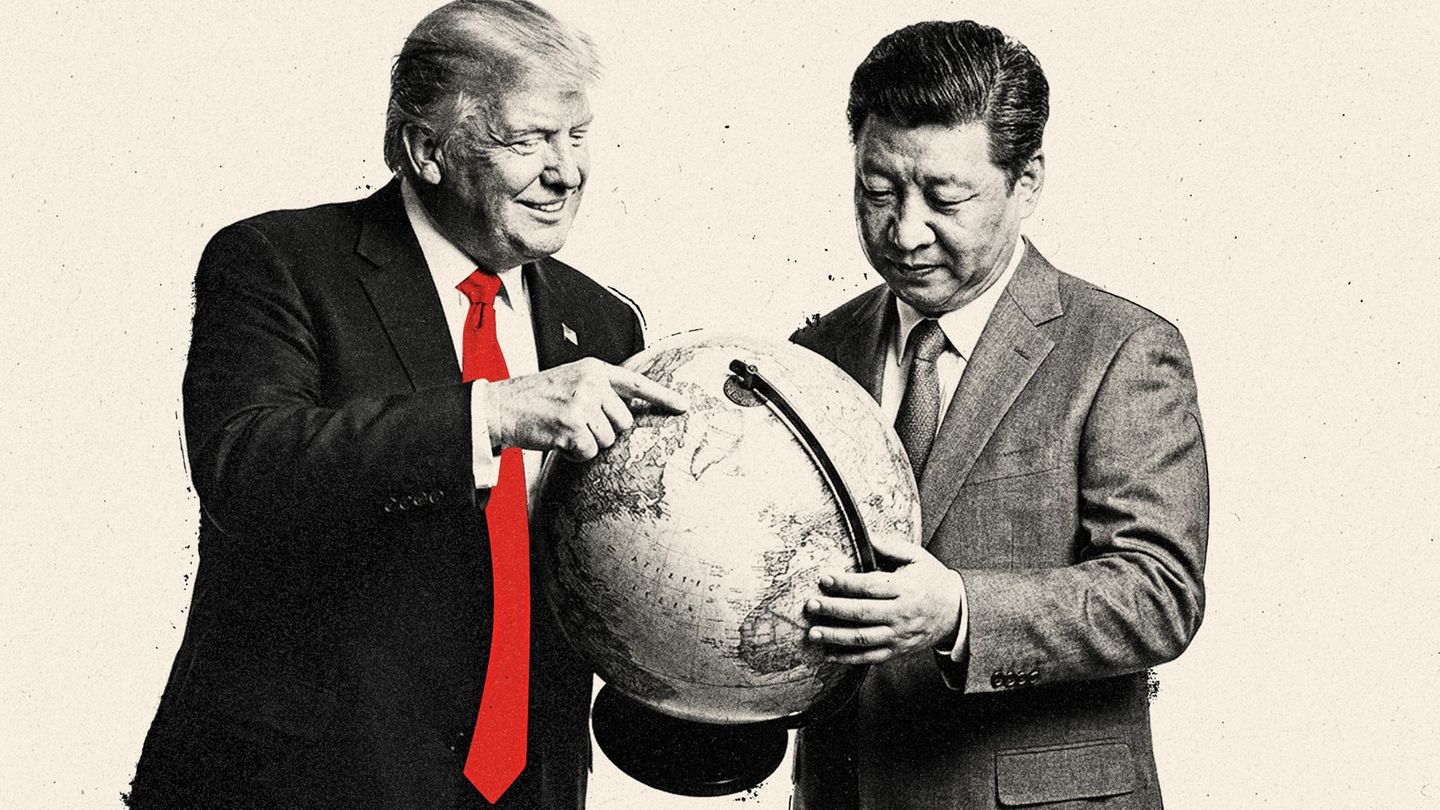
The USA and China, respectively Donald Trump and Xi Jinping, aim to divide the world
© Klawe Rzeczy
The Stakes for Germany and Europe
The intensifying US-China competition presents a unique set of challenges for Germany and the broader European Union. The “Zeitenwende” – a turning point – declared by German Chancellor Olaf Scholz following Russia’s invasion of Ukraine, has already prompted a reassessment of Germany’s foreign and security policy. However, the US-China rivalry adds another layer of complexity. Germany’s strong economic ties with China, particularly in sectors like automotive and manufacturing, make it hesitant to fully align with US efforts to decouple or contain China. At the same time, concerns over China’s human rights record, its assertive foreign policy, and its growing technological capabilities are pushing European policymakers to adopt a more cautious approach.
The Mercator Institute for China Studies (MERICS) has highlighted the historic challenges presented by both US policies and the US-China conflict. Their analysis suggests that Germany needs to develop a more strategic and independent approach to navigate this complex geopolitical landscape. This includes diversifying supply chains, reducing reliance on critical technologies from China, and strengthening partnerships with like-minded countries.
Areas of Contention: Technology and Trade
The technological realm is a key battleground in the US-China competition. Both countries are investing heavily in strategic technologies like artificial intelligence, semiconductors, and 5G, recognizing their potential to drive economic growth and enhance national security. The US has imposed export controls on certain technologies to prevent China from gaining an advantage, while China is pursuing its own indigenous innovation programs. This technological rivalry has significant implications for German companies, which rely on both US and Chinese markets for their technological components and products. The semiconductor industry, in particular, is facing disruptions due to geopolitical tensions and supply chain vulnerabilities.
Trade remains another critical area of contention. While China’s emergence as Germany’s largest trading partner demonstrates the strength of economic ties, it similarly raises concerns about trade imbalances and unfair trade practices. The US has accused China of engaging in intellectual property theft, currency manipulation, and other practices that distort global trade. These disputes have led to tariffs and other trade barriers, impacting businesses on both sides of the Atlantic. Germany, as a major exporting nation, is particularly vulnerable to the fallout from these trade tensions.
Navigating the Future: A Balancing Act
For Germany, the path forward requires a delicate balancing act. Maintaining strong economic ties with China is essential for continued growth and prosperity, but it must be done in a way that safeguards national security interests and upholds democratic values. This means diversifying trade relationships, investing in technological innovation, and strengthening partnerships with allies. It also requires a more assertive stance on issues like human rights and fair trade practices. The German government is currently developing a new China strategy that aims to address these challenges and provide a framework for navigating the complex relationship with Beijing.
The evolving dynamics of the US-China competition will undoubtedly continue to shape the global landscape for years to come. Germany, along with other European nations, will need to adapt to this new reality and develop a coherent strategy for navigating the challenges and opportunities that lie ahead. The next key development to watch will be the implementation of Germany’s new China strategy, expected to be unveiled in the coming months, and the ongoing negotiations between the US and China on trade and technology issues. The ability to foster constructive dialogue and cooperation, even amidst competition, will be crucial for maintaining global stability and prosperity.
Key Takeaways:
- China has overtaken the US as Germany’s largest trading partner, signaling a shift in economic power.
- Germany maintains closer political ties with the US despite its economic dependence on China.
- The US-China competition presents significant challenges for Germany in areas like technology, trade, and security.
- Germany is developing a new China strategy to navigate this complex relationship.
- Diversification of supply chains and strengthening partnerships with allies are crucial for Germany’s future.
What are your thoughts on Germany’s position in this evolving geopolitical landscape? Share your insights and perspectives in the comments below.
Related reading