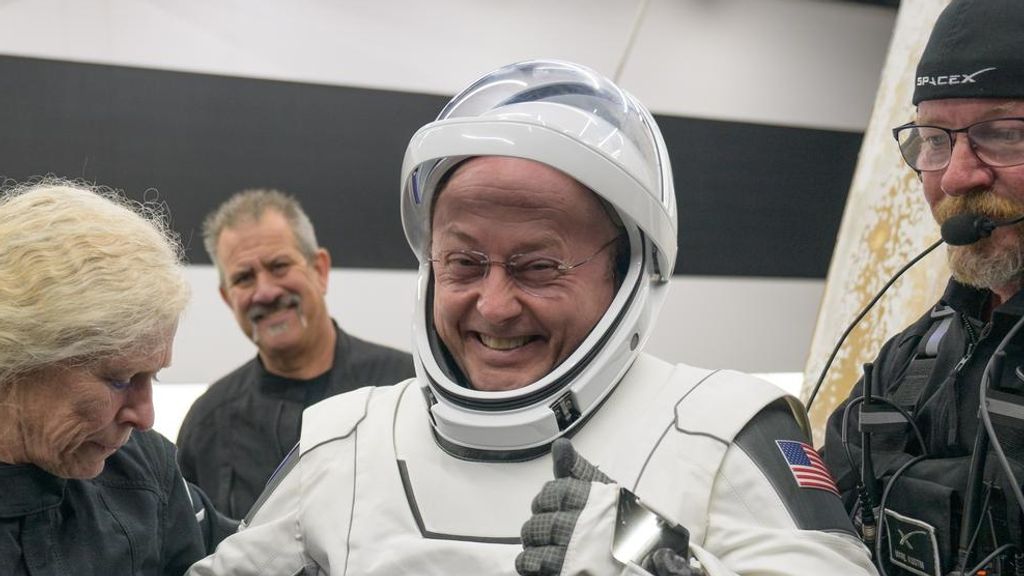
Houston, TX – In a rare disclosure, NASA has revealed that veteran astronaut Mike Fincke was the crew member who experienced a medical emergency aboard the International Space Station (ISS) in January, prompting an unprecedented early return to Earth for the four-person Crew-11 mission. The incident, which occurred on January 7th, led to the first-ever medical evacuation in the ISS’s 25-year history, raising questions about the health risks inherent in long-duration spaceflight and the protocols in place to address them.
The decision to cut short the mission and bring Fincke and his colleagues home was made after careful consideration, balancing the necessitate for advanced medical care unavailable on the ISS with the complexities of coordinating a rapid return. While NASA initially maintained privacy regarding the affected crew member, Fincke, 58, requested the agency share more details, emphasizing the importance of transparency and acknowledging the support he received from his crewmates and the NASA flight surgeons. The incident underscores the challenges of providing comprehensive medical support in the extreme environment of space, where access to specialized equipment and immediate terrestrial care is limited.
Fincke, a highly experienced astronaut with a distinguished career spanning multiple missions, expressed gratitude for the swift response of his crew and the medical professionals who guided them through the initial stages of the emergency. He confirmed that his condition stabilized thanks to their quick actions, but required further evaluation with advanced imaging technologies not available on the ISS. The early return of Crew-11 – which too included NASA astronaut Zena Cardman, Japanese astronaut Kimiya Yui, and Russian cosmonaut Oleg Platonov – was not classified as an emergency, but rather a “carefully coordinated plan” to ensure Fincke could receive the necessary medical attention.
The Medical Incident and the Emergency Return
The medical event unfolded on January 7th while Crew-11 was conducting ongoing research and maintenance aboard the ISS. According to NASA, Fincke experienced a medical issue that demanded “immediate attention.” Details surrounding the nature of the illness remain private at Fincke’s request, but the severity was sufficient to warrant consideration of an early return to Earth. NBC News reported that the situation prompted NASA to cancel a planned spacewalk on January 8th as the agency assessed the situation.
The decision to bring the crew home early was a complex logistical undertaking. It required coordinating with international partners, preparing the SpaceX Dragon Endeavour spacecraft for a rapid departure, and ensuring the continued operation of the ISS with a reduced crew. The four astronauts splashed down in the Pacific Ocean off the coast of San Diego on January 15th, concluding a five-and-a-half-month mission that was unexpectedly shortened. The return journey itself, as described by Fincke in a LinkedIn post, was a remarkable experience, involving reentry forces of nearly five Gs and the visual spectacle of plasma streaming past the spacecraft windows.
Fincke’s Condition and Recovery
Following their return to Earth, Fincke and his crewmates underwent thorough medical evaluations. CBS News reported that Fincke has stated he is “firmly on the path to a complete recovery.” He expressed his gratitude for the “professionalism and dedication” of his colleagues and the NASA medical team, which he credited with ensuring a positive outcome. He underwent a “full range of terrestrial imaging and diagnostic evaluations” to determine the cause of the medical event and monitor his progress.
While the specific nature of Fincke’s medical issue remains undisclosed, NASA’s decision to prioritize his access to advanced medical imaging highlights the limitations of healthcare capabilities in space. The ISS is equipped with basic medical supplies and equipment, and astronauts receive extensive training in first aid and emergency medical procedures. However, complex diagnoses and treatments often require the specialized resources available only on Earth. This incident reinforces the need for continued investment in space-based medical technologies and the development of strategies for providing more comprehensive healthcare to astronauts on long-duration missions.
The First Medical Evacuation in ISS History
The early return of Crew-11 marked the first time in the ISS’s 25-year history that a mission was cut short due to a medical emergency. Scientific American noted the unprecedented nature of the evacuation. Prior to this incident, astronauts experiencing medical issues typically continued their missions, relying on onboard medical resources and remote guidance from flight surgeons. The decision to evacuate in this case reflects a heightened awareness of the potential health risks associated with spaceflight and a commitment to prioritizing astronaut safety.
The incident has prompted a review of NASA’s medical protocols for ISS missions, with a focus on improving the ability to diagnose and treat medical conditions in space, as well as streamlining the process for evacuating astronauts when necessary. The agency is also exploring the development of recent technologies and procedures for providing more comprehensive medical care to astronauts on future missions to the Moon and Mars, where access to Earth-based medical facilities will be even more limited.
Implications for Future Space Missions
The medical incident involving Mike Fincke has significant implications for the future of space exploration, particularly as NASA and its international partners plan for longer-duration missions to the Moon and Mars. These missions will require astronauts to spend months or even years in the harsh environment of space, increasing their exposure to a range of health risks, including radiation exposure, bone loss, muscle atrophy, and psychological stress. The need for robust medical capabilities and effective evacuation procedures will grow even more critical as missions venture further from Earth.
The incident also underscores the importance of international collaboration in space medicine. The ISS is a joint project involving NASA, Roscosmos, ESA, JAXA, and CSA, and the medical support for astronauts is a shared responsibility. Effective communication and coordination between these agencies are essential for ensuring the health and safety of astronauts on all ISS missions. As space exploration expands, continued collaboration in space medicine will be vital for addressing the unique challenges of keeping astronauts healthy and productive in the extreme environment of space.
Fincke’s experience serves as a reminder of the inherent risks associated with spaceflight, but also highlights the resilience and dedication of astronauts and the medical professionals who support them. His willingness to share his experience, even while protecting his medical privacy, demonstrates a commitment to transparency and a desire to improve the safety and well-being of future space travelers. The lessons learned from this incident will undoubtedly inform NASA’s medical protocols and contribute to a safer and more sustainable future for human space exploration.
NASA continues to monitor Fincke’s recovery and will provide further updates as appropriate. The agency is committed to learning from this experience and implementing measures to mitigate the risks of medical emergencies on future missions. The next major milestone in NASA’s Artemis program, the planned crewed mission to the Moon, will undoubtedly benefit from the insights gained from this incident, ensuring the health and safety of the astronauts who will once again venture beyond Earth’s orbit.
What are your thoughts on the challenges of providing medical care in space? Share your comments below, and don’t forget to share this article with your network!
Worth a look