Modi’s Israel Visit Sparks Debate Amidst Gaza Conflict and India’s Diplomatic Balancing Act
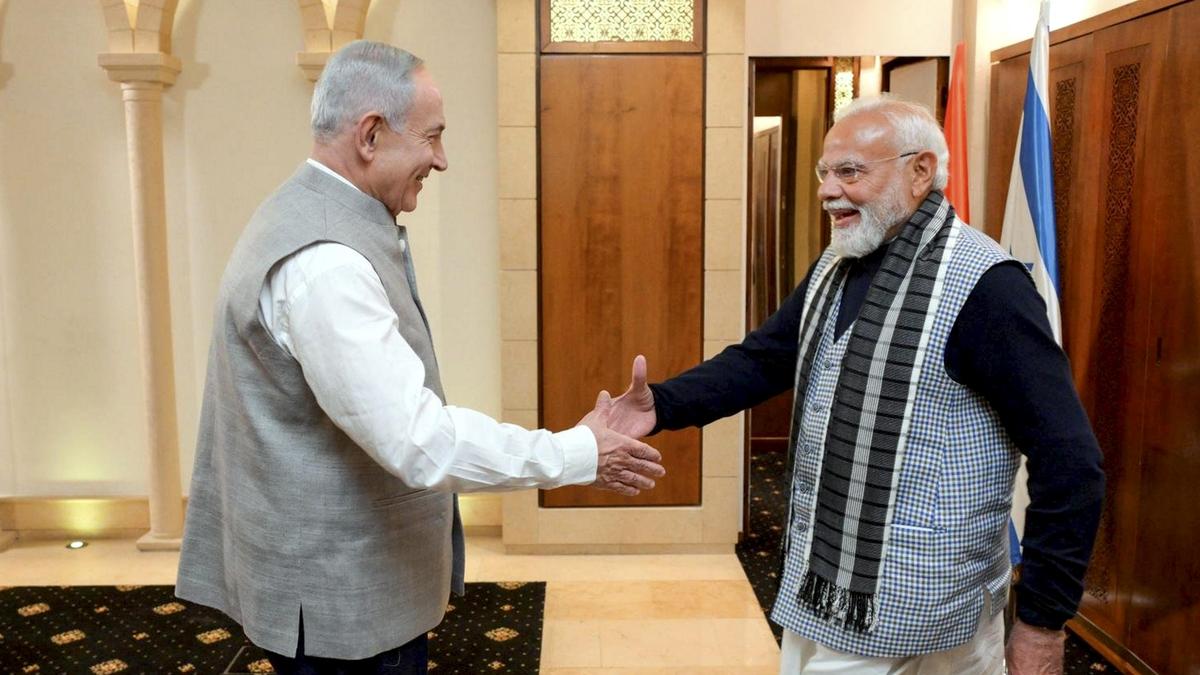
Tel Aviv – Indian Prime Minister Narendra Modi’s recent visit to Israel has ignited a complex debate surrounding India’s foreign policy and its commitment to both strategic partnerships and humanitarian principles. The trip, occurring against the backdrop of the ongoing conflict in Gaza, has drawn criticism from some quarters, including within India itself, who question whether it signals a shift away from New Delhi’s traditionally pro-Palestinian stance. The visit underscores the increasingly intricate geopolitical landscape of the Middle East and India’s efforts to navigate its relationships with key regional players.
The visit, Modi’s second to Israel, builds upon a significant warming of ties between the two nations over the past decade. Previously constrained by India’s historical solidarity with the Palestinian cause, the relationship has blossomed under Modi’s leadership, driven by shared interests in defense, technology and counter-terrorism cooperation. However, this closer alignment with Israel has prompted scrutiny, particularly as the humanitarian crisis in Gaza deepens. The core of the debate centers on whether India’s pursuit of strategic gains with Israel is overshadowing its long-held principles of justice and equality, as enshrined in the legacy of Mahatma Gandhi.
Sharma’s Criticism and Historical Context
Congress leader Anand Sharma voiced strong concerns regarding the timing and implications of Modi’s visit, stating that India should not appear to endorse a regime accused of perpetrating what some have labeled as genocide in Gaza. Sharma emphasized India’s historical commitment to humanity, justice, and equality, invoking the principles championed by Mahatma Gandhi. He specifically condemned the alleged starvation of Palestinian civilians, including women and children, a situation that has been denounced by the United Nations as a crime against humanity. Devdiscourse News reported on Sharma’s statements on February 26, 2026.
Sharma’s critique reflects a broader concern within India’s political landscape and among its traditional allies in the Global South. For decades, India maintained a strong relationship with the Palestinian Liberation Organization (PLO) and consistently advocated for the establishment of an independent Palestinian state. This position was rooted in India’s own experience as a post-colonial nation and its solidarity with other liberation movements. The shift towards closer ties with Israel, while strategically advantageous, has raised questions about whether India is abandoning its long-standing principles.
Modi’s Stance and the Strengthening India-Israel Partnership
In contrast to Sharma’s criticism, Prime Minister Modi reaffirmed India’s solidarity with Israel during his address to the Knesset, the Israeli parliament. He unequivocally condemned terrorism and expressed condolences for the lives lost in the October 7, 2023, Hamas attack. Al Jazeera detailed Modi’s remarks, highlighting his description of Israel as a “dear friend.”
Modi’s visit, building on his first trip to Israel in 2017 – a historic first for an Indian Prime Minister – signifies a dramatic transformation in bilateral relations. That initial visit, as noted by Al Jazeera, was characterized by a deliberate effort to “break down the walls” between the two countries. Since then, cooperation has expanded significantly, particularly in the areas of defense, agriculture, and technology. India has become a major importer of Israeli military equipment, including missile defense systems, and the two countries are collaborating on joint research and development projects. The economic relationship has also flourished, with bilateral trade reaching record levels.
Balancing Act: India’s Middle East Strategy
India’s evolving relationship with Israel is not occurring in a vacuum. New Delhi is acutely aware of the need to maintain its relationships with other key players in the Middle East, including Saudi Arabia, the United Arab Emirates, and Egypt. These countries are vital to India’s energy security, economic interests, and the welfare of its large diaspora population working in the Gulf region. Deutsche Welle (DW) reports that Modi’s trip is a test of India’s ability to balance these competing interests.
Indian diplomats have consistently emphasized that the strengthening of ties with Israel does not come at the expense of its relationship with the Palestinians. New Delhi continues to provide financial assistance to the Palestinian Authority and supports a two-state solution based on internationally recognized borders. However, critics argue that India’s actions speak louder than its words, and that its growing strategic alignment with Israel is effectively undermining its commitment to the Palestinian cause. The challenge for India lies in demonstrating that it can pursue its national interests while upholding its values and maintaining its credibility as a responsible global actor.
Defense Cooperation and Technological Advancements
A key driver of the India-Israel partnership is defense cooperation. Israel has emerged as a major supplier of military technology to India, providing advanced systems for air defense, surveillance, and counter-terrorism. The two countries are also collaborating on the development of indigenous defense industries, with a focus on joint research, and production. DW highlights that security and economic cooperation, with a priority on defense ties and missile systems, are expected to be central to discussions during Modi’s visit.
Beyond defense, India and Israel are also collaborating on cutting-edge technologies such as artificial intelligence, quantum computing, and cybersecurity. Israel’s vibrant tech ecosystem and its expertise in innovation are attracting significant Indian investment. The two countries have established a joint fund to support research and development in these areas, with the aim of fostering technological breakthroughs that can benefit both nations. This collaboration is seen as crucial for India’s efforts to become a global leader in technology and innovation.
The Gaza Conflict and International Implications
The timing of Modi’s visit is particularly sensitive given the ongoing conflict in Gaza. The humanitarian crisis in the region has drawn widespread international condemnation, and concerns are growing about potential war crimes and violations of international law. The International Criminal Court (ICC) issued an arrest warrant in late 2024 for Israeli Prime Minister Benjamin Netanyahu over alleged war crimes committed during the conflict, a development that adds another layer of complexity to the situation. Al Jazeera notes this warrant was issued despite Modi’s close relationship with Netanyahu.
India has consistently called for a ceasefire in Gaza and urged all parties to exercise restraint. It has also provided humanitarian assistance to the Palestinian people. However, India has refrained from directly criticizing Israel’s military actions, citing Israel’s right to defend itself against terrorism. This position has drawn criticism from some quarters, who argue that India is not doing enough to hold Israel accountable for its actions. The situation in Gaza underscores the delicate balancing act that India faces in navigating its relationships in the Middle East.
Looking Ahead: India’s Role in Regional Stability
As India’s economic and strategic influence grows, its role in the Middle East is likely to become increasingly important. New Delhi has the potential to play a constructive role in promoting regional stability and fostering dialogue between the various stakeholders. However, this will require India to carefully calibrate its policies and demonstrate a commitment to both its national interests and its values. The success of Modi’s visit to Israel will be judged not only by the concrete outcomes of the discussions but also by India’s ability to maintain its credibility as a fair and impartial mediator in the region.
The next key development to watch will be India’s continued engagement with both Israel and the Palestinian Authority, as well as its efforts to strengthen its relationships with other key players in the Middle East. Any significant shifts in India’s policy towards the region will likely be closely scrutinized by the international community. The ongoing situation in Gaza will undoubtedly remain a central focus of India’s diplomatic efforts in the months to come.
What are your thoughts on India’s foreign policy in the Middle East? Share your comments below and join the conversation.
Keep reading