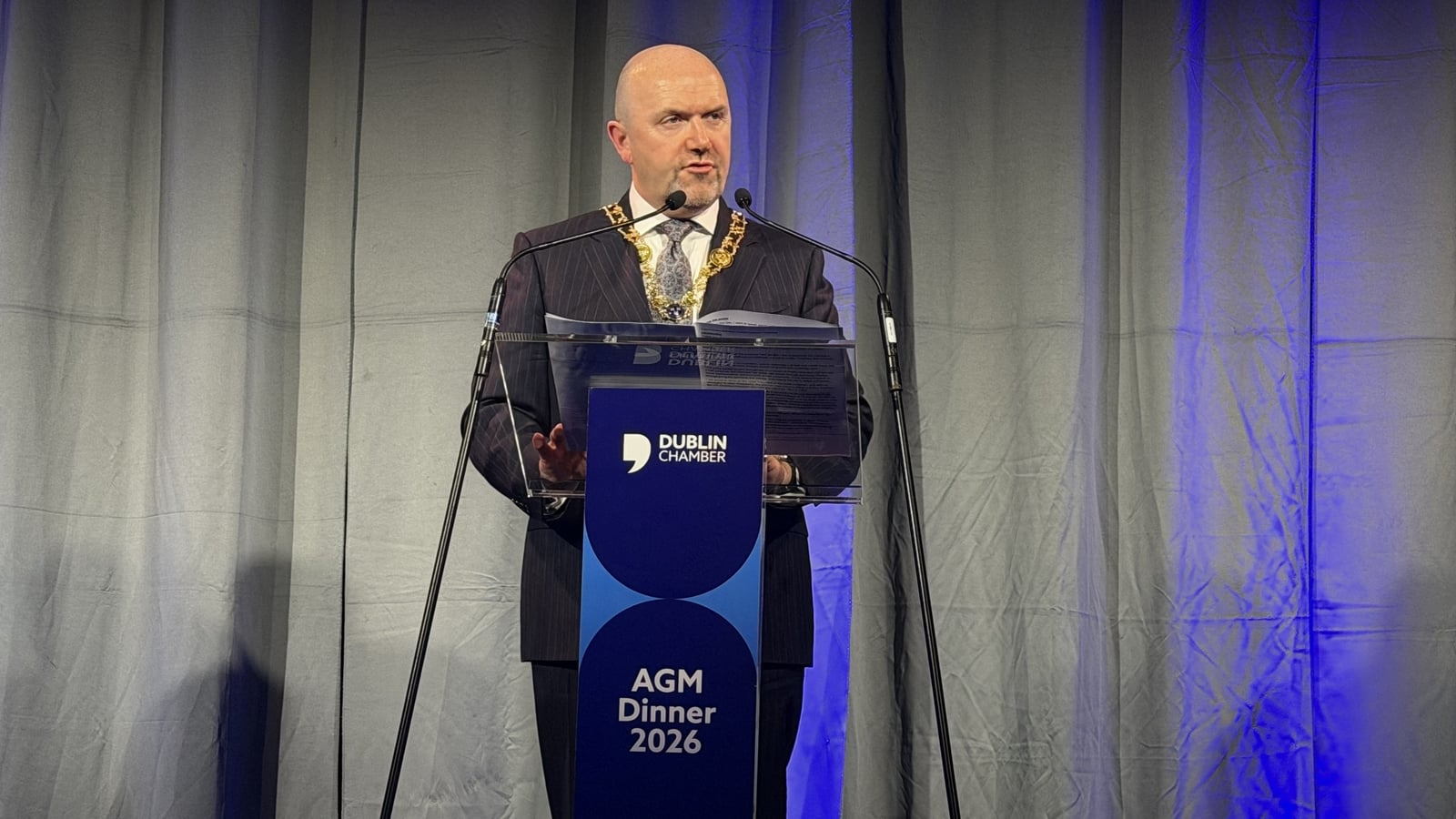
Dublin’s future hinges on strategic infrastructure investment, and the MetroLink project is rapidly becoming central to that conversation. Business leaders are increasingly vocal about the necessity of the high-capacity rail line, not just for easing congestion but for supporting the capital’s economic growth and attracting vital foreign investment. The call for accelerated delivery comes as Dublin navigates a complex energy landscape, balancing the demands of a growing population and a surge in data centre development.
David Kelly, the newly appointed President of Dublin Chamber and CEO of Gas Networks Ireland, has made a strong case for prioritizing the MetroLink, framing it as a “once-in-a-generation project” essential for Dublin and the entire country. His remarks, delivered at the Chamber’s Annual General Meeting on February 26th, 2026, underscore a growing consensus that Dublin’s long-term competitiveness depends on a robust and modern transportation network. The project’s importance is amplified by Dublin’s role as a major economic hub, with over one-third of Ireland’s jobs located within the capital city. Investment in infrastructure is, not simply desirable but fundamentally essential, according to Kelly.
MetroLink: A Necessity, Not a Luxury
The MetroLink, a proposed underground railway line connecting Dublin Airport, the city centre, and the southwestern suburbs, has been under discussion for years. The project aims to alleviate traffic congestion, improve public transport options, and facilitate economic development along its route. However, it has also faced scrutiny regarding its cost and potential disruption during construction. Kelly directly addressed these concerns, arguing that dismissing the project as unnecessary would repeat past mistakes with other vital infrastructure initiatives. He emphasized that underground infrastructure is “not a luxury; it is a necessity” for a modern, thriving capital city.
Recent developments indicate momentum is building behind the project. On February 4th, 2026, the first phases of the MetroLink project went to tender, marking a “pivotal milestone” in its development, according to RTÉ News. This signals a concrete step towards realizing the ambitious plan and demonstrates the government’s commitment to moving the project forward. The tendering process will determine the contractors responsible for the initial stages of construction, paving the way for physical function to begin.
Energy Infrastructure and the Data Centre Debate
Kelly’s address didn’t focus solely on transportation. He also highlighted the critical role of energy infrastructure in supporting Dublin’s economic growth, particularly in light of the increasing demand from data centres and other large energy users. He argued that these facilities should be viewed as an opportunity, not a constraint, recognizing their contribution to the economy and the potential to drive investment in renewable energy sources and grid development. This perspective is particularly relevant given Ireland’s commitment to decarbonization and the need to ensure a secure and sustainable energy supply.
The debate surrounding data centres in Ireland has intensified in recent years, with concerns raised about their energy consumption and impact on the national grid. However, Kelly contends that retaining and growing these energy-intensive firms can actually strengthen the business case for investing in renewables and upgrading grid capacity. He believes that “competitiveness and climate ambition can, and must, reinforce each other,” suggesting a pathway towards sustainable economic growth that prioritizes both environmental responsibility and economic prosperity. This aligns with broader European Union goals for a green transition and the development of a circular economy.
Protecting Critical Infrastructure
Beyond expanding capacity, Kelly stressed the importance of protecting Ireland’s energy infrastructure, including subsea cables and pipelines. He argued that these assets are “strategic” and their security must be embedded in national planning. This call for enhanced security measures reflects a growing awareness of the vulnerability of critical infrastructure to both physical and cyber threats. Protecting these networks is vital for ensuring the continued supply of energy and maintaining the connectivity that underpins Ireland’s digital economy. The increasing geopolitical instability globally further underscores the need for robust security protocols.
Calls for Tax Reform and EU Leadership
In addition to infrastructure and energy, Kelly also advocated for a cut in Capital Gains Tax (CGT) to stimulate entrepreneurship and encourage investment in scaling businesses. He argued that reducing CGT would incentivize risk-taking and support the growth of Ireland’s indigenous enterprise base. This proposal reflects a broader debate about the optimal tax policies to promote economic growth and attract foreign direct investment. The current rate of CGT in Ireland is 33%, and calls for a reduction have been made by various business groups and political parties.
Looking ahead, Kelly highlighted Ireland’s upcoming EU Presidency as an opportunity to demonstrate leadership on key issues such as productivity, innovation, regulatory simplification, and energy security. Ireland is scheduled to hold the Presidency of the Council of the European Union for the first six months of 2026, providing a platform to shape the EU’s agenda and advocate for Irish interests. Kelly believes that Ireland can play a pivotal role in driving progress on these critical issues and strengthening the EU’s competitiveness on the global stage.
Taoiseach Micheál Martin, who also attended the Dublin Chamber AGM, acknowledged David Kelly’s appointment as President and praised his experience in infrastructure delivery and energy transition. Martin’s presence at the event underscored the government’s commitment to working with the business community to address the challenges and opportunities facing Dublin and Ireland as a whole. He emphasized the importance of a strong partnership between the public and private sectors to drive economic growth and improve the quality of life for all citizens.
David Kelly’s background is particularly relevant to the challenges facing Dublin. Prior to his appointment as President of Dublin Chamber, he served as Vice President in 2025 and as Director of Customer and Business Development at Gas Networks Ireland. Gas Networks Ireland operates the country’s extensive natural gas network and is actively involved in the transition to renewable gases, such as biomethane and hydrogen, aligning with Ireland’s climate goals.
The Dublin Chamber, Ireland’s largest business representative organization, has a long history of advocating for the interests of businesses in the capital. For almost 250 years, the Chamber has played a vital role in shaping Dublin’s economic landscape and contributing to Ireland’s overall prosperity. Its continued advocacy for strategic infrastructure projects like the MetroLink will be crucial in ensuring Dublin’s future success.
The next key milestone for the MetroLink project is the announcement of the successful tender bids, expected in the coming months. This will provide greater clarity on the timeline for construction and the specific details of the project. Continued monitoring of the project’s progress and engagement with stakeholders will be essential to ensure its successful delivery. Readers interested in staying informed about the MetroLink project can find updates on the official website of Transport Infrastructure Ireland (TII).
What are your thoughts on the MetroLink project and its potential impact on Dublin’s future? Share your comments below and join the conversation.
Related reading