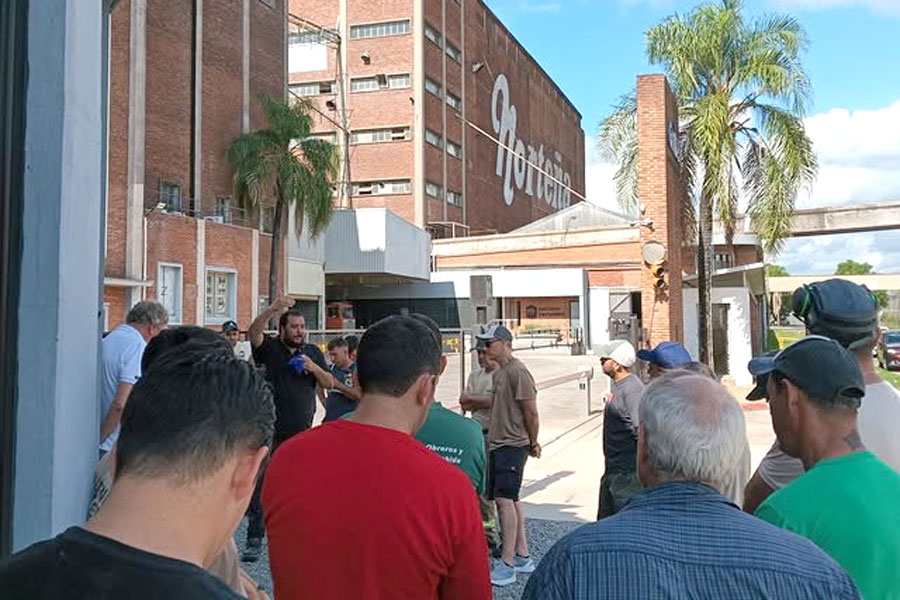
AmBev Production Halt in Uruguay Threatens Hundreds of Jobs
The future of AmBev’s malting plant in Paysandú, Uruguay, hangs in the balance as the beverage company announced it will suspend production starting March 1st, placing approximately 90% of its 115-strong workforce on unemployment insurance. The move, confirmed by union representatives, underscores growing concerns about the plant’s competitiveness and the broader economic challenges facing the Paysandú department, which already struggles with high unemployment rates. This isn’t an isolated incident; similar production halts occurred last year, raising fears of a permanent closure and prompting calls for government intervention to support the local economy.
The decision stems from a combination of factors, including a surplus of malt in Brazil, shifting consumer preferences, and logistical disadvantages that put the Paysandú facility at a cost disadvantage compared to other AmBev malting plants in Uruguay, Brazil, and Argentina. According to Eduardo Alza, a leader with the SOEN (Sindicato de Obreros y Empleados de Norteña), the Paysandú plant’s production costs are roughly $40 per ton higher than its competitors. This cost disparity, coupled with AmBev’s practice of sourcing raw materials and processed malt from third-party suppliers, is eroding the plant’s viability. The situation is further complicated by the company’s pursuit of increased export rebates from the Uruguayan government, a move the union views as a potential attempt to offset operational costs rather than invest in long-term solutions.
Logistical Challenges and Competitive Pressures
The Paysandú plant’s location presents a significant logistical hurdle. Although situated closer to barley plantations, it’s approximately 230 kilometers from the nearest suitable port for export, increasing transportation costs and diminishing its competitive edge. As reported by El Eco Digital, the port of Paysandú, once a functional export hub until 2015, has experienced a decline in technological capabilities, further exacerbating these challenges. This contrasts sharply with the situation at AmBev’s Nueva Palmira facility, which benefits from direct proximity to a major port.
AmBev, a dominant player in the Uruguayan beverage market, operates seven malting facilities across Uruguay, Brazil, and Argentina. The company’s internal competition, where plants vie for contracts based on cost, has placed the Paysandú facility at a disadvantage. The union alleges that AmBev likewise exports raw barley to Brazil for processing by third-party malters, only to then repurchase the processed malt – a practice they claim undermines the local industry. This complex supply chain dynamic, combined with the broader economic climate, has created a precarious situation for workers in Paysandú.
Seeking Government Support and Negotiating Worker Protections
The SOEN is actively lobbying for government intervention to address the structural challenges facing the plant. Union representatives are scheduled to meet with Labor Minister Juan Castillo on March 2nd to discuss potential solutions, including investment in port infrastructure and policies to protect local jobs. They are also seeking a meeting with the Minister of Industry. Radio 36 reports that the union is advocating for policies that provide a protective space for the industry, recognizing the cyclical nature of these challenges.
In anticipation of potential future disruptions, the union recently negotiated a new agreement within the framework of the Councils of Salaries. This agreement, according to El Telegrafo, includes a supplement to unemployment benefits, a 6×2 work schedule, and training opportunities during periods of inactivity. This proactive approach aims to mitigate the impact of future production halts on workers’ livelihoods. The union is also pushing for increased export rebates, currently at 3%, to be raised to 6%, arguing that a higher rebate could alleviate some of the cost pressures facing the plant. They point to a previous rebate of 6% that existed until 2017, when the country transitioned to using 100% national seed, as a potential model.
The Broader Economic Context and Regional Impact
The situation at the AmBev plant reflects broader economic trends impacting Uruguay’s agricultural sector. A decline in global beer consumption has reverberated throughout the supply chain, contributing to the malt surplus in Brazil. The Paysandú department, already grappling with high unemployment, is particularly vulnerable to these economic shocks. The potential loss of jobs at the malting plant would exacerbate the region’s economic woes and further strain social safety nets.
The union also alleges a degree of “trickery” in AmBev’s operations, suggesting the company prioritizes cost optimization over supporting local production. They claim that AmBev benefits from government incentives for investment but doesn’t translate those savings into lower product costs. This perception of unfair practices has fueled calls for greater transparency and accountability from the multinational corporation.
Key Takeaways
- Approximately 90% of the workforce at AmBev’s Paysandú malting plant will be placed on unemployment insurance starting March 1st.
- The production halt is attributed to a surplus of malt in Brazil, logistical disadvantages, and cost competitiveness issues.
- The union is actively seeking government intervention to support the plant and protect local jobs.
- A new agreement has been reached to provide workers with supplemental unemployment benefits and training opportunities.
The next critical step is the meeting between the SOEN and Labor Minister Juan Castillo on March 2nd, where the union will present its proposals for addressing the crisis. The outcome of this meeting, and subsequent discussions with the Minister of Industry, will be crucial in determining the future of the Paysandú plant and the livelihoods of its workers. The situation underscores the need for a comprehensive strategy to support Uruguay’s agricultural sector and ensure its long-term competitiveness in the global market.
What are your thoughts on the challenges facing the AmBev plant in Paysandú? Share your comments below and help us continue the conversation. Please also share this article with your network to raise awareness of this important issue.
Keep reading