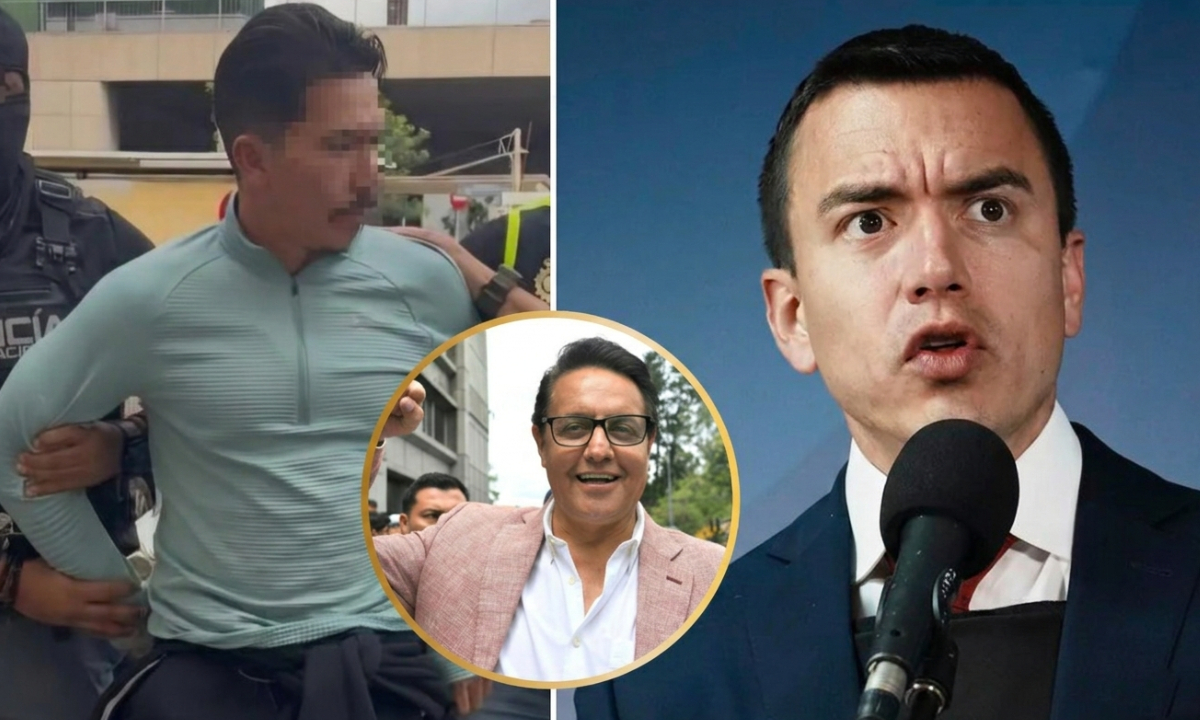
Ecuadorian Drug Lord Accuses President Noboa of Ordering Fernando Villavicencio’s Assassination
Madrid, Spain – Wilmer Chavarría Barré, alias “Pipo,” the alleged leader of Ecuador’s powerful Los Lobos criminal organization, has publicly accused Ecuadorian President Daniel Noboa of ordering the 2023 assassination of presidential candidate Fernando Villavicencio. The startling claim, made during a questioning session with Spanish prosecutors in Zaragoza, Spain, throws a new layer of complexity into the investigation surrounding Villavicencio’s murder and raises serious questions about the extent of political interference in Ecuador’s fight against organized crime. The accusation comes as Ecuador grapples with a surge in violence linked to drug trafficking and escalating tensions between the government and criminal groups.
Villavicencio, a vocal critic of corruption and organized crime, was assassinated on August 9, 2023, in Quito following a campaign rally. His death sent shockwaves through Ecuador and prompted a state of emergency. The investigation into his murder has been ongoing, with authorities initially focusing on several suspects linked to organized crime groups. Chavarría’s assertion, if substantiated, would represent a dramatic shift in the narrative, implicating the highest levels of the Ecuadorian government. The timing of these accusations is particularly sensitive, as Noboa’s administration has taken a hard-line stance against criminal organizations, declaring a state of war against them earlier this year. The Ecuadorian government has vehemently denied the allegations, dismissing them as “absurd.”
Chavarría’s Testimony and Allegations of Threats
According to reports from Spanish news agency EFE, Chavarría made the accusations during a voluntary appearance before the Fiscalía de Zaragoza on February 25, 2026. He was accompanied by his lawyer and guarded by Spanish and Ecuadorian police. Chavarría, who is currently detained in Spain awaiting a decision on Ecuador’s extradition request, reportedly claimed that a person close to Ecuador’s Interior Minister, John Reimberg, informed him that President Noboa ordered the assassination due to fears that Villavicencio would win the presidential election. The alleged motive, according to Chavarría, was to prevent Villavicencio from assuming the presidency.
Chavarría further alleged that the Ecuadorian government is attempting to “deceive” Spanish authorities into extraditing him, claiming that extradition would result in his death. He also stated that someone sent by Reimberg threatened him while he was detained in Málaga, Spain, asserting that the intention was to eliminate him as a competitor in the drug trade, where Noboa allegedly “plays an vital role.” These claims of intimidation and a conspiracy to eliminate him add another layer of complexity to the situation. Chavarría is considered the leader of Los Lobos, identified as the largest and most powerful criminal gang in Ecuador, and is implicated in over 400 murders.
Government Response and Denial
The Ecuadorian government swiftly and strongly rejected Chavarría’s accusations. Interior Minister John Reimberg dismissed the claims as “absurd,” attributing them to Chavarría’s “panic” over the possibility of extradition. Reimberg expressed his desire for Chavarría to “pay for his crimes.” This denial underscores the government’s determination to distance itself from the allegations and maintain its tough stance against organized crime.
The accusations come at a particularly fraught time for Ecuador. President Noboa, who assumed office in November 2023, has declared a state of emergency in response to escalating violence and has launched military operations against criminal groups. The country has been plagued by a surge in drug-related violence, with criminal organizations vying for control of drug trafficking routes. The government’s efforts to combat these groups have been met with resistance, including attacks on police and government officials. The Noboa administration has also faced criticism for its handling of the security situation and concerns about human rights violations during military operations.
The Context of Ecuador’s Security Crisis
Ecuador has grow a key transit country for cocaine destined for the United States and Europe, and the competition between rival drug cartels has fueled a dramatic increase in violence. The country’s strategic location, coupled with weak institutions and widespread corruption, has made it vulnerable to the influence of organized crime. The assassination of Fernando Villavicencio highlighted the growing threat posed by these groups and the challenges facing Ecuador in its efforts to maintain security and the rule of law.
The rise of Los Lobos, the criminal organization led by Chavarría, is a significant factor in Ecuador’s security crisis. Los Lobos has been involved in a wide range of criminal activities, including drug trafficking, extortion, and murder. The group has established a strong presence in several provinces and has been accused of infiltrating government institutions. Chavarría’s detention in Spain represents a major setback for the organization, but its influence remains significant.
The extradition of Chavarría to Ecuador or the United States is a complex legal and political issue. Ecuador has formally requested his extradition, citing his alleged involvement in numerous crimes. The United States has also sought his extradition on drug trafficking charges. Spanish authorities are currently reviewing the extradition requests and will make a decision based on legal considerations and international agreements. The outcome of the extradition process could have significant implications for the fight against organized crime in Ecuador.
What Happens Next?
The investigation into Fernando Villavicencio’s assassination remains open, and Ecuadorian authorities are expected to continue pursuing all leads. The accusations made by Wilmer Chavarría will likely be incorporated into the investigation, and Spanish authorities may be asked to provide further information. The Ecuadorian government has vowed to bring all those responsible for Villavicencio’s murder to justice, regardless of their position or influence. The next step in Chavarría’s case will be the Spanish court’s decision on the extradition requests from Ecuador and the United States. A ruling is expected in the coming weeks.
The allegations against President Noboa represent a serious challenge to his administration and could have far-reaching political consequences. If the accusations are substantiated, it could lead to calls for his resignation or impeachment. However, without concrete evidence, the claims remain just that – accusations. The situation underscores the deep-seated challenges facing Ecuador in its efforts to combat organized crime and strengthen its democratic institutions.
The ongoing security crisis in Ecuador demands a comprehensive and sustained response. This includes strengthening law enforcement, improving intelligence gathering, addressing corruption, and investing in social programs to address the root causes of crime. International cooperation is also essential, as Ecuador cannot effectively combat transnational criminal organizations on its own. The world will be watching closely as Ecuador navigates this turbulent period and seeks to restore stability and the rule of law.
What are your thoughts on these developments? Share your comments below and join the conversation.
Related reading