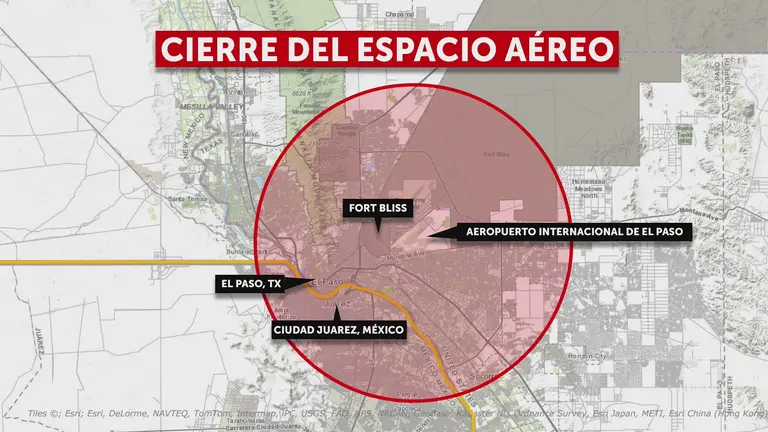
Fort Hancock, Texas – U.S. Armed forces utilized a laser weapon on Thursday, February 26, 2026, to intercept a drone operating near the U.S.-Mexico border. The drone was subsequently identified as belonging to U.S. Customs and Border Protection (CBP), prompting a temporary closure of airspace around Fort Hancock, approximately 50 miles southeast of El Paso, Texas. This incident marks the second time in two weeks that laser technology has been deployed in the region, raising questions about airspace security and identification protocols.
The U.S. Army’s action triggered a response from the Federal Aviation Administration (FAA), which issued a Notice to Air Missions (NOTAM) restricting flight operations in the area. According to reports from the Associated Press, the laser was used against a drone deemed “apparently threatening.” The misidentification of the CBP drone led to the FAA expanding airspace restrictions around Fort Hancock, impacting air traffic in the vicinity. The military is required to formally notify the FAA whenever it takes action against unmanned aircraft within U.S. Airspace.
Second Airspace Closure in as Many Weeks
This event follows a similar incident on February 11, 2026, when the FAA temporarily closed airspace around El Paso International Airport after CBP deployed a laser weapon, though it did not successfully intercept its target in that instance. That earlier incident prompted a suspension of air traffic at the airport and in surrounding areas. This time, however, the closure was more limited, and commercial flights were not affected. The increasing frequency of these events underscores growing concerns about unauthorized drone activity along the border and the challenges of distinguishing between legitimate and potentially hostile aircraft.
Democratic lawmakers, including Washington Representative Rick Larsen, expressed surprise upon being officially notified of Thursday’s incident. Larsen, a ranking member of the House Transportation and Infrastructure Committee, along with other senior Democrats on the House National Security Committee, have requested further information regarding the circumstances surrounding the drone’s interception. The Associated Press reports that the lawmakers are seeking clarification on the protocols used to identify and assess potential threats from unmanned aerial vehicles.
Understanding NOTAMs and Airspace Restrictions
A NOTAM, or Notice to Air Missions, is a critical communication tool used to inform pilots about temporary changes, alerts, or conditions affecting aviation facilities. These notices are essential for flight safety and ensure that pilots are aware of potential hazards or restrictions along their routes. In this case, the NOTAM issued by the FAA cited “special security reasons” as the basis for the airspace closure. The FAA’s alert also indicated that urgent operations, such as medical evacuations (MEDEVAC) or search and rescue missions, could contact the Albuquerque Air Route Traffic Control Center at 505-856-4500 for authorization to operate within the restricted airspace.
The use of laser technology to counter drone threats is a relatively new development, and the incidents in Texas highlight the complexities of implementing such systems. While lasers offer a non-kinetic means of disabling drones, the risk of misidentification and collateral damage remains a significant concern. The FAA and Department of Defense are likely to review existing protocols and procedures to minimize the potential for future incidents.
The Rise of Counter-Drone Technology
The deployment of laser weapons against drones reflects a growing trend in counter-drone technology. As drones become increasingly accessible and sophisticated, governments and security agencies are seeking effective ways to mitigate the risks they pose. Drones can be used for a variety of illicit purposes, including smuggling, surveillance, and even potential attacks. Americateve.com reports that the use of these technologies is becoming more common along international borders.
Beyond lasers, other counter-drone technologies include jamming systems, which disrupt the communication links between drones and their operators, and net-based systems, which physically capture drones in mid-air. The choice of technology depends on a variety of factors, including the size and type of drone, the environment, and the potential for collateral damage. The recent incidents in Texas demonstrate the challenges of deploying these technologies effectively and safely.
Impact on Air Travel and Border Security
The temporary airspace closures in Texas have raised concerns about the potential impact on air travel and border security. While commercial flights were not directly affected by the most recent closure, the disruption to air traffic can have cascading effects on flight schedules and passenger travel. The FAA is responsible for ensuring the safety and efficiency of the national airspace system, and it must balance the need to protect against drone threats with the need to maintain normal air travel operations.
The incidents also highlight the challenges of securing the U.S.-Mexico border. Drones can be used to monitor border activity, smuggle contraband, and potentially facilitate illegal crossings. CBP is actively deploying a range of technologies to enhance border security, including drones, sensors, and surveillance systems. The use of laser weapons represents a new dimension in border security efforts, but it also raises questions about the appropriate level of force and the potential for unintended consequences.
According to El Universal, the incident underscores the need for improved coordination between the military and CBP to prevent future misidentifications. Clearer communication protocols and enhanced training are essential to ensure that laser weapons are used only against legitimate threats.
The FAA and Department of Defense have not yet released detailed reports on the incidents in Texas. However, it is likely that a thorough investigation will be conducted to determine the root causes of the misidentification and to identify any necessary improvements to existing procedures. The results of this investigation will be closely watched by aviation and security experts alike.
The Secretary of Transportation, Sean Duffy, previously indicated that the FAA and the Department of War (DOW) conducted an operation at El Paso International Airport that temporarily suspended all flights on February 11th. This collaborative effort highlights the increasing involvement of multiple agencies in addressing the challenges posed by drone activity.
As drone technology continues to evolve, the development and deployment of effective counter-drone measures will remain a critical priority for governments and security agencies around the world. The incidents in Texas serve as a reminder of the complexities and challenges involved in this rapidly evolving field.
Key Takeaways:
- U.S. Armed forces used a laser to down a CBP drone near Fort Hancock, Texas, on February 26, 2026.
- This is the second airspace closure in the area in two weeks related to laser-based counter-drone operations.
- The FAA is investigating the incident to prevent future misidentifications and improve airspace security.
- The increasing use of counter-drone technology highlights the growing concerns about unauthorized drone activity.
The FAA is expected to provide further updates on the investigation in the coming days. Readers are encouraged to check the FAA website for the latest information on airspace restrictions and counter-drone measures. We invite your thoughts and comments on this developing story.
Keep reading