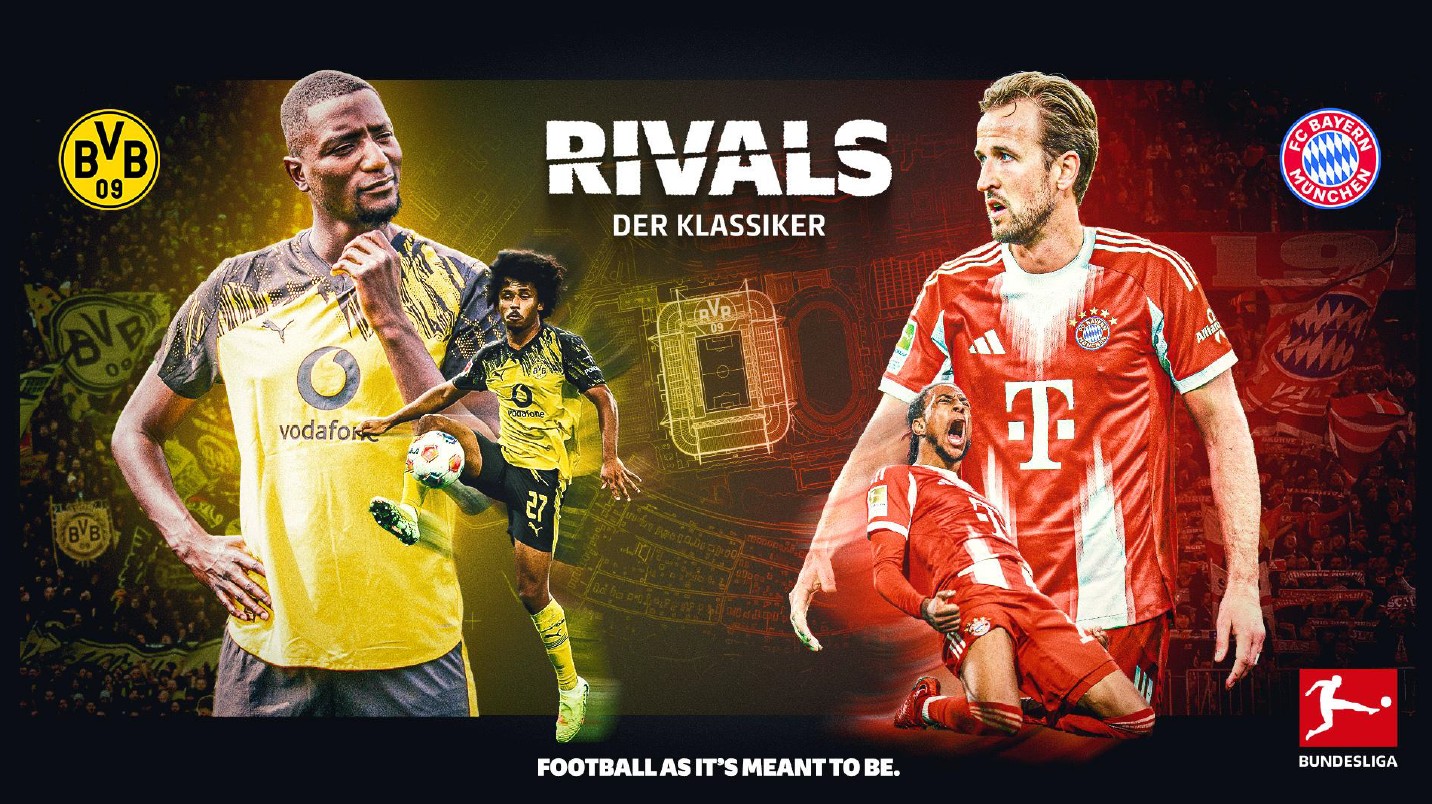
Dortmund, Germany – The anticipation is building as Borussia Dortmund prepares to host FC Bayern München in “Der Klassiker” this Saturday, February 28, 2026, at Signal Iduna Park. This highly-anticipated Bundesliga clash, a cornerstone of German football, transcends national borders, captivating a global audience and showcasing the power of modern sports broadcasting. The match, scheduled for 17:30 UTC, promises not only a thrilling contest on the pitch but also a cutting-edge media experience designed to reach fans in over 200 FIFA member countries. The enduring appeal of this rivalry, coupled with innovative production techniques, solidifies its position as a premier sporting event on the world stage.
The significance of “Der Klassiker” extends far beyond Germany’s domestic league. Broadcast agreements are in place to deliver the match live to viewers across the globe, demonstrating the Bundesliga’s expanding international reach. Beyond traditional television, the game will be available through a diverse range of international broadcasters, including ESPN in the USA and Latin America, Sky in Mexico, beIN Sports in France, Canal+ in French-speaking Africa, Eleven Sports in Poland, Canal Goat in Brazil, and Telenet in Belgium, with productions in both French and Dutch, as well as Digi Romania. This widespread coverage underscores the global demand for top-tier football and the Bundesliga’s commitment to delivering that content to a worldwide audience.
Elevated Production Values: The “Leuchtturmspiel” Concept
This season, select high-profile matches like “Der Klassiker” are benefiting from a modern “Leuchtturmspiel” (lighthouse game) concept, designed to enhance the media production quality. This initiative includes exclusive access for broadcasters, such as interviews conducted as team buses arrive at the stadium, and opportunities for on-air talent to broadcast directly from the team dressing rooms. The production will also feature opening segments filmed directly on the pitch and post-match interviews conducted both on the field and within the team’s facilities. This immersive approach aims to provide fans with an unprecedented level of access and insight into the world of professional football.
The visual spectacle of the match will be equally impressive. Fans watching from home can expect coverage utilizing 30 cameras, including an “Aerial Camera System” and a freely-flying drone to capture breathtaking aerial perspectives of the stadium and the action on the field. “Polecam Highspeed” cameras, mounted on four-meter arms behind the goals, will deliver stunning slow-motion replays and unique angles through the goal nets. Wireless “Cinestyle” handheld cameras will capture the raw emotion of the fans and the electric atmosphere within Signal Iduna Park. This comprehensive camera setup ensures that no moment of the game goes uncaptured, providing viewers with a dynamic and engaging viewing experience.
Technological Innovation for Fans and Broadcasters
Adding another layer of immersion, the RefCam will once again provide viewers with a unique perspective from the referee’s point of view during the match. Prior to kickoff, cameras inside the Borussia Dortmund team bus will capture the excitement of the fans as the team makes its way to the stadium. These technological advancements are designed to bring fans closer to the action and enhance their overall viewing experience.
The media partners of the DFL (Deutsche Fußball Liga) are leveraging the Global Product Portfolio (GPP), which offers a range of innovative features. This includes full live coverage of the matches with English-language commentary, exclusive interviews, and highlight clips. Dan O’Hagan and Steffen Freund will be providing commentary for the international World Feed, bringing their expertise to a global audience. SofaScore confirms the match is scheduled for February 28, 2026.
Beyond traditional broadcasting, Sky and other international partners are incorporating augmented reality (AR) elements and the “Tactical Feed” into their coverage. The Tactical Feed displays all 20 players on the field in real-time, overlaying crucial information and graphics onto the live video feed. This includes Bundesliga Match Facts, developed in collaboration with Amazon Web Services (AWS), providing insights into team formations, tactical analyses, and individual player statistics. These data-driven insights offer viewers a deeper understanding of the game’s intricacies and strategic nuances.
“In-Match Analysis Clips” will be produced during the game, visually representing key game data at critical moments. These clips will be automatically integrated with relevant graphics and seamlessly incorporated into the live Tactical Feed, providing viewers with instant and insightful analysis.
A Global Event: Fan Engagement Beyond the Stadium
The “Klassiker” is being promoted globally under the theme “Rivals,” with a comprehensive marketing campaign encompassing digital initiatives and live events. These events are being organized in collaboration with both clubs, international fan clubs, and local media and content partners. Watch parties are planned in major cities across the United States, China, and Indonesia, allowing fans worldwide to experience the excitement of the match together. SeatPick reports ticket prices starting at $130 for the match at Signal Iduna Park.
Carsten Cramer, spokesperson for Borussia Dortmund’s executive board, will be addressing a large group of international journalists representing media outlets from China, Japan, the USA, Brazil, and India. Content creators from Indonesia and Nigeria will be sharing the energy of the “Yellow Wall” – Borussia Dortmund’s famous home supporters’ section – with their followers. Bundesliga and club legends, including Jürgen Klinsmann, Patrick Owomoyela, and Karl-Heinz Riedle, will participate in global activities in Los Angeles and Bali, while Roman Weidenfeller, a BVB club legend, will conduct interviews with international media partners on the sidelines of the match.
The Historical Significance of “Der Klassiker”
The rivalry between Borussia Dortmund and Bayern Munich is deeply rooted in German football history. While the exact origins are debated, the competition intensified in the 1990s and 2000s as Dortmund emerged as a serious challenger to Bayern’s dominance. This period saw both clubs consistently competing for the Bundesliga title and reaching the Champions League final, creating a fierce and captivating rivalry that continues to this day. The match represents not just a sporting contest, but a clash of cultures and philosophies within German football.
Looking Ahead: Continued Innovation in Sports Broadcasting
The advancements showcased in the broadcast of “Der Klassiker” represent a broader trend in sports broadcasting – a move towards greater immersion, data-driven analysis, and global accessibility. As technology continues to evolve, fans can expect even more innovative ways to experience the thrill of live sports, blurring the lines between the stadium and the living room. The Bundesliga, and “Der Klassiker” in particular, are at the forefront of this revolution, setting a new standard for sports broadcasting worldwide.
The next step in this ongoing evolution will be the implementation of even more sophisticated AR and VR experiences, allowing fans to virtually step onto the pitch and interact with the game in entirely new ways. The DFL is also exploring the use of artificial intelligence (AI) to personalize the viewing experience, providing fans with customized content and insights based on their individual preferences.
What are your predictions for this weekend’s match? Share your thoughts in the comments below, and don’t forget to share this article with fellow football fans around the world!
Related reading