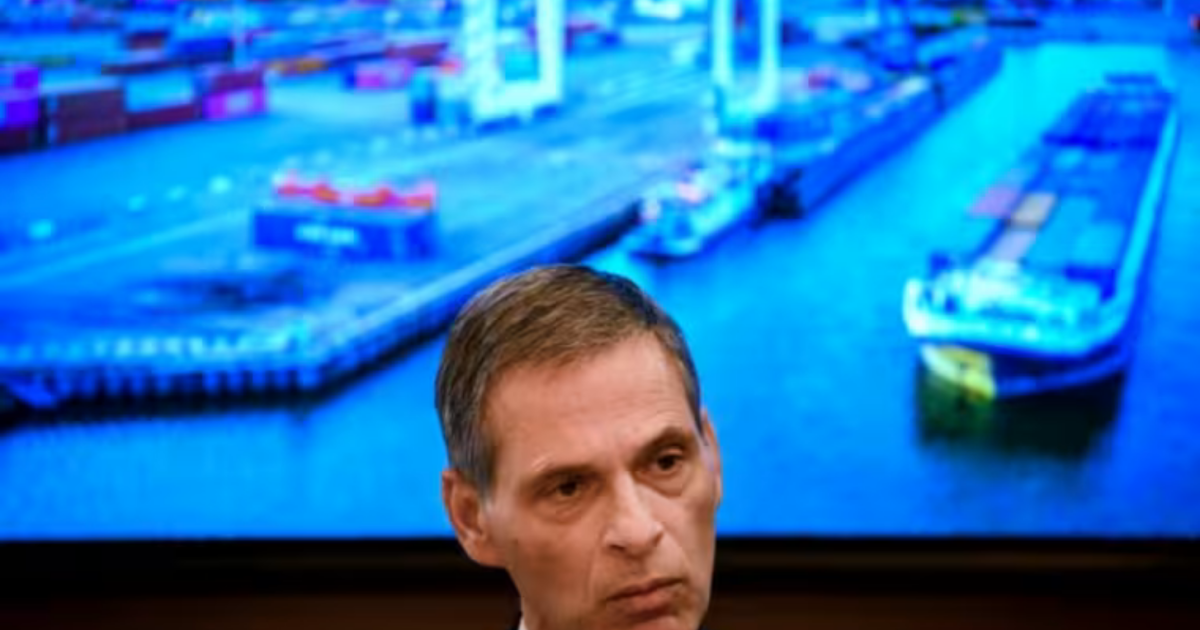
Rhône River Poised to Become a Green Shipping Corridor with Electric Barge Project
The Rhône River is on the cusp of a transformation into a major inland waterway for sustainable freight transport, following the announcement of a groundbreaking electric barge project slated to initiate operations in 2028. This initiative aims to significantly reduce carbon emissions associated with goods movement between the port of Fos-Marseille and Lyon, a key economic hub in France. The project, spearheaded by CMA CGM, a leading global shipping and logistics company, represents a substantial investment in modernizing France’s inland transportation infrastructure and aligns with broader European decarbonization goals.
Announced in February 2026, the project builds on CMA CGM’s recent acquisition of a 30-year sub-concession for the Lyon Rhône Terminal (LRT) in April 2025, a strategic multimodal terminal on the MeRS corridor. This acquisition, made in partnership with Banque des Territoires, CCI Lyon Métropole Saint-Étienne Roanne, and CCI métropolitaine Aix-Marseille-Provence, positions CMA CGM to play a central role in developing the Rhône River as a viable alternative to road transport. The move comes as France seeks to reduce its reliance on trucking and promote more environmentally friendly shipping options.
The planned electric barge will have a capacity of 156 TEUs (twenty-foot equivalent units), equivalent to the capacity of numerous trucks, and is expected to transport approximately 12,000 TEU annually. The total investment in the project, including terminal modernization and charging infrastructure, is estimated at €40 million over two years. This investment reflects a commitment to doubling container traffic on the Rhône River by 2030, aiming for 100,000 river containers and 80,000 rail containers annually. Currently, road transport accounts for 80% of freight movement on this axis, with rail handling 15% and river transport a mere 5%, according to CMA CGM.
Decarbonizing Transport and Boosting Efficiency
The shift towards electric barges is driven by the significant environmental benefits of inland waterway transport. According to the French Agency for Ecological Transition (Ademe), river transport emits three to five times less CO2 per tonne of goods transported compared to road transport. The new barge will contribute to a substantial reduction in carbon emissions along the 330-kilometer navigable stretch of the Rhône between Marseille and Lyon. The project also addresses growing demand for rail services connecting Marseille to Lyon and the Rhône-Alpes Region, with CMA CGM enhancing frequency and cost competitiveness.
The success of this project hinges on the development of dedicated electric charging stations along the Rhône River. Compagnie Nationale du Rhône (CNR) is currently undertaking technical studies and construction of these stations in Lyon and Arles, in coordination with regional authorities and leveraging European funding mechanisms. This infrastructure is crucial for enabling the operation of the electric barge and supporting the long-term viability of electric inland waterway transport. CMA CGM is already in discussions with operator Combronde for service operation and commercialization of the new barge.
This initiative is part of the broader “Marseille en grand” plan announced by French President Emmanuel Macron in September 2021, which aims to transform the port of Marseille into a major fluvio-maritime hub connecting the Mediterranean Sea to the French interior. The plan envisions Marseille as a key gateway for trade and logistics, leveraging both maritime and inland waterway transport to enhance efficiency and sustainability.
Marseille’s Role as a Decarbonized Gateway to Europe
The Rhône River project also has international implications, positioning Marseille as a potential “decarbonized gateway to Europe.” Rodolphe Saadé, CEO of CMA CGM, highlighted this potential, stating that the deployment of new fluvial capacities, including the electric barge, will contribute to France’s role as a sustainable entry point for trade with Europe. CMA CGM emphasizes the importance of this development in attracting international business and strengthening Marseille’s position as a major logistics hub.
The project aligns with broader efforts to develop new maritime and logistical routes, such as the India-Middle East-Europe Economic Corridor (IMEC). In February 2025, Saadé hosted Indian Prime Minister Narendra Modi and President Macron in Marseille to discuss the IMEC project, which aims to enhance trade connectivity between India, the Middle East, and Europe. Jean-Luc Chauvin, president of the Chamber of Commerce and Industry of Aix Marseille Provence, noted that Marseille is considered a potential “entry point” for the IMEC corridor. Supply News reported on these discussions.
To further enhance its strategic position, Marseille-Fos is focused on expanding its hinterland connections, reaching towards the Rhine and Danube rivers. This strategy mirrors the approaches taken by other major European ports, such as Le Havre (Haropa) and Rotterdam, which have successfully integrated inland waterways into their logistics networks. The consortium formed by CMA CGM, the CCIs of Aix-Marseille-Provence and Lyon Métropole Saint-Étienne Roanne, Banque des Territoires, and CNR, is working to develop a comprehensive plan for achieving this expansion.
Modernizing Infrastructure and Expanding Capacity
The €40 million investment will be directed towards modernizing the Port Edouard Herriot terminal in Lyon, with construction expected to seize two years. This modernization will enhance the terminal’s capacity and efficiency, enabling it to handle the increased volume of container traffic anticipated with the introduction of the electric barge and the overall expansion of inland waterway transport. CMA CGM’s commitment to this project demonstrates its long-term vision for sustainable logistics and its dedication to supporting the economic development of the Rhône-Alpes region.
CMA CGM’s foray into electric barge technology isn’t limited to the Rhône River. The company launched a pilot project in Vietnam last year, developing an electric container barge for a 90-kilometer route with Nike as its primary client. This experience will inform the implementation of the Rhône River project and contribute to the development of best practices for electric inland waterway transport. The Vietnamese project demonstrates CMA CGM’s commitment to innovation and its willingness to invest in sustainable transportation solutions.
The shift towards greater apply of the Rhône River for freight transport is not without its challenges. Navigational conditions, lock capacities, and the need for coordinated logistics are all factors that must be addressed to ensure the success of the project. However, the potential benefits – reduced carbon emissions, decreased road congestion, and enhanced economic competitiveness – make this a worthwhile endeavor.
Key Takeaways
- CMA CGM is launching an electric barge service on the Rhône River in 2028, aiming to reduce carbon emissions and promote sustainable freight transport.
- The project involves a €40 million investment in terminal modernization and charging infrastructure, with a goal of doubling container traffic on the Rhône by 2030.
- Marseille is positioning itself as a “decarbonized gateway to Europe,” leveraging the Rhône River project and the India-Middle East-Europe Economic Corridor (IMEC).
- The initiative aligns with France’s broader “Marseille en grand” plan to transform the port into a major fluvio-maritime hub.
- The project highlights the growing importance of inland waterway transport as a sustainable alternative to road transport.
The next key milestone for this project will be the commencement of construction on the charging stations in Lyon and Arles, scheduled to begin this week. Continued updates on the project’s progress, including details on the barge’s construction and the implementation of the charging infrastructure, will be available on the CMA CGM website. We encourage readers to share their thoughts on this exciting development and its potential impact on the future of freight transport in Europe.
Worth a look