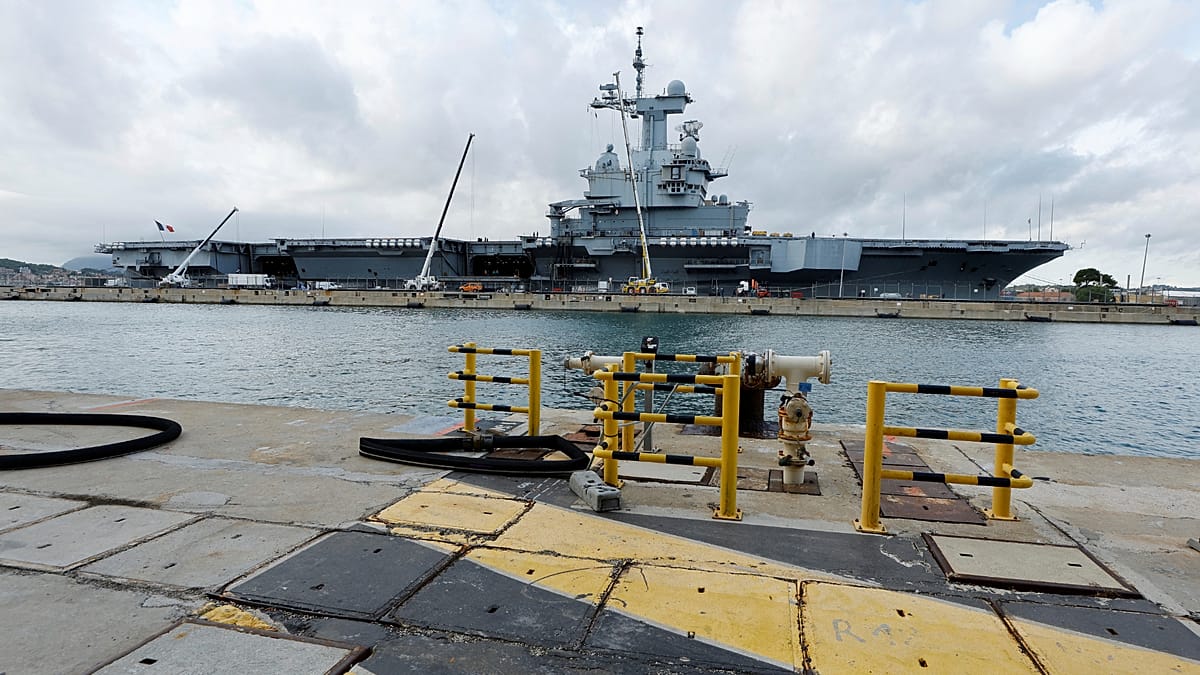
Malmö, Sweden – A suspected Russian drone was neutralized near the French aircraft carrier Charles de Gaulle while the vessel was docked in Malmö, Sweden, on Wednesday, February 25, 2026, prompting a swift response from Swedish armed forces. The incident, confirmed by both Swedish and French authorities, underscores growing concerns about airspace security and potential Russian probing activities in the Baltic Sea region, particularly as NATO increases its presence in the area. The Charles de Gaulle, a flagship of the French Navy, was making its first-ever visit to Sweden ahead of planned NATO exercises.
Swedish Defence Minister Pål Jonson stated that the drone “probably” originated from Russia, citing the proximity of a Russian military vessel at the time of the incident. According to Jonson, the Russian vessel continued its journey towards the Baltic Sea after the drone was jammed. Swedish authorities have contacted their Danish counterparts regarding the incident, given its location in the Øresund Strait, a waterway separating Sweden and Denmark. The incident highlights the increasingly complex security landscape in Northern Europe, where tensions remain high following Russia’s ongoing invasion of Ukraine.
The drone was detected approximately seven nautical miles (13 kilometers) from the Charles de Gaulle by a Swedish Navy vessel during a routine patrol. Rather than attempting to physically intercept the drone, Swedish forces employed electronic jamming technology to disrupt its signal and sever its connection with its operator. While the exact fate of the drone remains unknown – whether it crashed into the sea or managed to return to its origin – contact was lost immediately after the jamming signal was deployed. The Swedish Armed Forces confirmed that no further drone sightings were reported following the incident.
Growing Concerns Over Drone Activity in European Airspace
This incident is not isolated. European nations have reported a marked increase in unauthorized drone activity near sensitive military installations and critical infrastructure over the past year. In December 2025, France deployed electronic jamming systems to neutralize a suspicious drone flying over Île Longue, a naval base housing France’s nuclear-powered ballistic missile submarines. This base is a critical component of France’s nuclear deterrent, making the drone intrusion a particularly serious security concern. Similar incidents have been reported in Denmark and the Baltic states, raising alarms about potential reconnaissance or harassment operations.
The European Union unveiled a strategy in February 2026 to bolster defenses against malicious drones, recognizing the growing threat posed by these unmanned aerial vehicles. The EU strategy focuses on improving detection, identification and disruption capabilities, as well as strengthening international cooperation to address the challenge. The increasing sophistication and accessibility of drone technology have made it easier for both state and non-state actors to deploy these devices for potentially hostile purposes.
Interoperability and NATO Exercises
French military officials have emphasized the successful cooperation with Swedish forces in responding to the drone incident. They highlighted that Swedish detection and warning systems “worked perfectly,” demonstrating the growing interoperability between the two nations, particularly following Sweden’s recent accession to NATO. The Charles de Gaulle’s visit to Malmö was intended to signal strengthened ties between France and Sweden and to prepare for joint NATO exercises in the Baltic Sea. These exercises are designed to enhance the alliance’s collective defense capabilities and to deter potential aggression in the region.
The Charles de Gaulle, a nuclear-powered aircraft carrier, carries a complement of Rafale fighter jets and reconnaissance aircraft. While the carrier has its own naval escort, it relies on host nations for defense while operating in their territorial waters. The incident near Malmö underscores the importance of close coordination between NATO allies in protecting critical assets and maintaining maritime security. The carrier’s presence in the Baltic Sea is seen as a demonstration of NATO’s commitment to the region and a signal to Russia that any attempts to destabilize the area will be met with a firm response.
The “Grey Zone” of Hybrid Warfare
Security analysts suggest that the recent drone intrusions represent a deliberate strategy by Russia to operate in a “grey zone” – a space between peace and open conflict. By conducting probing activities and testing the defenses of NATO member states, Russia aims to gather intelligence, exert psychological pressure, and gradually weaken the alliance’s cohesion. This approach allows Moscow to avoid crossing the threshold that would trigger a direct military confrontation while simultaneously undermining the security of its adversaries. The use of drones in this context is a relatively low-cost, low-risk way for Russia to challenge NATO’s capabilities and to assess its vulnerabilities.
The incident near the Charles de Gaulle also raises questions about the potential for escalation. While the drone was successfully neutralized without causing any damage or casualties, a more aggressive or coordinated attack could have had serious consequences. NATO is increasingly focused on developing countermeasures to address the threat posed by drones, including electronic warfare systems, directed energy weapons, and improved air defense capabilities. However, the rapid pace of technological innovation means that the alliance must constantly adapt its strategies to stay ahead of potential adversaries.
The Swedish Armed Forces are continuing their investigation into the incident, seeking to determine the drone’s exact origin and purpose. The Danish authorities have also been informed and are cooperating with the investigation. While the incident did not disrupt the Charles de Gaulle’s operations, it serves as a stark reminder of the evolving security challenges facing Europe and the need for continued vigilance and cooperation among NATO allies.
Key Takeaways
- A suspected Russian drone was jammed near the French aircraft carrier Charles de Gaulle during a port visit to Malmö, Sweden.
- Swedish Defence Minister Pål Jonson believes the drone likely originated from a Russian military vessel in the area.
- The incident is part of a broader pattern of increased drone activity near sensitive military sites across Europe.
- NATO is enhancing its defenses and interoperability to counter the threat posed by drones and other hybrid warfare tactics.
Further updates on the investigation are expected from the Swedish Armed Forces in the coming days. The Charles de Gaulle is scheduled to continue its participation in NATO exercises in the Baltic Sea, and security measures have been heightened to prevent further incidents. Readers are encouraged to share their thoughts and perspectives on this developing story in the comments section below.
Keep reading
- Jan Suraaj Chief Hands BJP First-Ever Patna Seat Defeat Since 2008
- China Overhauls Housing Provident Fund System: New Rules Expand Coverage and Usage to Boost Real Estate Market
- Russian Military Bloggers Report Heavy Casualties And Low Life Expectancy For New Recruits (newsdirectory3.com)
- Odesa Attack: 13 Injured as Russian Strike Hits Transport Infrastructure (time.news)